Terry Riley 'A Rainbow In Curved Air' CBS S 64564 A1/B1 UK 1st press 1971
£
50
$
66




Favourite Auctions
To save auctions to your favourites, please login
If you don't have an account, please register
Description
Terry Riley 'A Rainbow In Curved Air' CBS – S 64564 UK 1st press Vinyl, LP, housed in a printed CBS inner sleeve and released in 1971. This version has the Orange CBS label with cat# S 64564 (MS 7315) on it, while the cover (front- rear- & spine) just shows 64564. The B-side track is misspelled as "Popply Nogood And The Phantom Band". This was corrected for later editions.
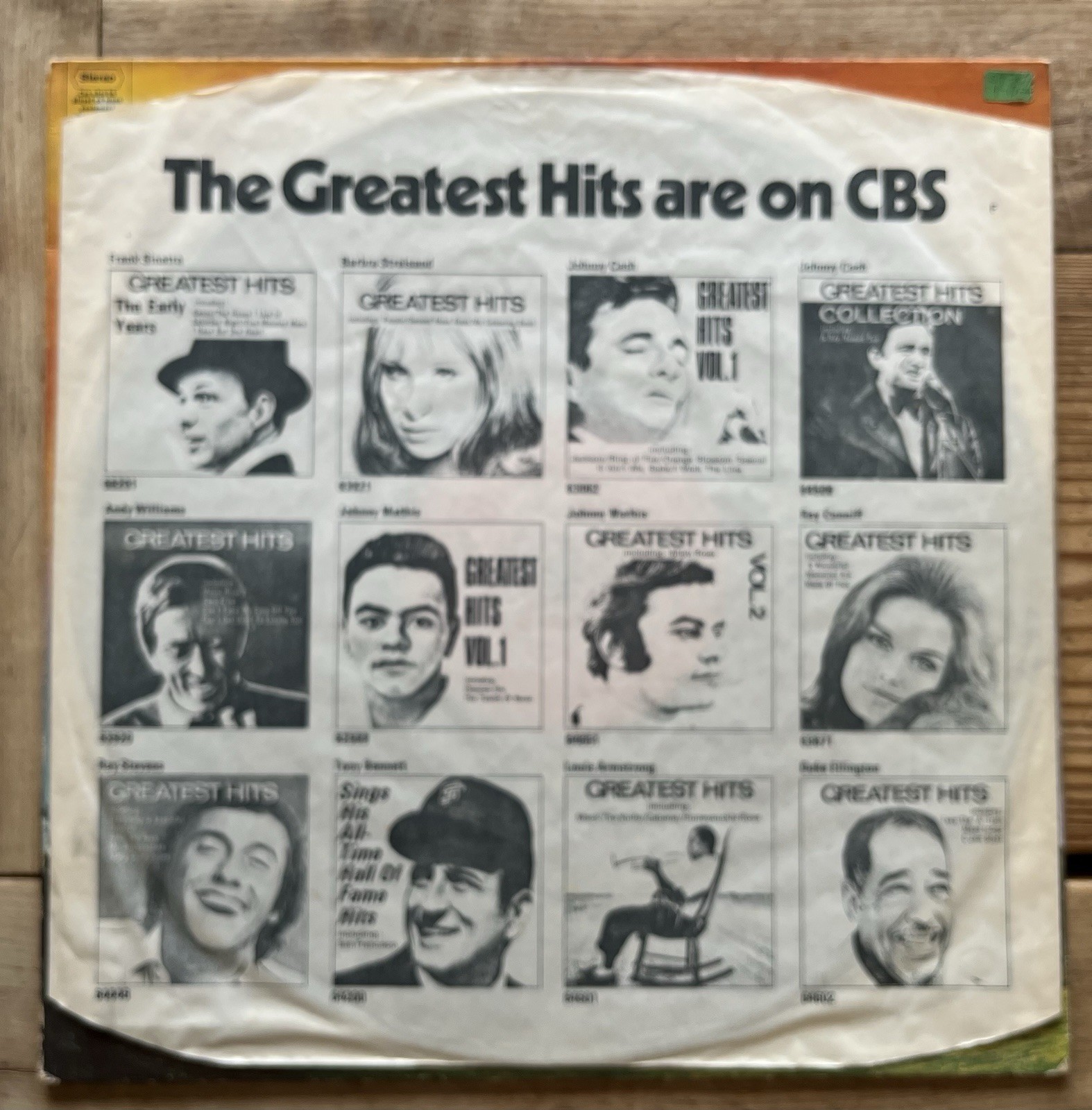
The vinyl appears to have been lightly played and is in great shape. It played through beautifully on my stereo - no skip or stick. It is housed in its original, printed CBS inner sleeve which, apart from some light creasing. is in good condition - no rips or writing. The sleeve, similarly, has a small price stick to the front and some slight wear to the bottom corner, but it is otherwise in good condition - no rips or writing. The spine is intact and legible. Matrix / Runout Side 1 : S 64564 AI Matrix / Runout Side 2: S 64564 BI
'A Rainbow in Curved Air' is the third album by American composer Terry Riley, first released in on CBS Records in the USA in 1969 . The title track consists of Riley's overdubbed improvisations on several keyboard and percussion instruments. The B-side "Poppy Nogood and the Phantom Band" is a saxophone-based drone piece featuring tape loops and edits, drawing on Riley's all-night improvisatory performances in the 1960s.
Riley's record deal with CBS was part of "Music of Our Time," a short-lived album series on American experimental music helmed by CBS employee David Behrman, who had also facilitated the release of Riley's 1968 album 'In C'. These two were the most successful LPs in the series. The album subsequently influenced a number of rock and electronic productions.
The largely improvisational nature of the work, based on modal scales, owes much to Riley's background in jazz improvisation and interest in Hindustani classical music. Jazz pianist Bill Evans, one of Riley's piano "heroes", had utilized overdubbing on his album 'Conversations with Myself' five years earlier. Riley would intensify this overdubbing approach with added instrumentation. Using overdubbing, Riley plays all the instruments on the title track: electric organ, two electric harpsichords (a Baldwin electric harpsichord & a RMI Rock-Si-Chord), dumbec, and tambourine. The piece moves through several sections; following the opening theme and introduction of "placid chords," Riley introduces "an explosion, a procession of right-hand lines that flutter and pirouette over the pulsing rhythmic patterns." The calmer second half of the recording features shorter, high-register keyboard lines which syncopate with the music's modal base.
The B-side of the original LP is titled "Poppy Nogood and the Phantom Band." It is a saxophone-based drone piece featuring tape loops and jump cuts. The piece is a version of the performances given at Riley's "All-Night Flight" concerts in the late 1960s. It employs overdubbing and tape delay, with Riley again playing all instruments. Riley's saxophone playing on the track was inspired by that of John Coltrane. The titular "Phantom Band" refers to Riley's tape delay accompaniment. A note on the album explains that "The spatially separated mirror images were adapted for studio recording by Glen Kolotkin and resemble the sound Terry gets in his all-night concerts."
The original LP sleeve includes a idealistic poem on the back cover, written by Riley, depicting a world in which the Pentagon is "turned on its side and painted purple, yellow & green within a plainly psychedelic environment" and "the concept of work was forgotten."
The album received a favourable review in Rolling Stone. Writing for The Village Voice, critic Robert Christgau opined that the title track "has to be a fair approximation of the music of the spheres."
The album inspired Mike Oldfield's 'Tubular Bells' and Pete Townshend's organ parts on The Who's "Won't Get Fooled Again" and "Baba O'Riley," the latter named in tribute to Riley and Meher Baba. It also inspired English progressive rock band Soft Machine's instrumental piece "Out-Bloody-Rageous". 'A Rainbow in Curved Air' has also had a significant impact on the developments of minimalism, ambient music, jazz fusion, new-age music, progressive rock, and subsequent electronic music. It foreshadows the later overdubbed instrumental works composed by Steve Reich. The English progressive rock band Curved Air named itself after this album.
price rating