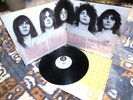
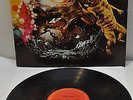
The Eagles ?? Hotel California ? 1976 Asylum Records Near Mint Vinyl LP w/Insert
$
20


Favourite Auctions
To save auctions to your favourites, please login
If you don't have an account, please register
Description
Welcome to Classic Cadillac Records! My goal is to provide each and every customer with the best possible buying experience, no matter the size of the order. Unlike most sellers, I advertise all my items clearly and in as much detail as possible, without shouting at you in all caps. I take multiple high quality pictures and never use stock photos, so you know exactly what you’re buying. I take great pride in my work and go the extra mile, which can clearly be seen in my listings compared to other sellers that put minimal effort into theirs. I visually grade all my records as accurately as possible and will never grade anything above Near Mint unless it’s still sealed. Please note that a visual grade can differ from a play grade, and am happy to spot check a record upon request. All orders are shipped within 1 business day (usually sooner) and packed with extra care to ensure fast, safe arrival. I combine shipping on multiple orders to save you money and gladly ship worldwide. Please look closely at all pictures, read all relevant details and ask any questions you may have before buying. I offer a full 30-day return policy on everything I sell, so buy with confidence! And most importantly, thanks for looking!
Hotel California Studio album by the Eagles Released December 8, 1976 Recorded March – October 1976 Studio Criteria Studios, Miami, FL and Record Plant Studios, Los Angeles, CA Genre Rock Length 43:28 Label Asylum Producer Bill Szymczyk the Eagles chronology Their Greatest Hits (1971–1975)(1976) Hotel California
(1976) The Long Run
(1979) Singles from Hotel California
- "New Kid in Town"
Released: December 2, 1976 - "Hotel California"
Released: February 1977 - "Life in the Fast Lane"
Released: May 3, 1977
Hotel California is the fifth studio album by American rock band the Eagles, and is one of the best-selling albums of all time. Three singles were released from the album, each reaching high in the Billboard Hot 100: "New Kid in Town" (number 1), "Hotel California" (number 1), and "Life in the Fast Lane" (number 11). The album became the band's best-selling album after Their Greatest Hits (1971–1975), with over 16 million copies sold in the U.S. alone and over 32 million copies sold worldwide. The album was ranked number 37 on Rolling Stone's list of "The 500 Greatest Albums of All Time".
The album was recorded by Bill Szymczyk at the Criteria and Record Plant studios between March and October 1976, and then released on Asylum in December. It was their first album with guitarist Joe Walsh, who had replaced founding member Bernie Leadon, and is the last album to feature bassist Randy Meisner. It is their sixth album (including Their Greatest Hits (1971–1975)), and fifth of new material. The front cover is a photograph of the Beverly Hills Hotel by David Alexander. The album topped the charts and won the band two Grammy Awards for "Hotel California" and "New Kid in Town". The album was nominated for Album of the Year but lost to Fleetwood Mac's Rumours. A 40th anniversary special edition was released in November 2017.
Theme
The first song written for the album was "Hotel California", which became the theme for the album. Henley said of the themes of the songs in the album:
“ They're the same themes that run through all of our work: loss of innocence, the cost of naiveté, the perils of fame, of excess; exploration of the dark underbelly of the American dream, idealism realized and idealism thwarted, illusion versus reality, the difficulties of balancing loving relationships and work, trying to square the conflicting relationship between business and art; the corruption in politics, the fading away of the Sixties dream of "peace, love and understanding." ”On the title "Hotel California", Henley said that "the word, "California," carries with it all kinds of connotations, powerful imagery, mystique, etc., that fires the imaginations of people in all corners of the globe. There's a built-in mythology that comes with that word, an American cultural mythology that has been created by both the film and the music industry." In an interview with the Dutch magazine ZigZag shortly before the album's release, Don Henley said:
“ This is a concept album, there's no way to hide it, but it's not set in the old West, the cowboy thing, you know. It's more urban this time (…) It's our bicentennial year, you know, the country is 200 years old, so we figured since we are the Eagles and the Eagle is our national symbol, that we were obliged to make some kind of a little bicentennial statement using California as a microcosm of the whole United States, or the whole world, if you will, and to try to wake people up and say 'We've been okay so far, for 200 years, but we're gonna have to change if we're gonna continue to be around.'" ”Composition
Bernie Leadon, who was the principal country influence in the band, left the band after the release of the previous album One of These Nights. For Hotel California, the band made a conscious decision to move away from country rock, and wrote some songs that are more rock & roll, such as "Victim of Love" and "Life in the Fast Lane". Leadon was replaced by Joe Walsh who provided the opening guitar riff of "Life in the Fast Lane" that was then developed into the song. The title for "Life in the Fast Lane" was inspired by a conversation between Frey and his drug dealer during a high speed car ride.
The melody of the title track, "Hotel California", was written by Don Felder. Don Henley wrote most of the lyrics, with contributions from Glenn Frey. Henley noted that hotel had become a "literal and symbolic focal point of their lives at that time", and it became the theme of the song. Frey wanted the song to be "more cinematic", and to write it "just like it was a movie". Henley sought inspiration for the lyrics by driving out into the desert, as well as from films and theatre.
Frey, in the "Hotel California" episode of In the Studio with Redbeard, spoke about the writing of "The Last Resort". Frey said: "It was the first time that Don took it upon himself to write an epic story and we were already starting to worry about the environment… we're constantly screwing up paradise and that was the point of the song and that at some point there is going to be no more new frontiers. I mean we're putting junk, er, garbage into space now."
Recording
The album was recorded between March and October 1976 at Criteria Studios, Miami, FL and Record Plant Studios, Los Angeles, CA, and produced by Bill Szymczyk. Although the band favored Los Angeles, the producer Szymczyk wanted to record in Miami as he had developed a fear of living on a fault line in Los Angeles after experiencing an earthquake, and a compromise was then struck to split the recording at both places.[3] While the band were recording the album, Black Sabbath were recording Technical Ecstasy in an adjacent studio at Criteria Studios in Miami. The band was forced to stop recording on numerous occasions because Black Sabbath were too loud and the sound was coming through the wall. The last track of the album, "The Last Resort" had to be re-recorded a number of times due to noise from the next studio.
For the title track "Hotel California", after the arrangement and instrumentation had been refined, several takes were recorded. The best parts were then spliced together, in all 33 edits on the two?inch master, to create the final version. In contrast, "Victim of Love" was recorded in a live session in studio apart from the lead vocal and the harmony on the choruses which were added later. Don Felder initially sang the lead vocals in the many early takes for the song, but the band felt that his efforts were not up to the required standard, and Henley then took over as the lead.
According to Henley in a 1982 interview, the Eagles "probably peaked on Hotel California." Henley said: "After that, we started growing apart as collaborators and as friends."
Artwork
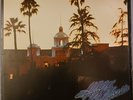
Eagles performing "Hotel California" in 2010 with the image from the album cover in the backgroundThe front cover artwork is a photograph of The Beverly Hills Hotel shot just before sunset by David Alexander with design and art direction by Kosh. According to Kosh, Henley wanted him to find a place that can portray the Hotel California of the album title, and "portray it with a slightly sinister edge". Three hotels were photographed, and the one with The Beverly Hills Hotel was selected as the cover. The photographer shot the image 60 feet above Sunset Boulevard on top of a cherry picker. As the image was taken from an unfamiliar position in fading light, most people did not initially recognize the hotel. However, when the identity of Beverly Hills Hotel was revealed, the hotel threatened legal action over the use of the image.
The rear album cover was shot in the lobby of the Lido Hotel in Hollywood. The gatefold image shows the same lobby but with their friends and members of the band. Henley said: "I wanted a collection of people from all walks of life, It’s people on the edge, on the fringes of society." A shadowy figure appears on the balcony above the lobby, leading to speculations over the person's identity.
Kosh designed a Hotel California logo as a neon sign which was used on the album cover and in its promotional materials. As it proved difficult to bend real neon tubings into the desired shape of the script, the neon effect of the logo was achieved with airbrush by Bob Hickson. Additional portraits of the band used in the album package and promotional materials were shot by Norman Seeff.
Release
The album was released by Asylum Records on December 8, 1976 in vinyl, cassette and 8-track cartridge formats. It was considered for quadraphonic release in early 1977, but this idea was dropped following the demise of the quadraphonic format. On the album's 25 anniversary in 2001, it was released in a Multichannel 5.1 DVD-Audio disc. On August 17, 2011, the album was released on a hybrid SACD in Japan in The Warner Premium Sound series, containing both a stereo and a 5.1 mix.
Original vinyl pressings of Hotel California (Elektra/Asylum catalog no. 7E-1084) had custom picture labels of a blue Hotel California logo with a yellow background. These also had text engraved in the run-out groove of each side, continuing an in-joke trend the band had started with their third album On the Border. The text reads: Side one: "Is It 6 O'Clock Yet?"; Side two: "V.O.L. Is Five-Piece Live", indicating that the song "Victim of Love" was recorded in a live session in studio, with no overdubbing. Joe Walsh and Glenn Frey confirm this on the inner booklet of The Very Best Of. This only referred to the instrumental track, however; the lead vocal and harmony for the chorus were added later. This was in response to those who criticized the Eagles' practice of copious overdubbing of instruments and that they were too clinical and soulless in the studio. They wanted to demonstrate that they could play together without overdubs if they wanted to.
A 40th anniversary deluxe edition was released on 24 November 2017. The set includes the original remastered album, and a second CD that features 10 live tracks from the concert at The Forum, recorded in October 1976 two months before the original release of the album.
Critical reception
Contemporary reviews indicate critics found the album well made; some found it patchy and unexceptional, others rated it highly. Robert Christgau felt it was their "most substantial if not their most enjoyable LP", while Charley Walters of Rolling Stone felt it showcased "both the best and worst tendencies of Los Angeles-situated rock". Both critics picked up on the album's California themes - Christgau remarking that while it may in places be "pretentious and condescending" and that "Don Henley is incapable of conveying a mental state as complex as self-criticism", the band couldn't have written the songs on side one "without caring about their California theme down deep"; Walters in contrast felt the "lyrics present a convincing and unflattering portrait of the milieu itself", and that Don Henley's vocals express well "the weary disgust of a victim (or observer) of the region's luxurious excess".
Billboard gave the album high praise: "The casually beautiful, quietly-intense multileveled vocal harmonies and brilliant original songs that meld solid emotional words with lovely melody lines are all back in force, keeping the Eagles at the acme of acoustic electric soft rock." It noted however that apart from what it called the "Procol Harum-type" title track, the album did not try out any new departure, nevertheless thought that "the album proves that there's a lot more left to explore profitably and artistically in the L.A. countryish-rock style." Robert Hilburn of the Los Angeles Times, writing after the band broke up, called the album "a legitimate rock masterpiece", in which the band "examined their recurring theme about the American Dream with more precision, power and daring than ever in such stark, uncompromising songs as "Hotel California" and "The Last Resort"."
Later retrospective reviews are mixed. William Ruhlmann writing for AllMusic, feels that "Hotel California unveiled what seemed almost like a whole new band. It was a band that could be bombastic, but also one that made music worthy of the later tag of 'classic rock', music appropriate for the arenas and stadiums the band was playing." Steve Holtje writing in CultureCatch in 2012, felt that even though "an awful lot of the album is snarky whining from co-leaders Don Henley and Glenn Frey, two guys who didn't really seem like they had that much they could legitimately complain about", in the final analysis "Hotel California and the underrated concept album Desperado stand as the group's greatest statements". John Alroy of Wilson & Alroy feels that the album is "one of the biggest LPs of the entire decade, but only a few tracks are solid enough to have merited the hype". The album was listed in 2003 at the number 37 on Rolling Stone magazine's list of the 500 greatest albums of all time, and it noted: "The highlight is the title track, a monument to the rock-aristocrat decadence of the day and a feast of triple-guitar interplay."
Accolades
Hotel California was the Eagles' sixth album (including Their Greatest Hits (1971–1975)), and fifth of original material. It became a critical and commercial success. In 2001, the TV network VH1 placed Hotel California at number 38 on their 100 Greatest Albums of All Time list. Hotel California was ranked 13th in a 2005 survey held by British television's Channel 4 to determine the 100 greatest albums of all time. In 2003, the album was ranked number 37 on Rolling Stone magazine's list of the 500 greatest albums of all time.
The song "Hotel California" was ranked number 49 on Rolling Stone's list of "The 500 Greatest Songs of All Time". The guitar duet at the end of the song was performed by Don Felder and Joe Walsh.
Awards and nominations
The album was nominated for several Grammy awards in 1978 and its title track "Hotel California" won the Record of the Year. The band manager Irving Azoff however refused requests by the Grammy producer for the band to attend or perform at the ceremony unless a win was guaranteed. The band therefore did not appear at the ceremony to collect their awards. Henley later said: "The whole idea of a contest to see who is 'best' just doesn't appeal to us."
Year Award Nominee Category Result 1978 Grammy Eagles for "Hotel California" Record of the Year Won Eagles for "New Kid in Town" Best Arrangement For Voices Won Eagles for Hotel California Best Pop Vocal Performance by a Group Nominated Eagles for Hotel California Album of the Year Nominated Bill Szymczyk Producer of the Year NominatedCommercial performance
The album first entered the US Billboard 200 at number four, reaching number one in its fourth week in January 1977. It topped the chart for eight weeks (non-consecutively), and it was certified platinum by the Recording Industry Association of America (RIAA) in a week of release. In its first year of release it sold nearly 6 million copies in the United States, and by July 1978 it has sold 9.5 million copies worldwide (7 million in the US and 2.5 million elsewhere internationally). In 2001, the album was certified 16x platinum by the Recording Industry Association of America, denoting shipment of 16 million in the United States, and has sold over 17 million copies in the US by 2013. Worldwide, the album has sold 32 million copies.
The album produced two number one hit singles on the US Billboard Hot 100: "New Kid in Town", on February 26, 1977, and "Hotel California" on May 7, 1977.
Track listing
Side one No. Title Writer(s) Lead vocals Length 1. "Hotel California"- Don Felder
- Don Henley
- Glenn Frey
- Henley
- Frey
- J.D. Souther
- Henley
- Frey
- Joe Walsh
- Henley
- Frey
- Henley
- Frey
- Jim Ed Norman
- Henley
- Frey
- Felder
- Souther
- Walsh
- Joe Vitale
- Henley
- Frey
price rating