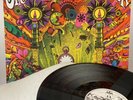
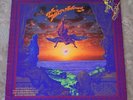
The Residents – Commercial Album LP 1980 Misprint 1st Press Ralph Records VG+
$
30


Favourite Auctions
To save auctions to your favourites, please login
If you don't have an account, please register
Description
The Residents
Commercial Album
First edition(!) black vinyl LP
Ralph Records (RZ-8052-L), 1980
Record is a strong VG+, with just a few light, small brushes, and one faint/silent scratch on three bands of side A. Inner sleeve has ~3" split on bottom, and record will accordingly be shipped in separate new anti-static inner sleeve. Outer sleeve has soft corners, and most notably a split spine, but no folds and artwork is clear/intact.
From Wikipedia:
"Commercial Album is the seventh studio album released by art rock group the Residents in 1980. It is commonly considered a follow-up to their 1978 album Duck Stab/Buster & Glen, in that it retains the former album's pop-oriented song structures. The album contains 40 songs, each lasting exactly one minute - a deliberate allusion to Top 40 mainstream radio. The album's liner notes state that, to form a complete pop song, tracks from the album should be played three times in a row.
The album features a number of guest musicians, notably drummer Chris Cutler and guitarist Fred Frith of the recently disbanded Henry Cow. The credits mention Frith as an "Extra-Hard Working Guest Musician." Frith told author Cole Gagne that he recorded parts for around 25 tracks and was later told by a band member that he appeared on at least 15 of the released cuts, but that he could only identify himself on three tracks where he played bass.[4] Other guests are credited under pseudonyms, such as Andy Partridge of XTC (as "Sandy Sandwich") and Lene Lovich (as "Mud's Sis"); Brian Eno and David Byrne appear on the album uncredited.
As a promotional stunt, the Residents purchased 40 one-minute advertising slots on San Francisco's most popular Top 40 radio station at the time, KFRC, such that the station played each track on the album over the course of three days. This prompted an editorial in Billboard magazine questioning whether the act was art or advertising."
price rating