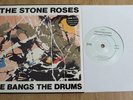
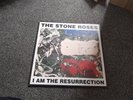
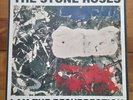
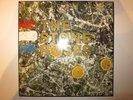
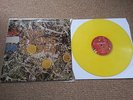
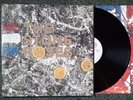
The Stone Roses live Valencia 89 double 12"
£
81
$
107


Favourite Auctions
To save auctions to your favourites, please login
If you don't have an account, please register
Description
The Stone Roses live Valencia 89 double 12"
Ultra Rare Green
Selling from personal collection.
There are B-legs, and then there are B-legs that feel less like contraband and more like time travel.
23/09/1989 – Barraca, Valencia, Spain is a double 12" firmly in the latter category, a sun-bleached, sweat-drenched postcard from the exact moment The Stone Roses stopped being merely excellent and started becoming inevitable.
First, let’s address the miracle in the room: this is an audience recording that actually deserves to exist. No murky swamp of cassette hiss, no sonic equivalent of peering through frosted glass. Instead, you get clarity with character, the crowd present but not intrusive, the band raw but not reduced to distortion soup. It sounds like you’re standing about six rows back, close enough to feel the amps in your ribs but far enough to see the bigger picture.
And what a picture it is.
From the moment they launch into Adored, there’s a loose, feline confidence to the performance. Ian Brown isn’t yet the myth, the caricature, or the tabloid magnet, he’s just cool in the purest sense. His vocals float rather than strain, detached in a way that feels intentional rather than indifferent. He sounds like a man who knows he’s holding winning cards and doesn’t need to show them.
Meanwhile, John Squire plays like someone quietly rewriting the rules of British guitar music. His tone is shimmering but muscular, psychedelic but precise. Each riff doesn’t just land, it blooms. There’s a generosity to his playing, as if he’s letting the songs breathe in real time, discovering new corners even he didn’t know were there.
The setting helps enormously. Barraca wasn’t some cavernous arena designed to flatten nuance into echo. It was intimate, humid, and probably smelled like cigarettes and bad decisions. You can hear the room reacting, not in overwhelming roars, but in bursts of recognition, as if the audience knows they’re witnessing something special but hasn’t fully processed it yet. They’re not worshipping. They’re witnessing.
You don't dance much quips Brown...
There’s a fascinating looseness throughout the set. Songs stretch slightly at the edges, rhythms lean forward or hang back by a heartbeat, and the whole thing feels alive in a way studio recordings rarely manage. This isn’t the pristine, museum-piece version of the band. This is the band as a living organism—breathing, flexing, occasionally flirting with chaos but never losing control.
What makes this recording especially compelling is its timing. In September 1989, in Valencia, they weren’t legends yet. They were becoming legends. You can hear ambition colliding with momentum. There’s hunger still present, but it’s paired with the unmistakable glow of arrival. They’re not trying to prove themselves anymore. They’re demonstrating themselves.
And perhaps that’s why this bootleg resonates so strongly. It captures that fleeting, electric window where possibility hasn’t yet hardened into history.
In the grand, often dubious world of bootlegs, this one feels less like stolen goods and more like recovered treasure, a document of four musicians standing at the precise intersection of confidence, chemistry, and destiny. Not just one of the best audience recordings of The Stone Roses, but one of the rare recordings that reminds you why audience recordings exist at all.
As if the live set weren’t enough, Side 4 delivers an unexpected bonus: an interview with Ian Brown and John Squire on Canadian radio, and it’s every bit as entertaining as you’d hope. Brown, in particular, treats the entire exercise with the bemused patience of a man being asked to explain gravity to someone who’s just fallen off a chair. His answers hover somewhere between sincere, evasive, and gently mischievous, as if he’s permanently one step ahead of the question and not entirely convinced it was worth asking in the first place.
Squire, meanwhile, plays the perfect foil—dry, understated, and armed with that razor-thin northern wit that can slice through awkward questions without ever raising its voice. There’s a sense that both men are faintly amused by the machinery of music journalism, indulging it just enough to keep things moving while quietly refusing to become part of the spectacle.
What makes it so enjoyable is how unpolished it feels. No media training, no carefully engineered soundbites—just two young musicians from The Stone Roses on the cusp of global myth, casually dismantling the seriousness surrounding them with humour, detachment, and the occasional perfectly timed bit of ambiguity. It’s funny without trying to be funny, which is, of course, the funniest kind.
In its own way, this interview is as revealing as the concert itself. The performance shows the band becoming legends; the interview shows them still human, still slightly incredulous at the fuss, and still very much themselves.
price rating