VICTOR 78 RPM Record 18398 Collins and Harlan “Lily of the Valley” /”When I Hear
$
24


Favourite Auctions
To save auctions to your favourites, please login
If you don't have an account, please register
Description
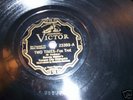
VICTOR 78 RPM Record 18398 Collins and Harlan “Lily of the Valley”/”When I Hear That Jazz Band Play” Marion Harris E- -/VG + + Visible Condition, Collins and Harlan side is pretty nice disc with only a few light scratches and scuffs. Marion Harris side has several light scratches and one really long light scratch. Plays very good on both sides. “Lily of the Valley”is a pretty funny vaudevillian minstrel tune with talking and singing and lots of laughing. Marion Harris song is from Ziegfeld’s “Midnight Frolic”. For those of you who think Marion Harris was African-American -think again. She is white as a marshmallow.
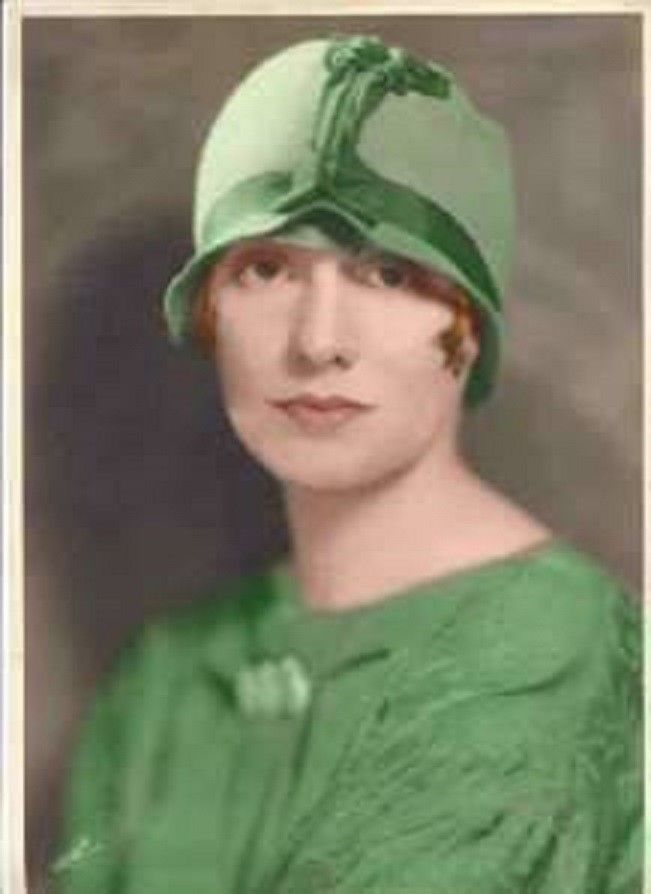
Credit: John Bush. A hitmaker who was recording before the end of World War I, Marion Harris sang a Broadway version of the blues several years before it had cracked the commercial consciousness, near the end of the 1910s. In that, she was a harbinger of the Jazz Age, although her hits dried up by the mid-'20s, and when she died in 1944 she had been long forgotten. Still, Harris was among the most popular singers of the '20s, and her versions of "St. Louis Blues," "Tea for Two," and "Look for the Silver Lining" were the most successful of the era.
Born in 1896, probably in Indiana, Harris made her first professional stop in Chicago, where she played vaudeville and accompanied silent pictures with her voice. Her singing made an impression on the famed dancer Vernon Castle, who enabled her entrance into the New York theater scene; she debuted in a 1915 Irving Berlin revue titled Stop! Look! Listen! and also performed with Florenz Ziegfeld's famous Follies. By 1916, Harris began recording for Victor, and one year later she enjoyed her first hit -- "They Go Wild, Simply Wild, Over Me." She could belt out a strong theater blues, like Layton-Creamer's "Eveybody's Crazy 'Bout the Doggone Blues, But I'm Happy" (also a hit), but she tempered those brash titles with ballads such as "After You've Gone." Also, she continued performing in vaudeville, but at a much higher caliber than in Chicago, touring the nation with a top billing.
Meanwhile, her personal life was much less successful than her professional career. Her 1920 marriage to actor Bobby Williams was tempestuous and lasted only one year; a later marriage collapsed after her husband was tried on rape charges (the alleged victim was appearing with Harris in a play). Her lone attempt at going Hollywood, the 1927 film Devil-May-Care, was a flop, and she withdrew from her next theater show because of an undisclosed illness. Harris spent the next few years in Europe, often performing in cabaret, but never appeared again professionally after the mid-'30s. Until 1944, the last year of her life, she lived in London with her third husband; the effects of the blitz may have caused the "neurological disorder" that caused her to travel to New York for treatment. Although she was discharged two months later, she died soon after in a hotel fire that started when she fell asleep while smoking in bed. The Ziegfeld Midnight Frolic, It’s a sweltering July evening in 1915 and the lights have just come up after the finale of a Ziegfeld Follies show at the New Amsterdam Theatre on 42nd Street. You dread walking out into the muggy night and long for a cool escape. But you’re in luck tonight because it’s the premiere of Flo Ziegfeld Jr.’s new revue, the Danse de Follies! You take the elevator from the theatre lobby up to the rooftop garden (you’ve heard it called “the meeting place of the world”) and as the doors open you are met with dancing and the sound of champagne being uncorked. The show starts at midnight and you have work in the morning, but a late night of revelry to escape the stuffy New York summer seems like a small price to pay for the exhaustion of tomorrow.
Earlier that year, Florenz Ziegfeld, Jr., tired of seeing his audiences leave after performances of the Ziegfeld Follies to spend money at other people’s nightclubs, staged a second late-night revue in the New Amsterdam Theatre’s underused 680 seat roof-top level with tables, complete with box seats, and a balcony. Ziegfeld mechanized the stage so that it rolled back to reveal a dance floor, and installed a glass walkway that would allow chorus girls to dance right above the customers seated below. Later called the Midnight Frolic, the show was a bit more risqué than the Follies. The girls shimmying down the glass walkway above the audience were reportedly cautioned to wear bloomers but oftentimes the rule wasn’t followed very closely. Audience members were asked to vote for the young lady he or she considered the most beautiful and to state why on cards handed out by the usher. The young lady receiving the most votes during the run of that Frolic series had her salary doubled. One of the audience favorites was the “balloon girls,” who encouraged male patrons to use their cigars to pop the balloons covering the majority of their costumes.
To keep out the rougher elements, Ziegfeld charged a hefty $5.00 cover (roughly $117 today) on top of the ticket price – first row seats went for $3 (approximately $55 today), while orchestra seats went for $2.50 (about $46). Upper class theatre-goers were delighted with the Midnight Frolic’s party-like atmosphere, and the revue became an annual event after its premiere in 1915. Insisting that theater-goers would have sore hands after applauding so much, Ziegfeld provided little wooden hammers at Frolic tables, so audiences could bang out their appreciation.
The Midnight Frolic often received rave reviews from the New York Times: “The latest edition of Florenz Ziegfeld’s ‘Midnight Frolic,’ which had its first presentation Monday midnight before an audience that embraced all who live and move and have their being in Broadway, out-Ziegfelds all its predecessors. It is like the others only more so. It is a Ziegfeld-Urban-Wayburn show of beautiful women, frocks and tableaux designed for the business man who is too tired to go home after the play… One might search the world and not find anything quite as unique or lavish as this midnight revue.”
The show was broken up into different comedy, singing, and dancing acts featuring stars like Frances White, Teddy Gerard, Eddie Cantor, Will Rogers, and W.C. Fields.
During the twenty-five minute intermission between the acts, audience members were welcome to dance, drink, and dine. For .75 cents to $1.00 (from $17-$23 today) guests could partake in a cold beer or soda, and for those willing to pay $2.75 ($64 today) there were small bottles of champagne readily available. The Ziegfeld kitchens were most known for their steak dinners, but also popular was Beluga caviar for $2.00 a serving ($47).
There was no limit to the extravagance of the Midnight Frolic, even after the US entered World War I. The New York Times reported in 1917 that, “For fear some one will think that he has adopted a policy of retrenchment because of the war Mr. Ziegfeld calls attention to one novelty, a chiffon scene in which the chiffon alone cost $3,000. He also wishes to state that the cost of production approximated $100,000.”
The club stayed open year-round for seven years and while World War I couldn’t stop the Midnight Frolic, Prohibition was ultimately what led Ziegfeld to end the show in 1922. He commented on this to the New York Times in 1921: “The best class of people from all over the world have been in the habit of coming up on the roof … and when they are subjected to the humiliation of having policemen stand by their tables and watch what they are drinking, then I do not care to keep open any longer… But occasionally some of my patrons have brought liquor of their own, and recently two men were arrested on the roof. When these things can happen I think it is time to close.” That first midnight performance back in 1915 closes to a sea of hammers and cheers. You shuffle out with the crowd, your feet sore from dancing and the bright white lights of Broadway shining on your face. You feel tired, but you know there will be no way for you to fall asleep now after seeing the sensation of Ziegfeld’s Midnight Frolic.
Collins was born in Philadelphia, Pennsylvania and moved with his family to Barnegat, New Jersey around 1879 and as a teenager worked as a volunteer lifesaver on the Jersey shore, beginning an enthusiasm for sailing that became a lifelong pursuit. However, his fine baritone voice – heard in church and in local concert appearances – convinced Collins' family to send him back to Philadelphia for formal training. After concluding his studies, Collins spent some 15 years touring with various stock companies and appearing in summer opera in St. Louis. None of these ventures turned out any long term prospects for Collins, and when he married actress and singer Anna Leah Connelly in 1895 Collins swore off show business and decided to study for a career in bookkeeping. Taking occasional roles for extra money, Collins appeared in a production given by the DeWolf Hopper Opera Company in 1898, and talent scouts for Edison Records requested Collins audition which, according to his wife, took place May 16, 1898.
Within a few years, Collins proved one of the most productive and successful singers in the record business, and in his long career between 1898 and 1925 he worked for every record company active in the United States. He specialized in what were then called coon songs, popular African-American dialect numbers associated with vaudeville and minstrel shows. Collins also utilized an array of vocal effects and caricature voices which gave the impression that there were multiple persons at the horn on his recordings, though it was just Collins. Towards making that end of it more effective, Collins began to work in a duo format with tenor Joe Natus in 1901 and both sang in an Edison group called the Big Four Quartet It is assumed that Collins first came into contact with tenor Byron G. Harlan within the context of the Big Four Quartet, and from then until the end of Collins' career in the early 1920s, Harlan was Collins's duet partner. Collins & Harlan were probably the most famous and popular male duo on early records.
In 1909, Collins joined John H. Meyer, Henry Burr, and Albert Campbell in the Peerless Quartet, a successful barbershop music group which toured as the Record Makers, and later as the Eight Popular Victor Artists. However, by 1917 bass Frank Croxton began to replace Collins on some records, a situation that became permanent by mid-1919 as Collins did not get along with Burr, who also served as the group's manager.
During a personal appearance at the Princess Theater in Medina, Ohio on October 20, 1921, Collins was badly injured when he fell through an open trap door. While he recovered well enough to resume his singing and recording career, his health began to decline afterward and in 1926, Collins retired, relocating to Florida with his wife. He died at the age of 69 in Tice, Florida on August 3, 1933
Byron George Harlan (August 29, 1861 – September 11, 1936) was an American singer from Kansas, a comic minstrel singer and balladeer who often recorded with Arthur Collins. The two together were often billed as "Collins & Harlan".
The scratches on the left of every photo are my broken glass on scanner ? not on item. Images of artists etc. are for information only and not included in auction, record & sleeve only.If possible we gladly combine shipping items to lessen postage. PLEASE don?t use eBay auto pay. I will invoice you for general shipping costs which will be easier and cheaper for you: insurance added for all items $10+ or at your request. We will pack securely ? but are not responsible for shipping company damage if uninsured.
1 record - $4.70 ? Add $1 for each additional record (+ insurance if required). (USA ONLY) (Int?l use eBay calculator and I will adjust to get cheapest rate)
More of all the types of records listed: Odd tunes, Political, Blues, Hot Jazz, Hillbilly, Odd labels, Doo-Wop, etc. More of all the types of records listed: Odd tunes, Political, Blues, Hot Jazz, Hillbilly, Odd labels, Doo-Wop, etc.E++, Visibly nearly new with no visible signs of wear or damage.
E+, Looks and plays like new with only few signs of handling and play.
E Still very shiny, near new looking, with slight visible signs of wear and a few nearly inaudible scuffs and scratches
E- Still shiny but without the luster of a new record, few scuffs that have little or no effect on play, some light scratches.
E- - Mostly shiny but with even less of the luster of an E- record, more scuffs than E-that have little or no effect on play, light scratches with some light noise.
VG+, Slightly above average condition 78 in which scuffs and general use has dulled the finish somewhat. Wear is moderate but playing is generally free from distortion. Surface noise not overly pronounced.
VG, An average condition 78 - moderate wear throughout, but still very playable and enjoyable. Surface somewhat dull with noise and scratches audible but not intrusive.
VG-, Quite playable still, but with some distortion and may have some graying in loud passages. Music remains loud in most passages. Surface noise and scratches well below music level.
VG- - Quite playable still, but with distortion and most have some graying in loud passages. Music remains loud in most passages. Surface noise and scratches noticeable and may be loud at times.
G+ Quite worn and scratched, but music level is still higher than surface noise. Grey may be throughout but still serviceable. Music begins to sound muffled.
G Not so good. Wear and scratch damage extensive. Listening can become uncomfortable as music and surface noise probably blending. Lowest level music can be understood.
G-, Music barely audible over surface noise & listening is uncomfortable. Record is borderline unplayable.
P Used only for high dollar space fillers like Black Patti, Okeh blues, etc. Music covered by surface noise, scratches, and needle digs, label may be trashed, & listening is almost if not definitely impossible. Record is basically unplayable. What you keep because you can?t bear to toss ? while you look for that E+ copy of Robert Johnson on Vocalion at the local flea markets for $1 (Good Luck!)
See Description, A wildcard grade that can be used when standard grading does not apply or when a record (or item) has special attributes (or defects) that can affect how the item is assigned a grade.
price rating