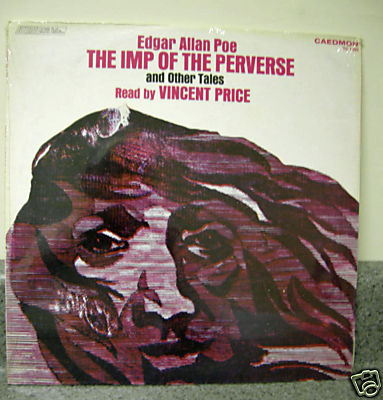
Vincent Price Estate LP: E.A. Poe, Imp of the Perverse
$
62


Favourite Auctions
To save auctions to your favourites, please login
If you don't have an account, please register
Description
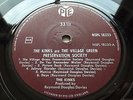
Vincent Price was justly famous for his mellifluous voice--and he frequently made recordings in all genres.
But he was most famous for his readings of Edgar Allan Poe.
This is The Imp of the Perverse and Other Tales, recorded in 1972.
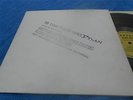
It is Price's personal copy and it is still shrink wrapped.
About Edgar Allan Poe:
Edgar Allan Poe was born January 19, 1809 in Boston, where his mother had been employed as an actress. Elizabeth Arnold Poe died in Richmond on December 8, 1811, and Edgar was taken into the family of John Allan, a member of the firm of Ellis and Allan, tobacco-merchants.
After attending schools in England and Richmond, young Poe registered at the University of Virginia on February 14, 1826, the second session of the University. He lived in Room 13, West Range. He became an active member of the Jefferson Literary Society, and passed his courses with good grades at the end of the session in December. Mr. Allan failed to give him enough money for necessary expenses, and Poe made debts of which his so-called father did not approve. When Mr. Allan refused to let him return to the University, a quarrel ensued, and Poe was driven from the Allan home without money. Mr. Allan probably sent him a little money later, and Poe went to Boston. There he published a little volume of poetry, Tamerlane and Other Poems. It is such a rare book now that a single copy has sold for $200,000.00
In Boston on May 26, 1827, Poe enlisted in The United States Army as a private using the name Edgar A. Perry. After two years of service, during which he was promoted to the rank of Sergeant-major, he secured, with Mr. Allan's aid, a discharge from the Army and went to Baltimore. He lived there with his aunt, Mrs. Maria Poe Clemm, on the small amounts of money sent by Mr. Allan until he received an appointment to the U.S. Military Academy at West Point.
Meanwhile, Poe published a second book of poetry in 1829: Al Aaraaf, Tamerlane and Minor Poems. After another quarrel with Allan (who had married a second wife in 1830), Poe no longer received aid from his foster father. Poe then took the only method of release from the Academy, and got himself dismissed on March 6, 1831.
Soon after Poe left West Point, a third volume appeared: Poems by Edgar Allan Poe, Second Edition. While living in Baltimore with his aunt, Mrs. Clemm, young Poe began writing prose tales. Five of these appeared in the Philadelphia Saturday Courier in 1832.
With the December issue of 1835, Poe began editing the Southern Literary Messenger for Thomas W. White in Richmond; he held this position until January, 1837. During this time, Poe married his young cousin, Virginia Clemm in Richmond on May 16, 1836.
Poe's slashing reviews and sensational tales made him widely known as an author; however, he failed to find a publisher for a volume of burlesque tales, Tales of the Folio Club. Harpers did, however, print his book-length narrative, Arthur Gordon Pym in July of 1838.
Little is known about Poe's life after he left the Messenger; however, in 1838 he went to Philadelphia where he lived for six years. He was an editor of Burton's Gentleman's Magazine from July, 1839 to June, 1840, and of Graham's Magazine from April, 1841 to May, 1842. In April, 1844, with barely car fare for his family of three, [including his aunt, Virginia's mother, who lived with them], Poe went to New York where he found work on the New York Evening Mirror.
In 1840, Poe's Tales of the Grotesque and Arabesque was published in two volumes in Philadelphia. In 1845, Poe became famous with the spectacular success of his poem "The Raven," and in March of that year, he joined C. F. Briggs in an effort to publish The Broadway Journal. Also in 1845,Wiley and Putnam issued Tales by Edgar A. Poe and The Raven and Other Poems.
The year 1846 was a tragic one. Poe rented the little cottage at Fordham, where he lived the last three years of his life. The Broadway Journal failed, and Virginia became very ill and died on January 30, 1847. After his wife's death, Poe perhaps yielded more often to a weakness for drink, which had beset him at intervals since early manhood. He was unable to take even a little alcohol without a change of personality, and any excess was accompanied by physical prostration. Throughout his life those illnesses had interfered with his success as an editor, and had given him a reputation for intemperateness that he scarcely deserved.
In his latter years, Poe was interested in several women. They included the poetess, Mrs. Sarah Helen Whitman, Mrs. Charles Richmond, and the widow, Mrs. Sarah Elmira Shelton, whom he had known in his boyhood as Miss Royster.
The circumstances of Poe's death remain a mystery. After a visit to Norfolk and Richmond for lectures, he was found in Baltimore in a pitiable condition and taken unconscious to a hospital where he died on Sunday, October 7, 1849. He was buried in the yard of Westminster Presbyterian Church in Baltimore, Maryland.
In personal appearance, Poe was a quiet, shy-looking but handsome man; he was slightly built, and was five feet, eight inches in height. His mouth was considered beautiful. His eyes, with long dark lashes, were hazel-gray
www.poemuseum.org
About the beloved, Vincent Price:
Vincent Price is best remembered for his roles in horror movies, specifically the Roger Corman adaptations from Edger Allan Poe. Although these gave him a wide variety of characters to play and were striking enough, they type cast him for the remainder of his career. Price did not start out with the intentions of becoming an actor but rather an art historian. He obtained degrees in Art History and English at Yale and then taught school for a year. He felt that he needed to further his education though as the students seemed to know more than he did! Price returned to college to take his Masters in Fine Arts at the Courtauld Institute in London, he also studied briefly in Vienna.
It was while in London In 1934 that the theatre bug hit him, theatre tickets were relatively cheap and Price took advantage of this. He first appeared as an actor at the Gate Theatre, at the time a private experimental theater, as the judge and a policeman in the play "Chicago'. He also appeared here as Albert in 'Victoria Regina', the role that was to bring him to Broadway and the public's attention. The show's producer Gilbert Miller, decided to take the play to New York and open with Helen Hayes (the number one actress in America at the time), in the leading role. Miller also decided to take Vincent Price to New York to play opposite her. The play opened on the 26th December 1935 and ran for three years.
The program notes in the original 1936 playbill give an interesting insight into Vincent Price's entrance to the theatrical profession....
"Vincent Price's appearance as leading man to Helen Hayes marks his professional as well as his American debut on the stage. This extraordinary circumstance is due to the fact that although Mr. Price has had stage aspirations since he was ten years old, he was forced to earn his living as a schoolmaster until mere chance decreed otherwise.
He was studying the history of German art at the Courtauld Institute in London when a friend took him to London's Gate Theater, where casting of Maurine Watkins' "Chicago" was in process. American accents being at a premium, Mr. Price was thrust into the production and found himself doubling as a burly policeman and a venerable judge. His remarkable resemblance to Prince Albert led to his being offered the important role of the Price Consort in the ensuing production of "Victoria Regina".
He received glowing notices and was subsequently signed by Gilbert Miller for the American production."
How accurate that "he was forced to earn his living as a schoolmaster until mere chance decreed otherwise." is probably an exaggeration, his father did own the National Candy Company in St Louis.
Price's love of art never left him and he used his education to good advantage. He was responsible, in 1951, of founding the Vincent Price Gallery, with his then wife Mary Grant Price on the campus of East Los Angeles Collage. Price had been invited to lecture on the ''Aesthetic Responsibilities of the Citizen,'' he arrived to find he was, ''speaking in a Quonset hut on a mud flat.''
He was so struck by the students' spirits and the need for the community to have the opportunity to experience original art works first hand, Price donated some ninety pieces which established the first ''teaching art collection'' owned by a community college in the United States. Over the decades, Price and other patrons continued to contribute art with the goal of illustrating diverse periods, styles, mediums, and techniques: from Egyptian sculpture circa 600 BC to 1990s serigraphs. He continued to maintain a hands-on interest in the gallery with selecting exhibits and developing a fund raising program to which he leant his name and support. In 1991, he was quoted,
''We just wanted it to serve the community. We didn't want to make publicity out of it since everything actors do is suspect! We just shut up and let it grow.''
Price's love of American Indian Art led to another little known side of him, his work for Native Americans, he worked for 15 years with the Department of the Interior and was quoted as saying in an interview:
"I have an enormous respect for the American Indian. I think we shut them off, at a period when they might have become the most creative people on the face of the earth. But we killed them off."
Prior to his movie career Price joined Orson Wells' Mercury Theatre for a brief spell, here he claimed, everyone in the company had a disagreement with Wells at some point or another. Price's first movie was "Service DeLuxe" in 1938 and he went on to play such diverse historical characters as Raleigh, Clarence, Richelieu, Charles II and the Mormon Joseph Smith. He was also cast in several films as a charming but effete young man, notably in 'Laura' (1944) and 'The Fly' (1958). The occasional horror role came his way too at this time, he reveled in the old Lionel Atwell part of the demented sculptor in "The House of Wax" (1953). Price's niche in the horror movie genre was carved in 1960 with the classic movie "The Fall of the House of Usher".
Price did return to the stage in later years. He toured his one-man show of Oscar Wilde throughout America for many years to great acclaim. It was a demonstration of the excellence performing skills of Vincent Price and an escape from the type casting.
In his later years, Price became involved with the rock & roll industry, he was involved in music videos with performers including Alice Cooper, Ringo Starr, and Michael Jackson. Price had his own ideas why he was chosen for this honor.
"I have great admiration for rock `n roll, but not when it's done badly. My God! You know, I have a theory about how I get selected for these things. I think they've based a lot of their stuff on my movies. They go out and do the rock `n roll, and they're all high, and making the noise and flying around, and then they go back to their hotel room, turn on the TV, and there I am! Alice and I met a couple of times, and I liked him, then he asked me to do 'Welcome to My Nightmare'. Then one time I got a call and they said would you come and do a recording with Michael Jackson, called 'Thriller'. I said, "Sure, I'll do anything." So I went and did it, and I didn't think anything would happen with it, than it came out and sold 40 million copies! I didn't do it for the money, because I didn't have a percentage of it. It was just fun to do.
You know to be identified with the most popular record ever made is not just chopped liver! It has really done me a lot of good, because it has given me a new audience. "
As if Price didn't have enough to occupy himself during his career as an actor, he began another career as a TV chef, which ran for several series. He had a reputation as an outstanding cook and collector of recipes. He also found time to write a book , “Joe".
Towards the end of his life, he was struck with a great personal loss. His beloved third wife, Coral Browne, succumbed to breast cancer two days after Vincent Price's 80th birthday on May 29th, 1991. In the Autumn of that year a memorial service was held at London's Farmers Church, many of Coral Browne's friends from the Theater and Film attended. Price's own frail health made it impossible for him to be at the memorial in person. A letter written by Price was read out by director John Schlesinger --
"Dear John:
When I was courting Coral, the first gift she gave me was a photo of herself simply signed, "Remember Coral" -- not really a challenge as the problem was, how could you forget her? I've come to believe remembering someone is not the highest compliment -- it is missing them. I find I miss every hour of Coral's life -- I miss her morning cloudiness, noon mellowness, evening brightness. I miss her in every corner of our house, every crevice of my life. In missing her, I feel I'm missing much of life itself. Over her long illness, as I held her hand or stroked her brow, or just lay still beside her, it was not the affectionate contact we'd known as we wandered down the glamorous paths we'd been privileged to share in our few years together; we were marching towards the end of our time and we both knew it. But, in our looks, our smiles, the private, few, soft-spoken word, there was hope of other places, other ways, perhaps, to meet again.
One fact of Coral I'll always miss, her many, many devoted friends -- many here, today, in this beautiful church, celebrating her life more than mourning her death, and missing the liveliness of her wit, her personal beauty, her outgoing self. I love them all for loving her. Many of you have shared more of her life than I have, but that very private and intense passion for her is mine alone.
She survived that last long year on the love of her friends, their caring and concern -- and very especially yours, dear John. I miss you all, and though we may not meet as often, nor in the great good company of my wife, you are in my memory locked.
All my love,
Vincent
price rating