Vintage George Gershwin PORGY & BESS Decca Albums Set, Todd Duncan, Anne Brown
$
40
Favourite Auctions
To save auctions to your favourites, please login
If you don't have an account, please register
Description
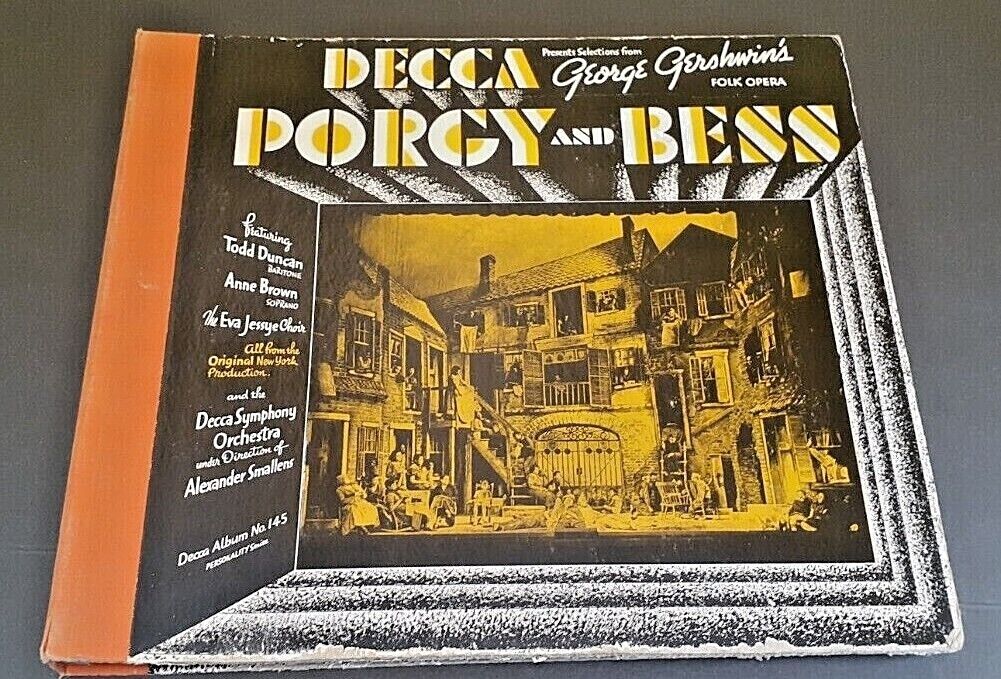
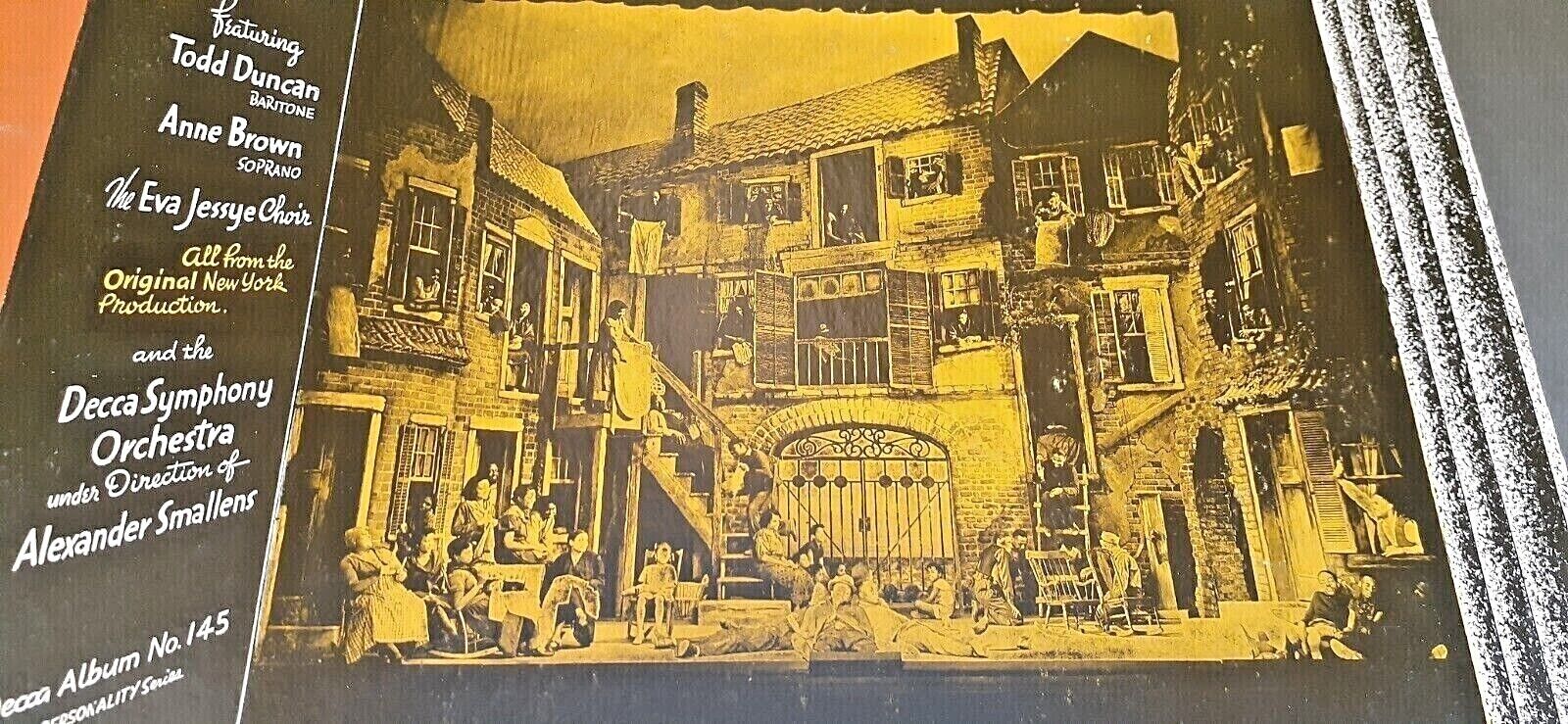
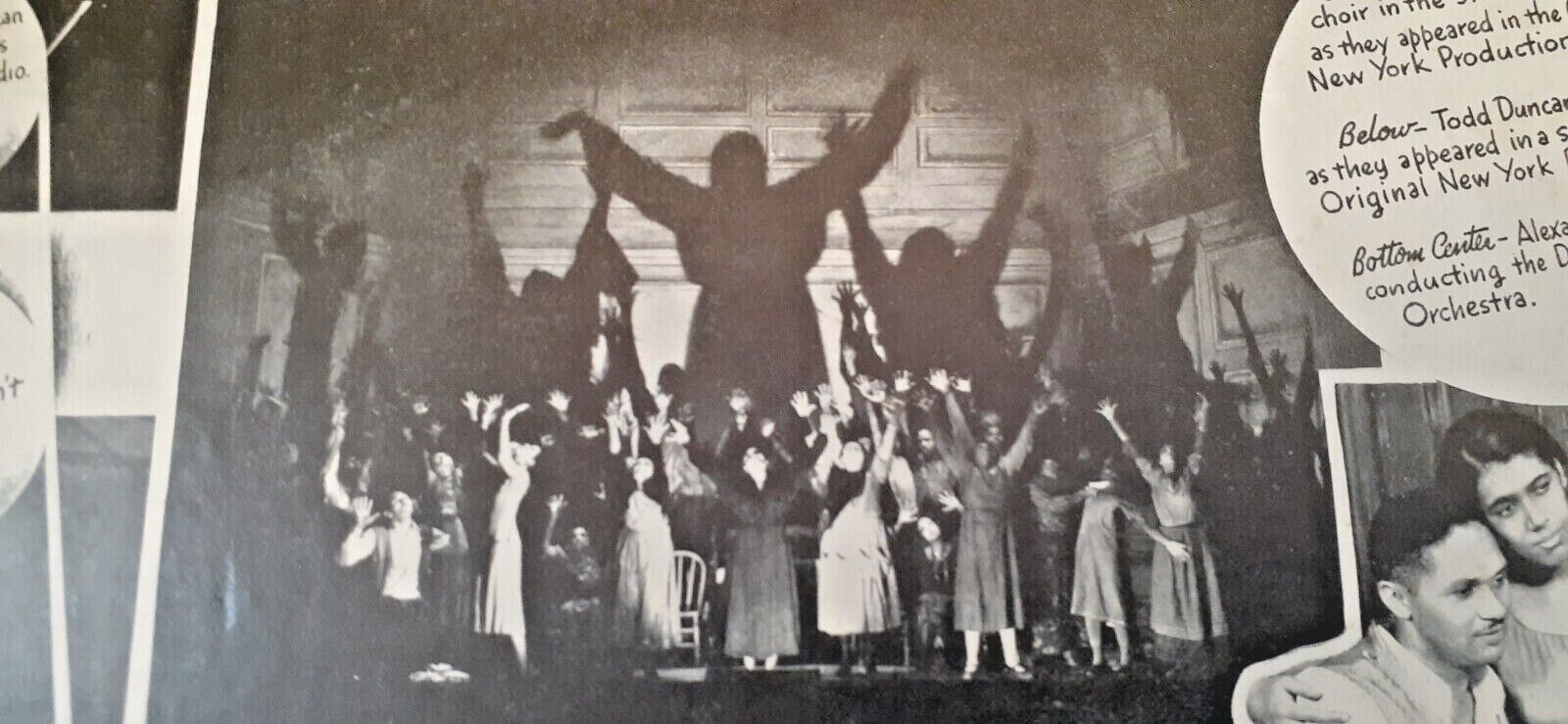
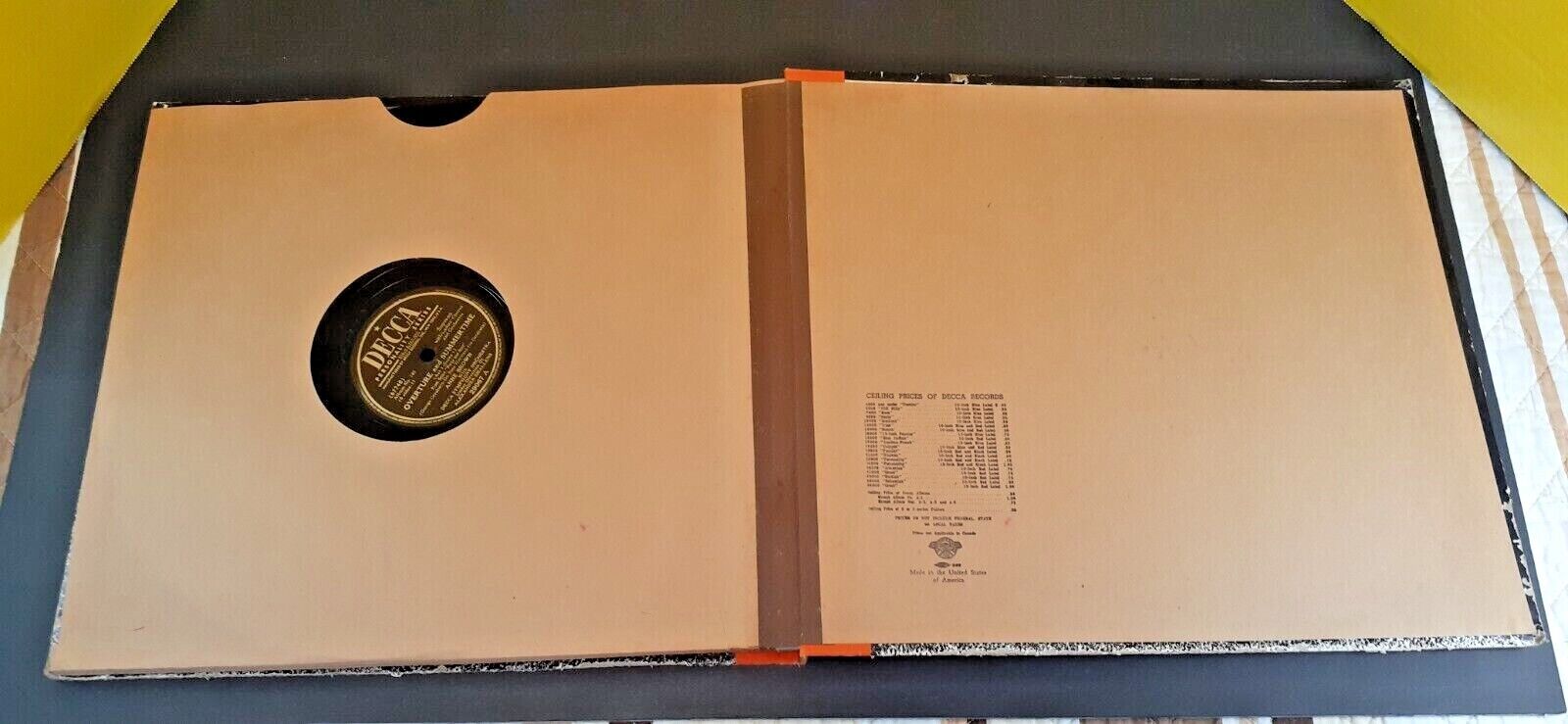
Vintage George Gershwin PORGY & BESS Decca Albums Box Set, no. 145 featuring Todd Duncan & Anne Brown, Decca Symphony Orchestra, Alexander Smallens (Director), The Eva Jessye Choir Original Cast from the first production in New York City, New York (4 Records)
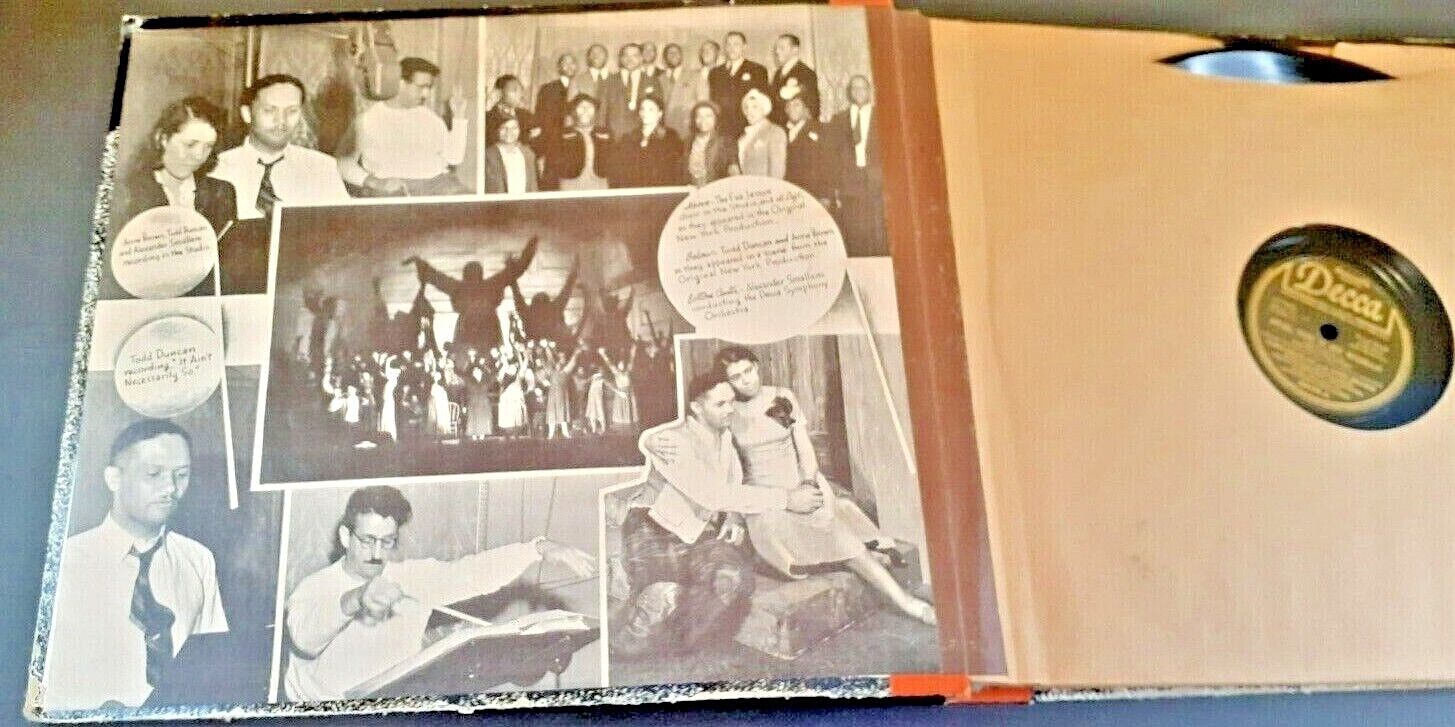
Original issue, Original Cast recordings on Four Decca 12" 78 rpm records (145) with extensive production photographs in very good condition. Records have been tested and play very well, Outer binding and sleeves are solid, slight discoloration at spine, edges and corners show signs of usage, some bumping and vintage wear. Item comes from a smoke-free estate and has been properly cleaned and sanitized (UV) by Katerina Kollectibles staff. See pictures for details, thank you. The principals Porgy, Todd Duncan and Bess, Anne Brown, perform all the cast roles on the Decca Albums. Label: Decca – no. 145
Content: Style: Musical, Operetta Side 1: Overture and Summertime (Act 1, Scene 1), Anne Brown, (67740) Side 2: My Man's Gone Now (Act 1, Scene 2), Anne Brown with Eva Jessye Choir, (67738) Side 3: I Got Plenty O Nuttin' (Act 2, Scene 1), Todd Duncan with Eva Jessye Choir, (67744) Side 4: Buzzard Song (Act 2, Scene 1), Todd Duncan with Eva Jessye Choir, (67737) Side 5: Bess, You Is My Woman (Act 2, Scene 1), Todd Duncan and Anne Brown, (67742) Side 6: It Ain't Necessarily So (Act 2, Scene 2), Todd Duncan, (67741) Side 7: The Requiem (Act 3, Scene 1), Eva Jessye Choir, (67743) Side 8: Porgy's Lament and Finale, Todd Duncan, (67739)
Art Direction – Vartan (4) Composed By – George Gershwin Conductor – Alexander Smallens Libretto By – DuBose Heyward Lyrics By – Ira Gershwin Orchestra – Decca Symphony Orchestra Recorded May, 1940
About Porgy and Bess "Porgy and Bess is an English-language opera by American composer George Gershwin, with a libretto written by author DuBose Heyward and lyricist Ira Gershwin. It was adapted from Dorothy Heyward and DuBose Heyward's play Porgy, itself an adaptation of DuBose Heyward's 1925 novel of the same name. Porgy and Bess was first performed in Boston on September 30, 1935, before it moved to Broadway in New York City. It featured a cast of classically trained African-American singers—a daring artistic choice at the time. A 1976 Houston Grand Opera production gained it a renewed popularity after languishing in the doldrums of the 1960s and early 1970s, and it is now one of the best known and most frequently performed operas.
The libretto of Porgy and Bess tells the story of Porgy, a disabled black street beggar living in the slums of Charleston. It deals with his attempts to rescue Bess from the clutches of Crown, her violent and possessive lover, and Sportin' Life, her drug dealer. The opera plot generally follows the stage play.
There were tryouts in Boston before proceeding to New York, and here the first of a number of unfortunate cuts were made to trim "Porgy" down to Broadway size, including the opening "Jazzbo Brown" sequence, the "Buzzard Song" and the wrenching lament in the finale, "Oh Bess, Oh Where's My Bess?" The pared-down opera opened in Boston on September 30, 1935, to audience and critical acclaim. "Gershwin's most important contribution to music," said the Christian Science Monitor. "Gershwin must now be accepted as a serious composer," noted the Boston Transcript. The New York opening followed on Oct. 10. The Manhattan audience was just as enthusiastic, but the New York press was not. Thus began the great "Porgy" debate. The critics were unable to accept the piece as an opera. They were upset by what they perceived as a disturbing and unconventional blend of musical comedy and opera. "Porgy," however, lasted 124 performances.
In the years following Gershwin's death, Porgy and Bess was adapted for smaller-scale performances. It was adapted as a film Porgy and Bess in 1959. Some of the songs in the opera, such as "Summertime", became popular and are frequently recorded. In the late 20th and early 21st centuries, the trend has been toward productions with greater fidelity to Gershwin's original intentions. Smaller-scale productions also continue to be mounted. A complete recorded version of the score was released in 1976; since then, it has been recorded several times.
Although the best tunes from "Porgy and Bess," such as "Summertime" and "Ain't Necessarily So," continued to be loved and sung, the opera as a whole went into an eclipse. When it was revived in the 1940s on Broadway, it was in a two-act version with spoken dialogue and further cuts. The world was still not ready to accept "Porgy" for what it was -- grand opera. Beyond this, further acceptance was delayed because many blacks in their struggle for equal rights during the 1950s and 1960s were offended by the portrayal of their race presented in "Porgy."
Returns accepted in original, shipped condition. We welcome any reasonable offers.
Thank you for visiting Katerina Kollectibles!
price rating