W War I It's a long Way to BERLIN BUT Arthur Fields PEERLESS Quartet COLUMBIA
$
25


Favourite Auctions
To save auctions to your favourites, please login
If you don't have an account, please register
Description
I am offering over 100 John Philip Sousa, Cornet, Trombone and Brass Ensemble Records and records by Sousa's Band from 1903 to 1930.
Click on this link to see more NATIONAL ANTHEMS and War Related Records!
Click on this link to see more Sousa and Brass Band Records
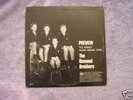
L-R: John H. Meyer, Henry Burr, Frank Croxton, Albert Campbell
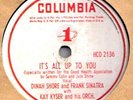
Two anxious W War I Patriotic songs recorded at the US Entry into W War 1 1917 by Arthur Fields and the Peerless Quartet
The Peerless Quartet was an American vocal group that recorded in the early years of the twentieth century. They formed to record for Columbia Records, where they were credited as the Columbia Quartet or Columbia Male Quartet. From about 1907, when they began to record for record labels other than Columbia, they were more widely known as the Peerless Quartet.
It's a long way to Berlin, but we'll get there
Leon Flatow (composer)
Arthur Fields (lyricist)
Arthur Fields (vocalist : tenor vocal)
Description: Male vocal solo, with orchestra
9/6/1917 New York, New York
So long Mother
Gus Kahn (lyricist)
Raymond B. Egan (lyricist)
Egbert Van Alstyne (composer)
Columbia Quartette (Vocal group)
Description: Male vocal quartet, with orchestra
9/11/1917 New York, New York Columbia A2383
NEW PROCESS issue Blue Gold Viva Tonal Columbia 10" 78 rpm record
Condition:
EXCELLENT MINUS, scuffs just a hint of greying, plays VERY QUIET lightest hiss
A SUPERB COPY
How Tin Pan Ally won the War
"It's a Long Way to Berlin, but We'll Get There!" is a World War I era song released in 1917. Arthur Fields wrote the lyrics. Leon Flatow composed the music.[1] Leo Feist, Inc. of New York City published the song. Rosenbaum Studios designed the sheet music cover. It features soldiers marching in formation. There is an inset photo of Maurice Burkhardt, Will J. Ward, Ed Morton, Jimmy Flynn, Willie Weston, or Francis Maguire that varies per edition.[2] There is another version of the cover known as the "Popular edition". It features a photo of Henry Bergman.[3]
It is interesting to follow World War 1 though the record issues of US companies: In 1914, with the US staying out, Record companies were tepid: you'll find the obligatory Marseillaise, Tipperary and other songs lamenting the fate of the Allies. Add to that some pro-allied propaganda, the lamenting MY BELGIAN ROSE (Belgium, invaded by the German Army, to circumvent French Defenses, was the KUWAIT of WW I), or the pro-French My Alsace-Lorraine (which had been ceded by France to Germany after the German Victory in the war of 1870).
Even some doubtful isolationist voices are heard: American Peace March.
All that changes in 1917 with the US joining the Allies: The whole roster of Top stars a called to duty, and you get a Barrage of Star Spangled banners by McCormack, Geraldine Farrar, the Harry Lauder War records, and again plaintive Battle records like IN Flanders Fields.
One interesting aspect, that lasted from 1917 through the early 20s is the experience of the American Boys overseas, especially in France: Jimmy Europes famous: How are you going to keep them down on the farm, once they have seen Paree, Joseph Smiths Oh Frenchy, Billy Murray's And he say OO-LA-LA Wee Wee & Frenchie in Yankee Land show a lasting influence of the French experience on the American spirit.
price rating