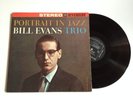
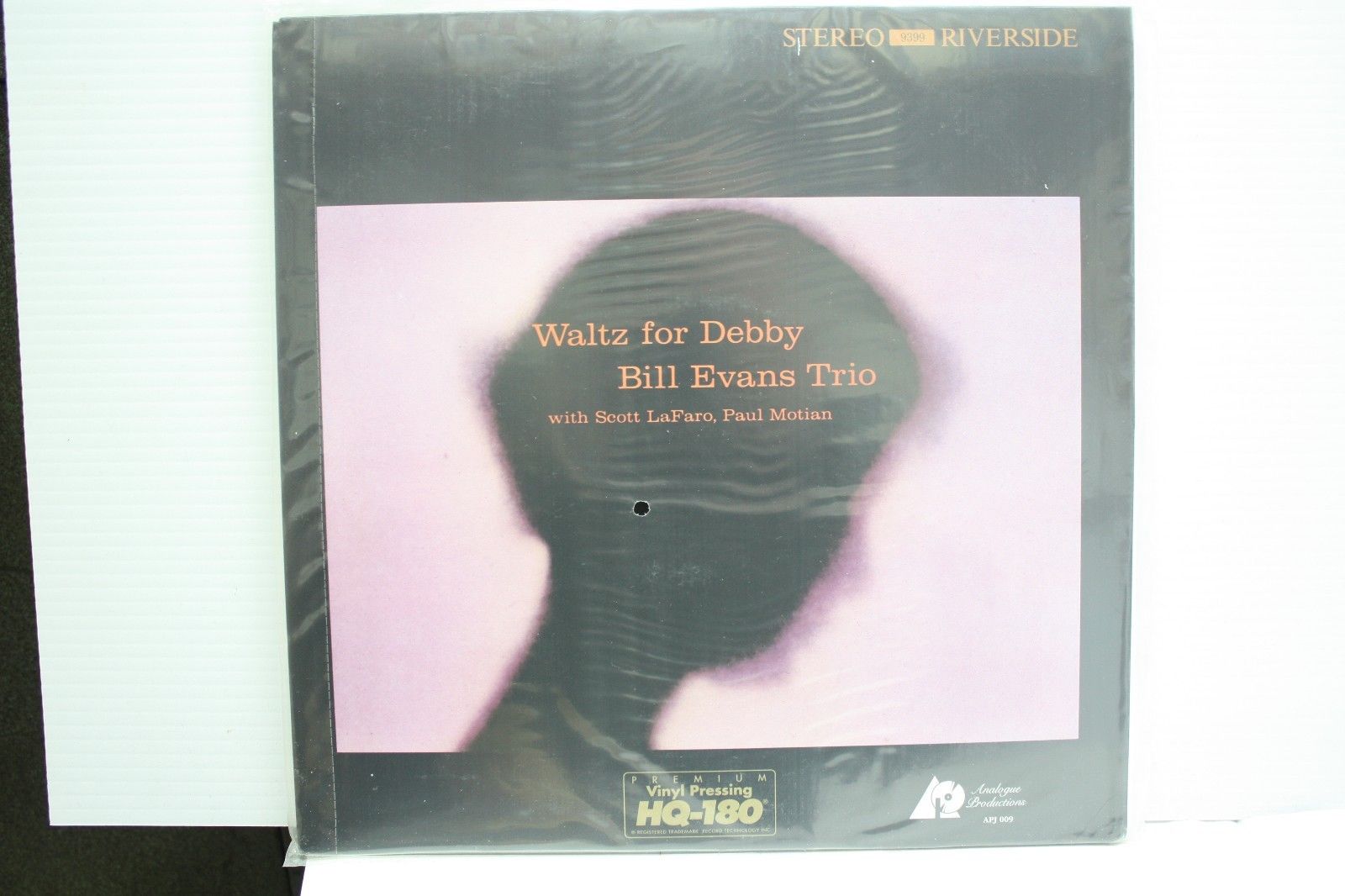
Waltz for Debby Bill Evans Trio - premium pressing - Analogue Production
$
305


Favourite Auctions
To save auctions to your favourites, please login
If you don't have an account, please register
Description
Waltz for Debby is an album by American jazz pianist Bill Evans and his Trio consisting of Evans, bassist Scott LaFaro, and drummer Paul Motian, originally released in 1962.
It is the afternoon of a Sunday in New York City, June 1961. Producer Orrin Keepnews, head of the independent jazz label Riverside, descends the stairs to the basement at 178 7th avenue, a small wedge-shaped room with low ceilings, known to jazz enthusiasts as the Village Vanguard. The simple looking room is an ideal spot for jazz performances. For unexplained reasons it has one of the best acoustics for a live setting, making it ideal for capturing on tape jazz artists who are booked to play the It is the afternoon of a Sunday in New York City, June 1961. Together with sound engineer Dave Jones they setup the Ampex portable tape machine on a table close to the bandstand. They have a moment of panic when the power to the tape recorder quits, but luckily it is quickly restored. They have a full day of recording ahead of them, for Sundays are known to feature the same artist playing two matinee and three evening sets. There is no room for errors, because this is the last day of a two-week engagement by an artist quite reluctant to go into a studio and record new material. And so unfolds the story of one of the most revered recordings in modern jazz, The Bill Evans Trio Live at the Village Vanguard.
Recorded at the Village Vanguard in 1961, shortly before Scott La Faro's death, Waltz for Debby is the second album issued from that historic session, and the final one from that legendary trio that also contained drummer Paul Motian
The album was the fourth and final effort from the unit—LaFaro died in a car accident just ten days after the live date at the Village Vanguard from which Waltz for Debby and its predecessor, Sunday at the Village Vanguard were taken. The loss of LaFaro hit Evans hard, and he went into a brief seclusion. When Evans returned to the trio format later in 1962, it was with Motian and noted bassist Chuck Israels.
The title track, a musical portrait of Evans' niece, became a staple of his live repertoire in later years. It originally appeared as a solo piano piece on Evans' debut album, New Jazz Conceptions. It remains what is likely Evans' most well-known song, one that he would play throughout his career.
This record is just good music - beautiful, meaningful music.
price rating