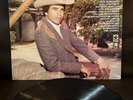
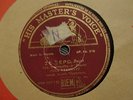
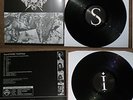
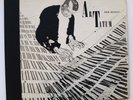
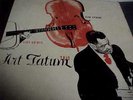
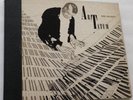
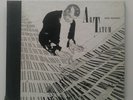
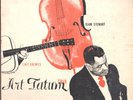
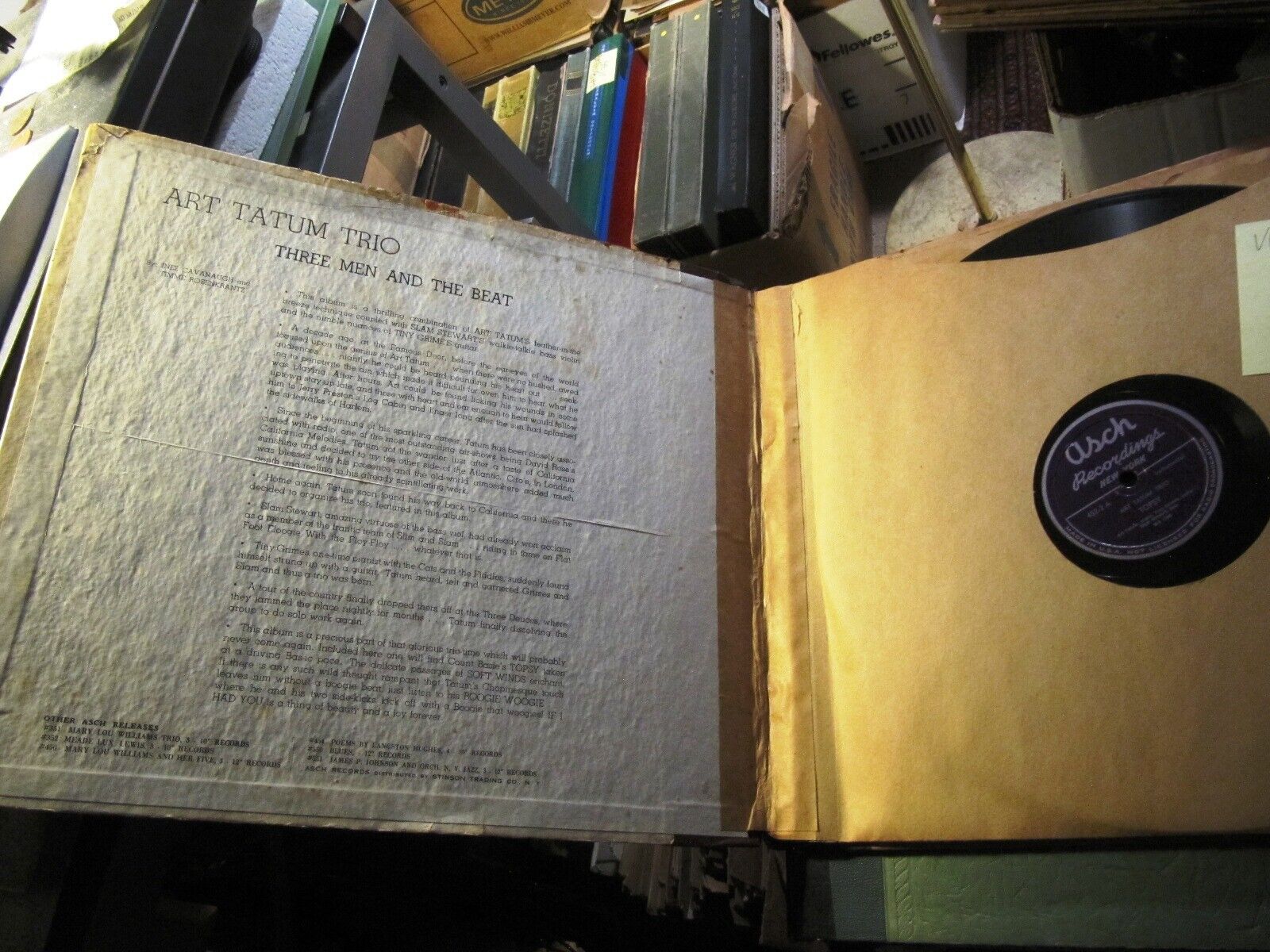
ART TATUM TRIO THREE MEN AND A BEAT Slam Stewart Tiny Grimes ASCH Album 452
$
25
Favourite Auctions
To save auctions to your favourites, please login
If you don't have an account, please register
Description
A series of great JAZZ piano records from early Tin Pan Alley to the 40s
Blind Jazz Pianist - and one of the greatest virtuosos of the Piano here in a small combo with Slam Stewart Bass and Tiny Grimes Bass in a great, cool jazz arrangement in great Asch Album 452
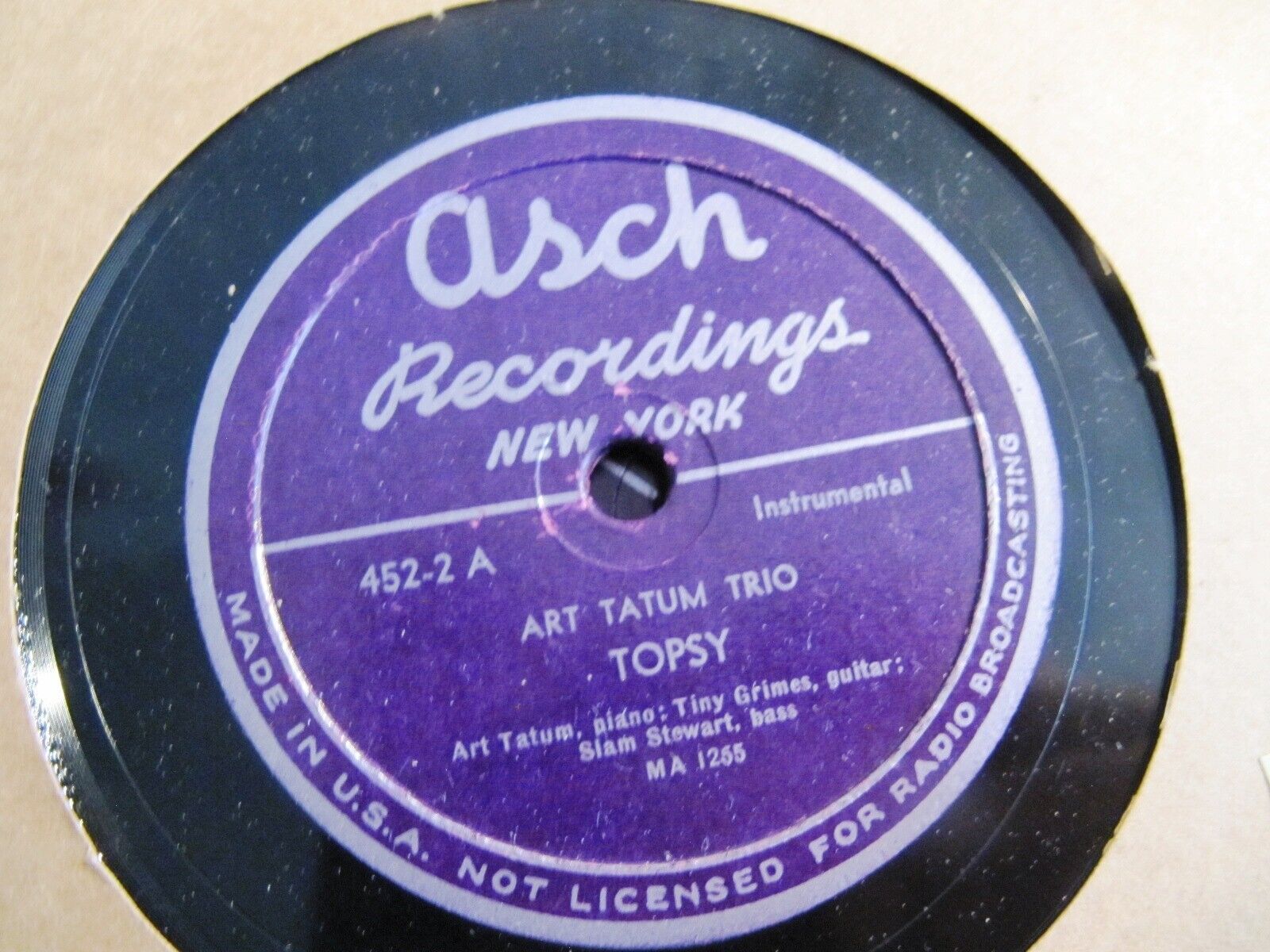
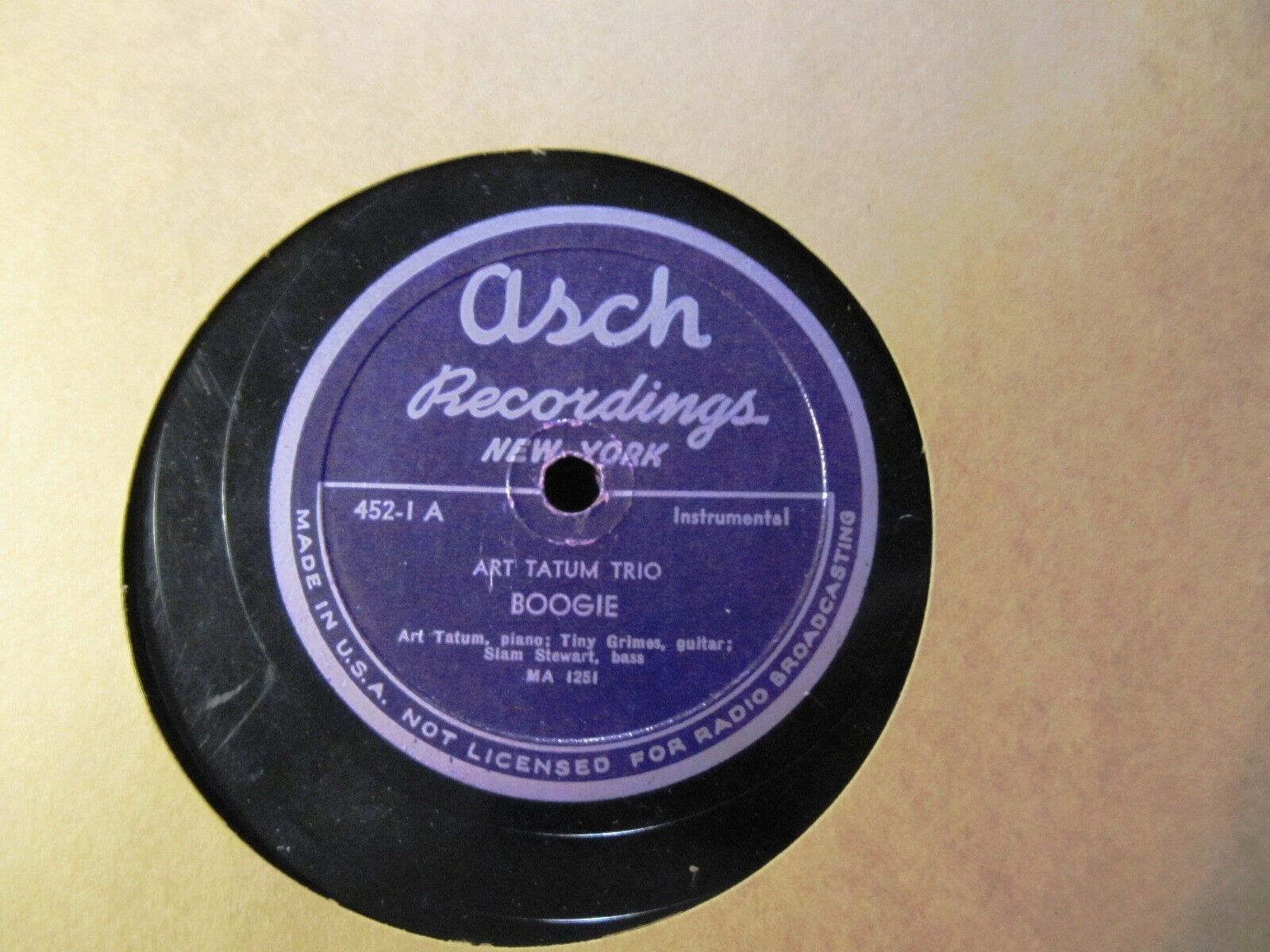
Art Tatum Trio ?– Art Tatum Trio
Label:
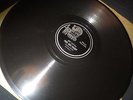
Asch Recordings ?– 452, Asch Records ?– 452
A Boogie
B If I Had You
C Topsy
D Soft Winds
Primis Player Placeholder
Credits
Artwork – David Stone Martin
Bass – Slam Stewart
Guitar – Tiny Grimes
Liner Notes – Inez Cavanaugh, Timme Rosenkrantz
Piano – Art Tatum
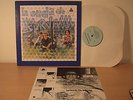
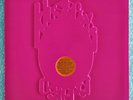
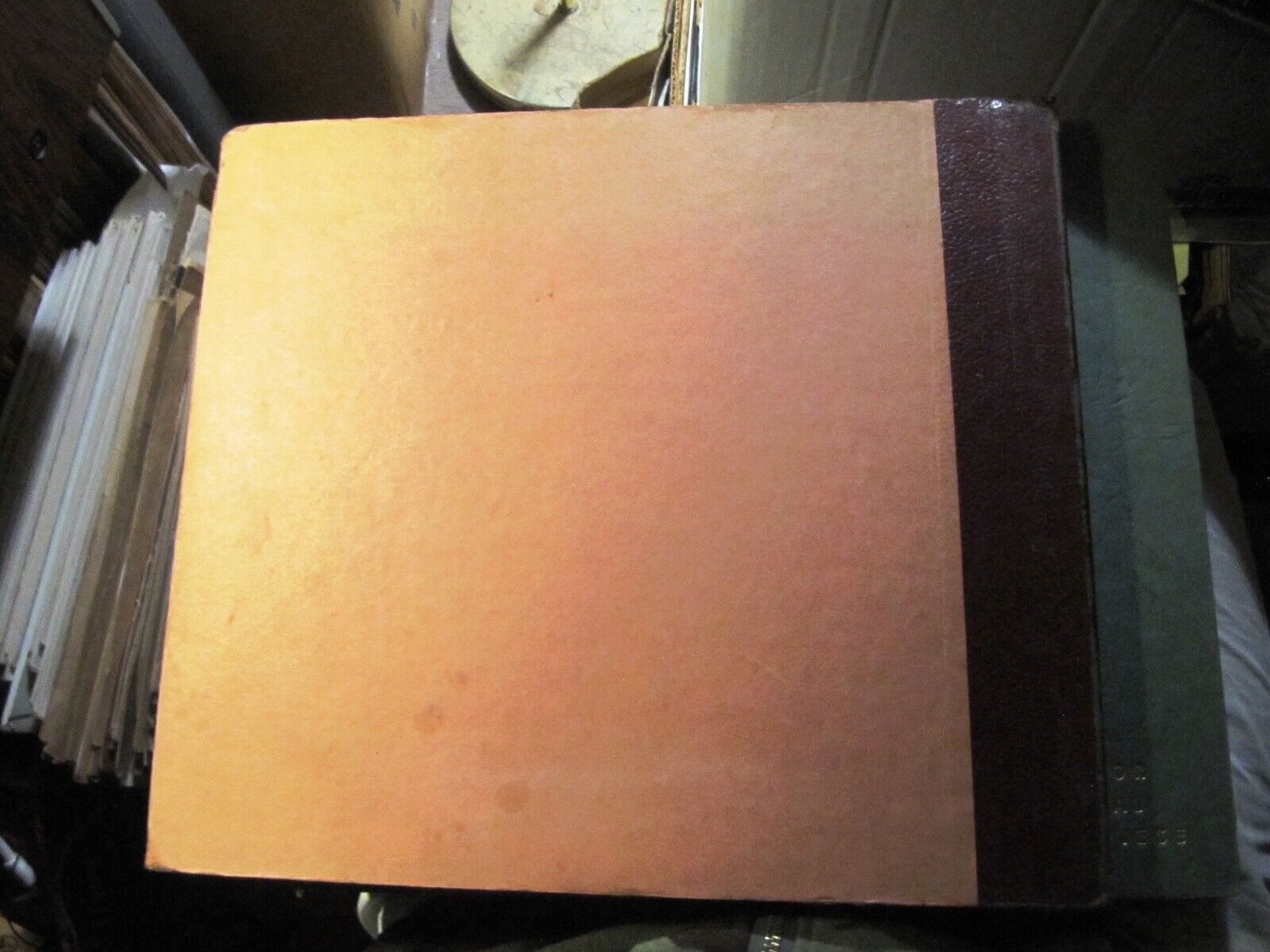
extended play 3x12" 78 rpm records w orig Album and Notes
Condition:
EXCELLENT MINUS unworn light rubs, plays very quiet some hiss. Album solid, some foxing on inside, edges rubbed, top and bottom of spine a little rough, small writing on front
Arthur Tatum Jr. (October 13, 1909 – November 5, 1956) was an American jazz pianist and virtuoso. The jazz pianist and educator Kenny Barron has commented that "I have every record [Tatum] ever made — and I try never to listen to them … If I did, I'd throw up my hands and give up!" Jean Cocteau dubbed Tatum "a crazed Chopin." Some jazz musicians liked to call him the eighth wonder of the world.
Biography
Tatum was born in Toledo, Ohio. From infancy he suffered from cataracts of disputed cause, which left him blind in one eye, and with only very limited vision in the other. Some surgery improved Tatum's eye condition to a degree, but this effort was reversed when he was assaulted in 1930 at age 20.[1] He played piano from his youth, and played professionally in Ohio and especially the Cleveland area before moving to New York City in 1932.
A child prodigy, Tatum learned to play by copying piano roll recordings his mother owned, playing by ear by the age of three. Tatum would learn both parts of a piece for four hands by feeling the keys depressed on the piano. By the age of six he was able to play songs originally performed as duets, unaware that there were supposed to be two players. In this way, he developed an incredibly fast playing style, without losing any of his accuracy. As a child Tatum was also very sensitive to the piano's intonation, and insisted it be tuned often.[1]
Tatum drew inspiration from his contemporaries James P. Johnson and Fats Waller, who exemplified the best stride piano style. Tatum's meteoric rise to the top began with his appearance at a cutting contest in 1933 that included Waller and others. Standard contest pieces included Johnson's "Harlem Strut" and "Carolina Shout," and Fats Waller's "Handful of Keys." Tatum was victorious, presenting his arrangement of "Tiger Rag." This was considered by Harlem musicians to be Tatum's ultimate contribution to stride piano, and taken as the most astonishing and original that would probably ever appear, in many respects, despite being an arrangement. In subsequent gatherings Tatum tended to prefer not to be followed by another pianist. He was not challenged further until Donald Lambert initiated a half-serious rivalry with him.
From the foundation of stride, Tatum made great leaps in terms of technique and theory, and honed a new style that would greatly influence later jazz pianists, such as Thelonious Monk, Oscar Peterson, Billy Taylor, Bill Evans, and Chick Corea. Tatum's extensive use of the pentatonic scale, for example, may have inspired later pianists to further mine its possibilities as a device for soloing.
Tatum introduced a strong, swinging pulse to jazz piano, as well as other new sounds in his improvisation and self-accompaniment. Tatum rarely abandoned the original melodic lines of the songs he played, preferring instead to feature innovative reharmonization (changing the chord progressions supporting the melodies). Occasionally, Tatum's reharmonizing was simply a matter of altering the root movements of a tune so as to more effectively apply already commonly used chords from early jazz and classical music. Yet many of Tatum's harmonic concepts and larger chord voicings were well ahead of their time in the 1930s (except for their partial emergence in popular songs of the jazz age) and they would be explored by bebop-era musicians 20 years later. Tatum worked some of the upper extensions of chords into his lines, and this practice was further developed by Bud Powell and Charlie Parker, which in turn was an influence on the development of 'modern jazz'. He also had a penchant for filling spaces within melodies with trademark runs and embellishments. The notes and phrases within those embellishments made genuine musical statements praised by jazz and classical audiences alike. The speed of the techniques, however, made them somewhat enigmatic and difficult for ensemble playing.
Tatum tended to record unaccompanied, partly because relatively few musicians could keep up with his lightning-fast tempos and advanced harmonic vocabulary. He formed a trio during the early 1940s with bassist Slam Stewart and guitarist Tiny Grimes. During their short period of time together, they recorded a number of 78 rpm discs that feature interplay among the musicians.
Transcriptions of Tatum are popular and are often practiced assiduously. But perhaps because his playing was so difficult to copy, only a handful of musicians — such as Oscar Peterson, Johnny Costa, Johnny Guarnieri, Francois Rilhac, Adam Makowicz, Steven Mayer and Dan Knight — have attempted to seriously emulate or challenge Tatum. Phineas Newborn's playing, such as his recording of Willow Weep For Me, is closely modelled on Tatum.
Tatum recorded commercially from 1932 until near his death, though the predominantly solo nature of his skills meant that recording opportunities were somewhat intermittent. Tatum recorded for Decca (1934–41), Capitol (1949, 1952) and for the labels associated with Norman Granz (1953–56). For Granz, he recorded an extended series of solo albums and group recordings with, among others, Ben Webster, Buddy DeFranco, Benny Carter and Lionel Hampton.
Acclaim
Tatum posthumously received the Grammy Lifetime Achievement Award in 1989.
When Tatum walked into a club where Fats Waller was playing, Waller stepped away from the piano bench to make way for Tatum, announcing, "I only play the piano, but tonight God is in the house." In addition, Russian composer Sergei Rachmaninoff, after hearing Tatum play, claimed he was the greatest piano player in any style. Other luminaries of the day such as Vladimir Horowitz, Artur Rubinstein and George Gershwin marveled at Tatum's genius. Charlie Parker (who helped develop bebop) was highly influenced by Tatum. When newly arrived in New York, Parker briefly worked as a dishwasher in a Manhattan restaurant where Tatum happened to be performing, and often listened to the legendary pianist.
price rating