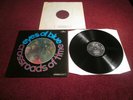
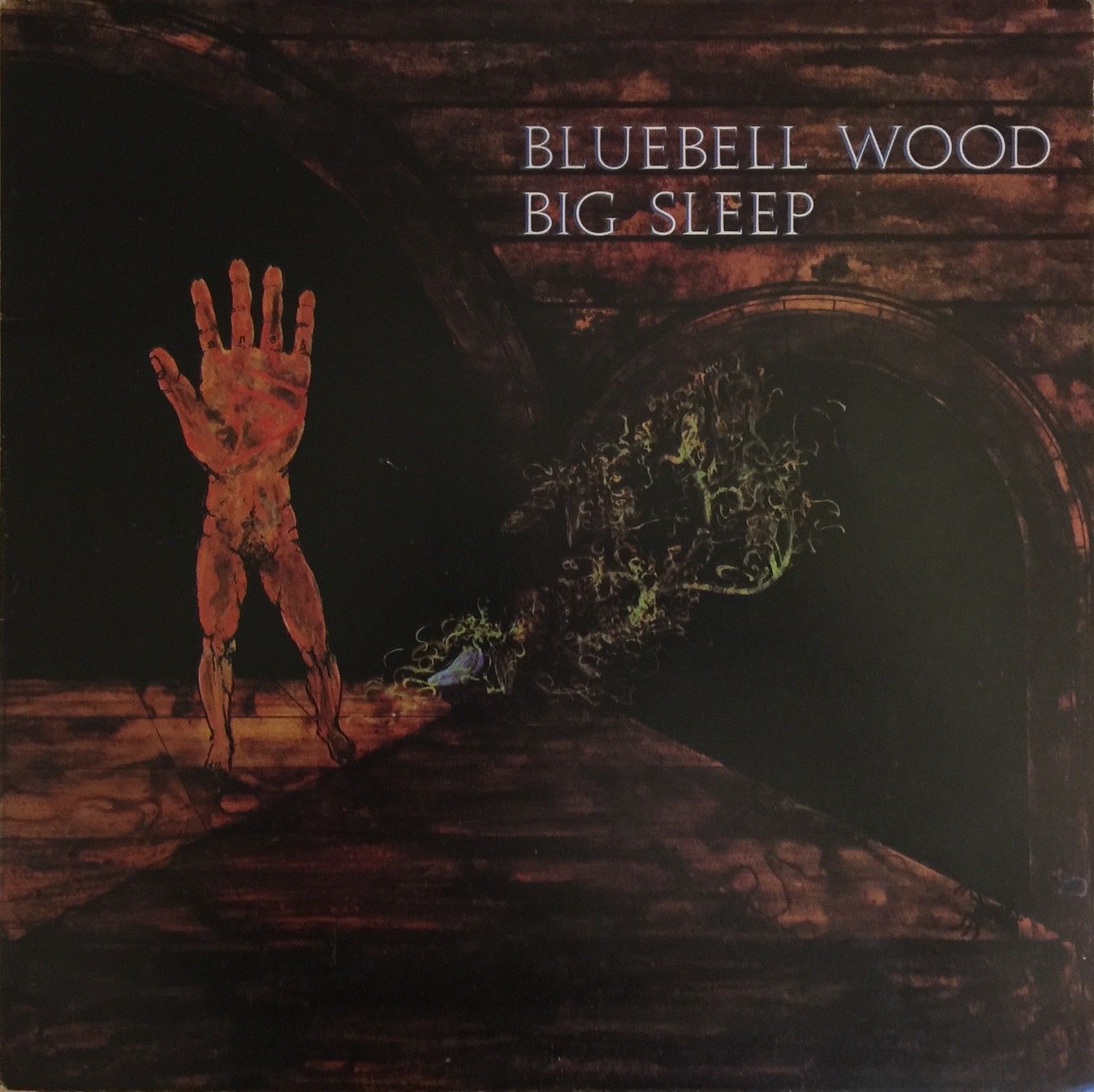
BIG SLEEP (aka EYES OF BLUE) BLUEBELL WOOD UK VINYL PEGASUS PEG-4 - 1971
£
227
$
301


Favourite Auctions
To save auctions to your favourites, please login
If you don't have an account, please register
Description
Big Sleep was a pseudonym for EYES OF BLUE. Here's the story...
WIKIPEDIA:
Born in Port Talbot, Phil Ryan played trombone in the National Youth Orchestra,[1] but his rock career started in 1964 when he formed the Port Talbot/Neath band The Smokestacks, with John Hockin, Gary Pickford-Hopkins, Peter Randal and Gerald Trolley.
Eyes of Blue[edit]
In 1966 Ryan and Hopkins - together with the drummer John Weathers - joined The Eyes of Blue, who then turned professional. They won the 1966 Melody Maker Beat Contest, winning a one-year record contract, but had to record songs chosen for them, rather than their own material, and neither of their singles, "Heart Trouble" / "Up And Down" and "Supermarket Full of Cans" / "Don't Ask Me To Mend Your Broken Heart", sold well.
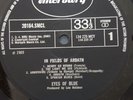
The Eyes moved from Decca to Mercury Records and recorded their first album Crossroads of Time in 1968, which was produced by Lou Reizner. The album included two tracks written by Graham Bond "Crossroads of Time" and "Love is the Law", who was a major influence on Ryan.[2] and who also wrote the album sleeve notes.[3] Despite poor sales, the album was "acknowledged as a major influence on the nascent Yes"[2] Reizner then used The Eyes as the backing band for American singer-songwriter Buzzy Linhart's album Buzzy.[4] They collaborated with Quincy Jones on the score of the movie Toy Grabbers, some tracks of which appear on their second album In Fields of Ardath (1969) and they also appeared in the movie Connecting Rooms.[5]
Through producer Lou Reizner, Ryan began getting work as an arranger, and wrote the string arrangements on Caetano Veloso's third self-titled album called either his 1971 album or A Little More Blue.
The Eyes of Blue's third and final album, Bluebell Wood, was released under the pseudonym Big Sleep, and the band broke up shortly afterwards.
In 1970 Ryan and Weathers joined Pete Brown & Piblokto! playing on one single, "Flying Hero Sandwich" / "My Last Band". When bassist Steve Glover broke his wrist, he was replaced by Michael "Will" Youatt,[6] and when Piblokto disbanded Ryan and Youatt, together with Clive John, who had just left Man, formed the first incarnation of Iorworth Pritchard and the Neutrons.
Man[edit]
In April 1972 Ryan and Youatt joined Man, Clive John re-joining at the same time.[7] The band recorded Be Good to Yourself at Least Once a Day which received good reviews. A party on 19 December 1972, with Dave Edmunds, Help Yourself and others, was issued as Christmas at the Patti, a double 10" album, which topped the "budget" album chart. Man then recorded the double album Back into the Future, half in the studio, and half live at The Roundhouse.[8] The album initially sold well, rising to No 23,[9] and was tipped to be album that would make the band, but pressing was restricted by a lack of plastic during the 1973 oil crisis.
DISCOGS:
Big Sleep (2) ?– Bluebell Wood
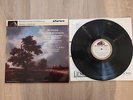
Label: Pegasus (3) ?– PEG 4 Format: Vinyl, LP, AlbumCountry: UK Released: 1971 Genre: Rock Style: Prog Rock
Tracklist Hide Credits
A1 Death Of A Hope Written-By – John Weathers A2 Odd Song Written-By – Gary Pickford-Hopkins A3 Free Life Written-By – John Weathers A4 Aunty James Written-By – Ritchie Francis A5 Saint & Sceptic Written-By – Ritchie Francis B1 Bluebell Wood Written-By – Ritchie Francis B2 Watching Love Grow Written-By – Ritchie Francis B3 When The Sun Was Out Written-By – Ritchie FrancisCredits
- Arranged By [Strings] – Phil Ryan (tracks: A1, A5)
- Artwork By – Steve Thomas Associates
- Bass, Piano, Vocals – Ritchie Francis
- Drums, Vocals – John "Pugwash" Weathers*
- Engineer – John Timperley
- Guitar – Raymond "Taff" Williams*
- Organ, Piano – Phil Ryan
- Producer, Photography By – Lou Reizner
- Vocals, Guitar – Gary Pickford-Hopkins