BO CARTER MEAN FEELING BLUES OKEH 8870 PRE WAR BLUES
$
305


Favourite Auctions
To save auctions to your favourites, please login
If you don't have an account, please register
Description
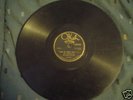
HI UP FOR AUCTION IS OKEH 8870 MEAN FEELING BLUES / SHES YOUR COOK BUT SHE BURNS MY BREAD SOMETIMES - BO CARTER - RECORD GRADES VG + - NO WARP NO CRACKS SOME SCRATCHES NONE LOOK TO BE VERY DEEP - THERE IS AN CHIP ON EDGE - LOW START NO RESERVE - ESTATE SALE FINE - PLEASE CHECK OUT MY AUCTIONS FOR ANOTHER BO CARTER SINGLE- BECAUSE OF THE NATURE AND FRAGILE OF 78'S IM REQUIRE INSURANCE - THANKS FOR LOOKING AND GOOD BIDDING - JOHN
Armenter "Bo Carter" Chatmon (March 21, 1893 — September 21, 1964) was a popular early blues musician. He was a member of the Mississippi Sheiks in concerts, and on a few of their recordings. Carter also managed that group, which included his brother, Lonnie Chatmon, on fiddle and occasionally Sam Chatmon on bass, along with a non-relative, Walter Vincson, on guitar and lead vocal.
[edit] Career
Since the 1960s, Carter has become best known for his bawdy songs such as "Banana in Your Fruit Basket", "Pin in Your Cushion", "Your Biscuits Are Big Enough for Me" and "My Pencil Won't Write No More". However, his output was not restricted to risqué music. In 1928, he recorded the original version of "Corrine, Corrina", which later became a hit for Big Joe Turner and has become a standard in various musical genres.
Carter and his brothers (including pianist Harry Chatmon, who also made recordings) first learned music from their father, ex-slave fiddler Henderson Chatmon, at their home on a plantation between Bolton and Edwards, Mississippi. Their mother, Eliza, also sang and played guitar.
Carter made his recording debut in 1928, backing Alec Johnson. Carter soon was recording as a solo artist, and became one of the dominant blues recording acts of the 1930s, recording more than 100 sides. He also played with and managed the family group, the Mississippi Sheiks, and several other acts in the area. He and the Sheiks often played for whites, playing the pop hits of the day and white-oriented dance material, as well as for blacks, using a bluesier repertoire.[citation needed]
Carter went partly blind, sometime in the 1930s. He settled in Glen Allan, and, despite his vision problems, did some farming, but also continued to play music and performed, sometimes with his brothers. Carter moved to Memphis, and worked outside music in the 1940s.
Carter suffered strokes and died of a cerebral hemorrhage at Shelby County Hospital, Memphis, on September 21, 1964.
price rating