EARLY 1910s 78 rpm phonograph records in good shape PARAMOUNT GREY GULL VICTOR
$
20
Favourite Auctions
To save auctions to your favourites, please login
If you don't have an account, please register
Description
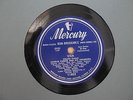
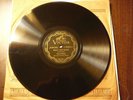
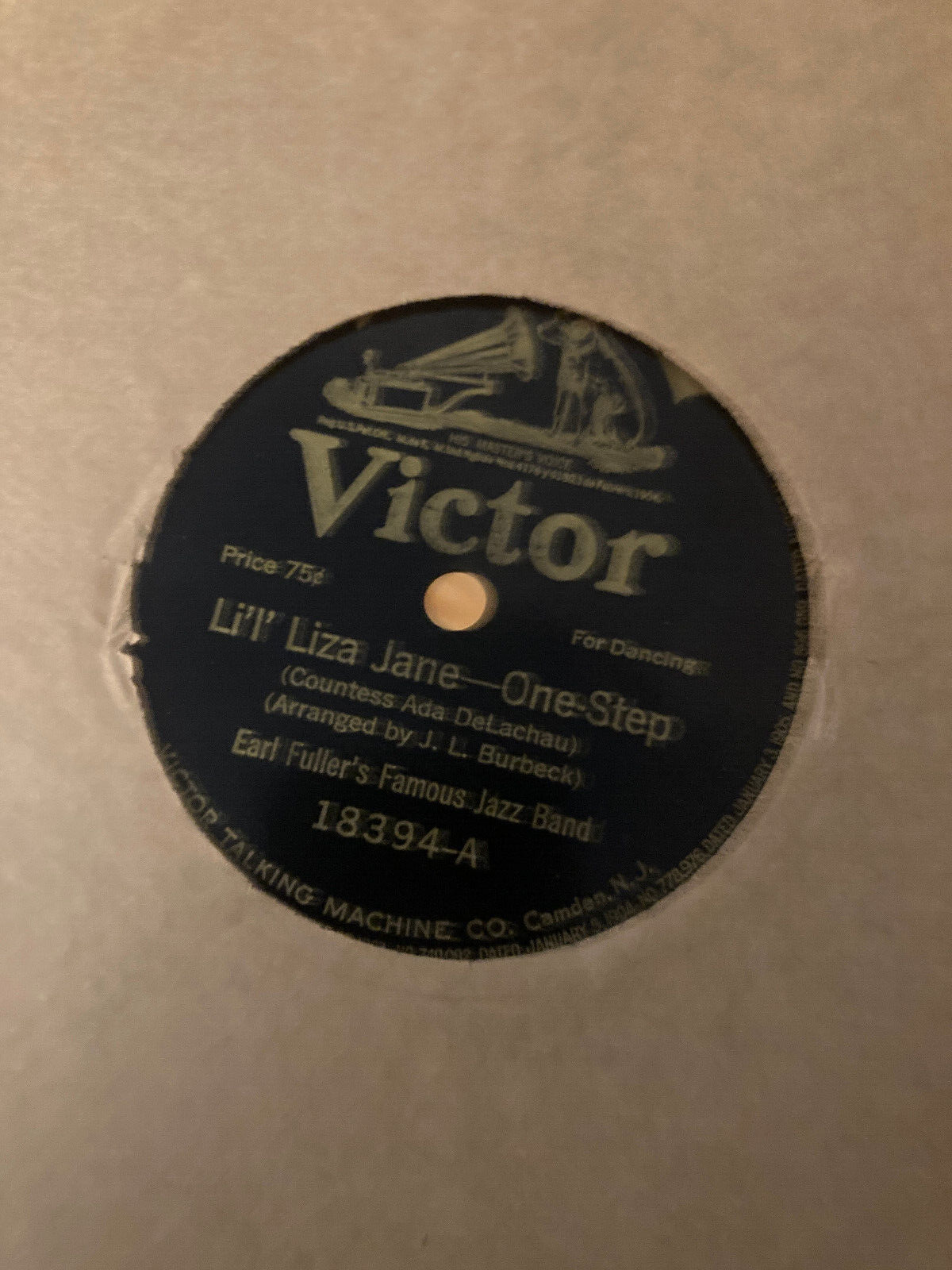
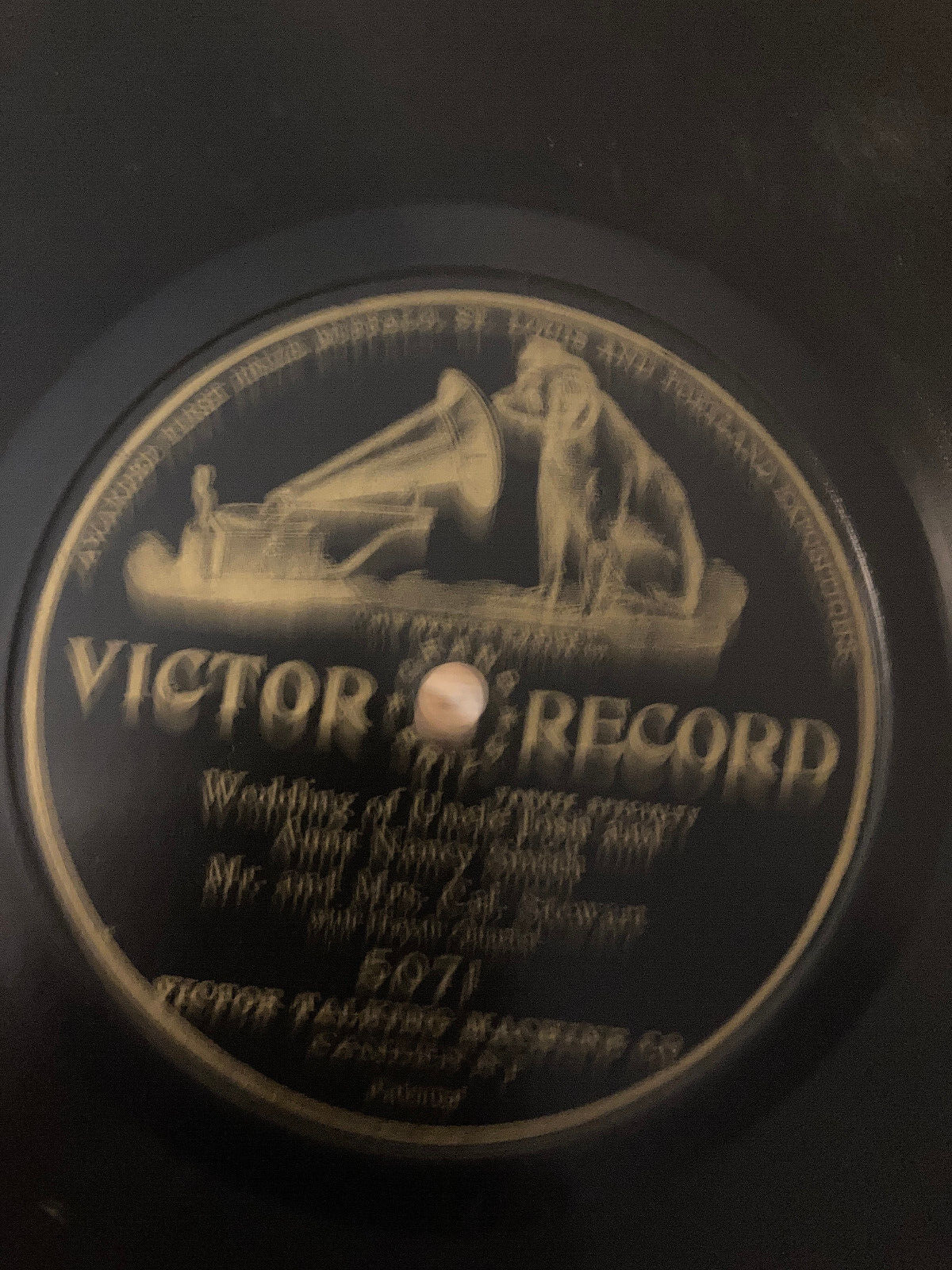
These are all pretty old 78s, most in VG or better shape, see descriptions below. A few are one-siders
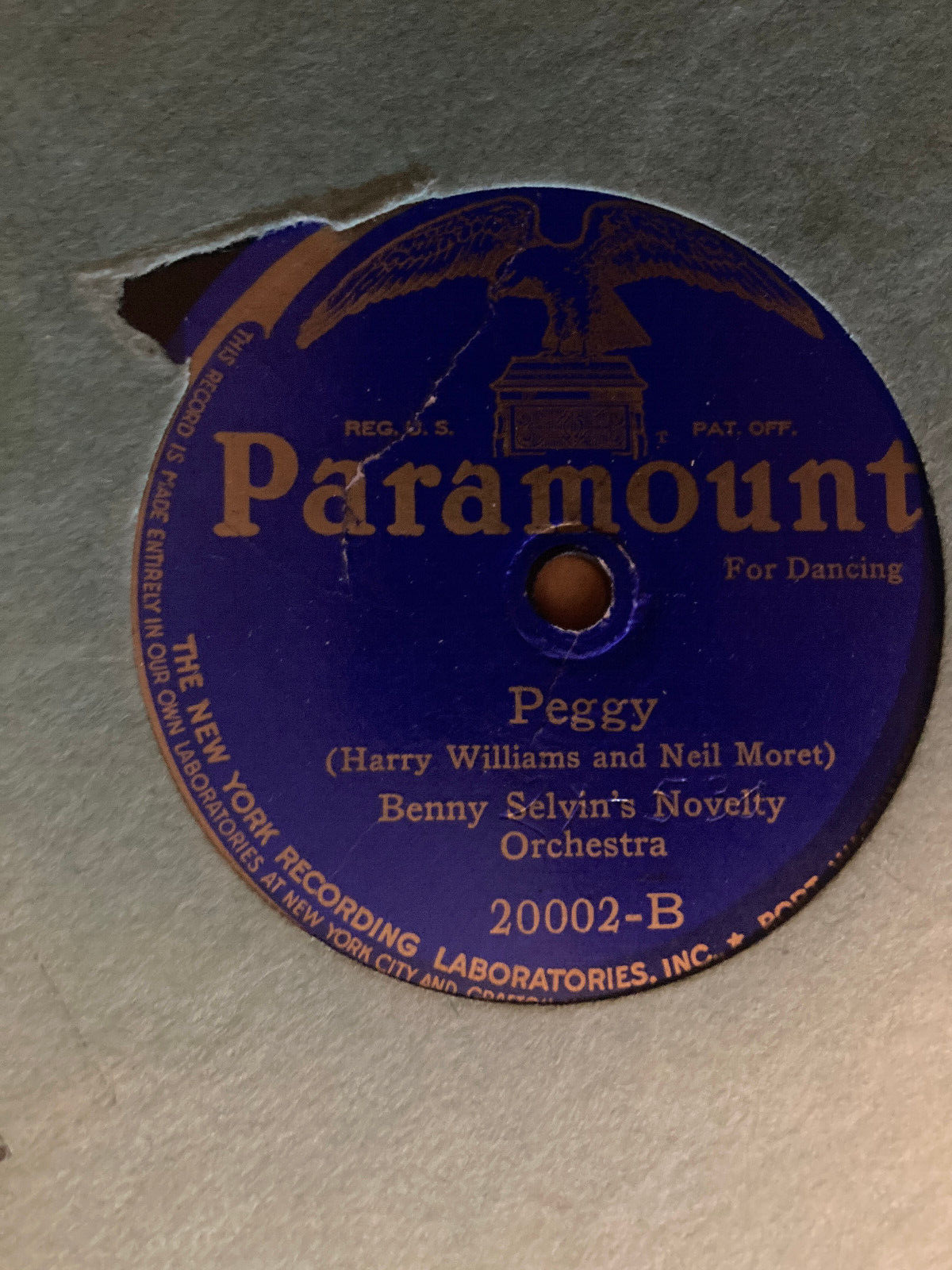
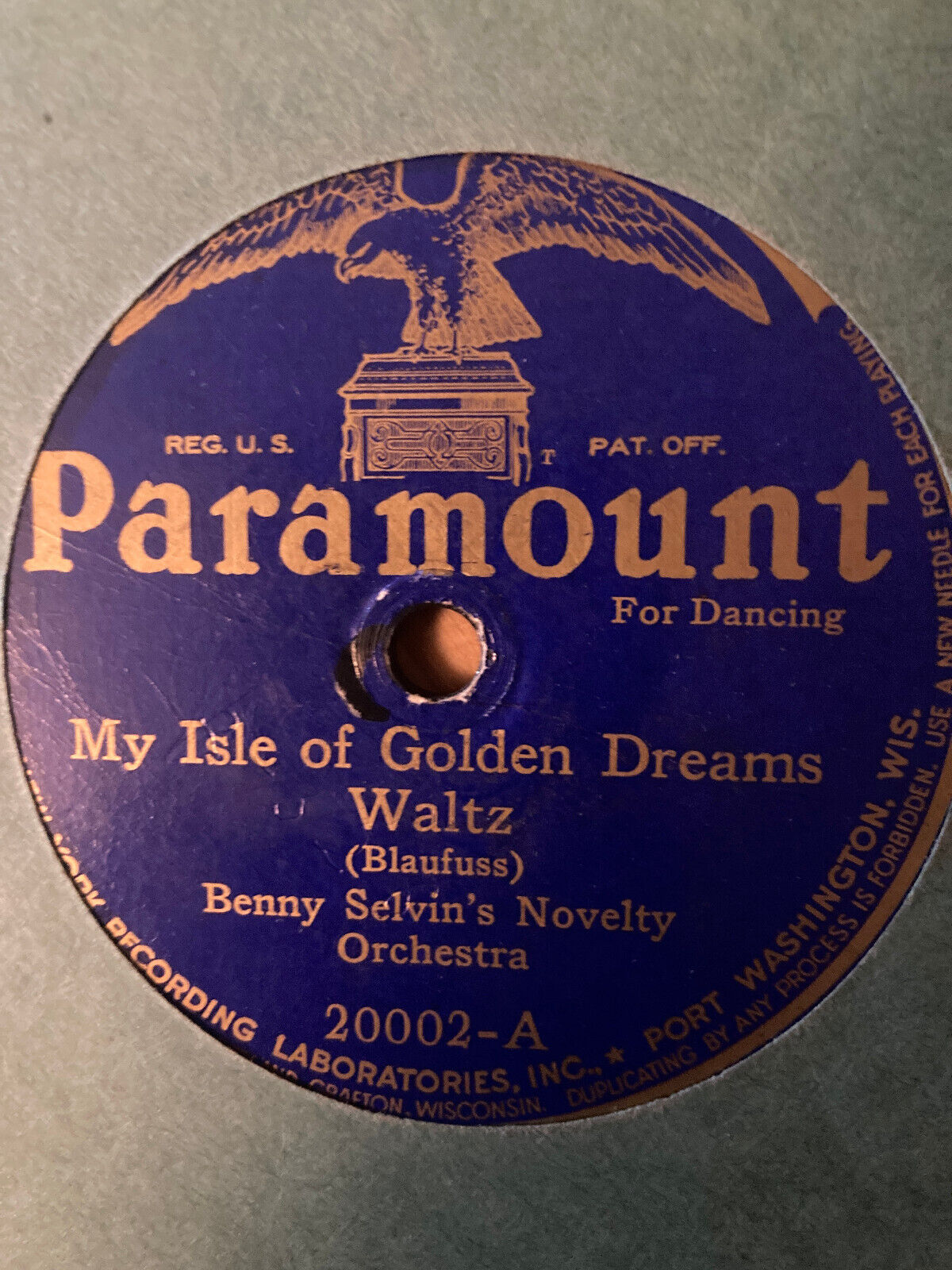
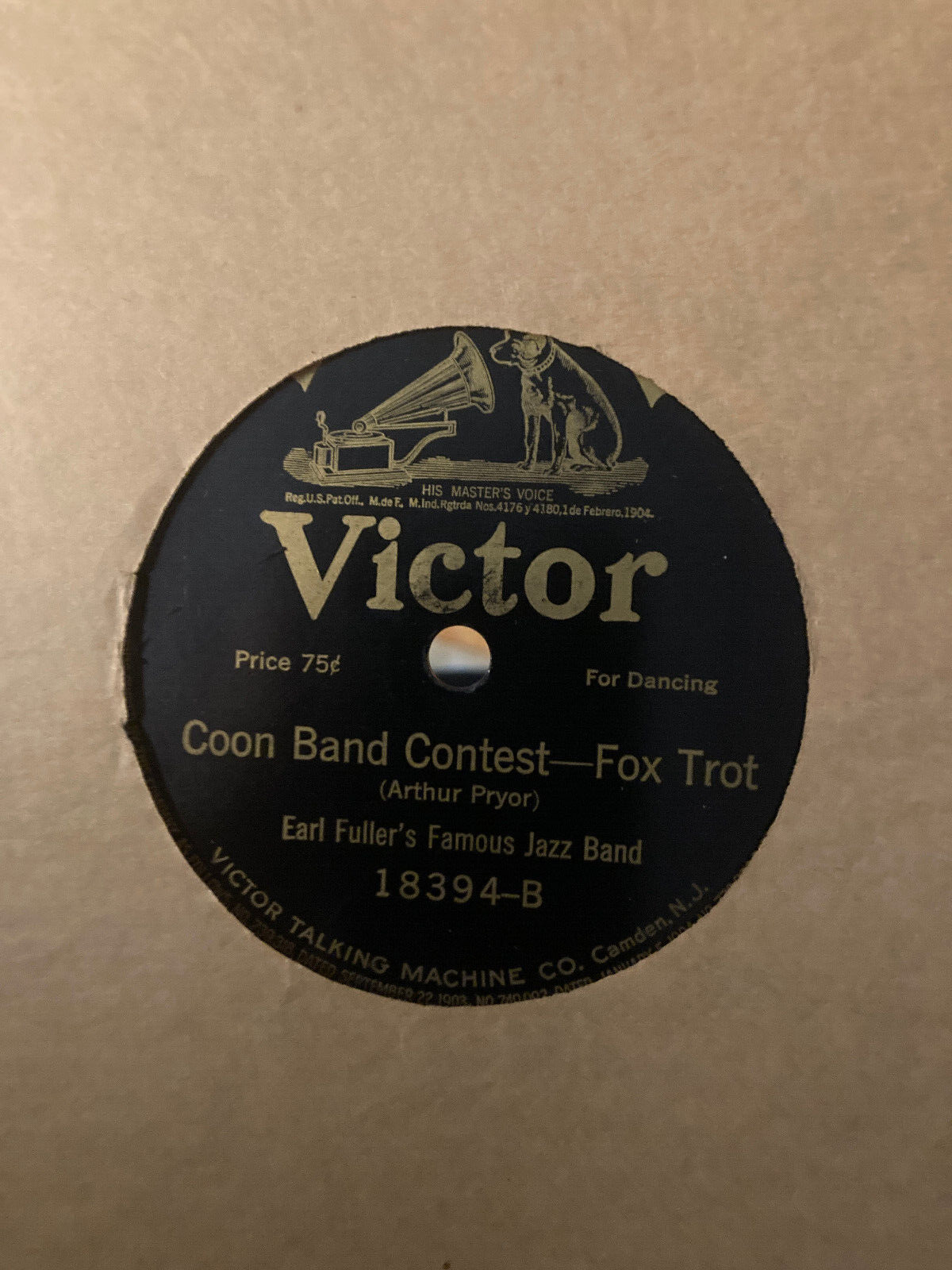
1. VICTOR 18394 Earl Fuller's Famous Jazz Band E- / E- 2. VICTOR 5071 Yankee specialty Cal stewart V+ 3. VICTOR 5122 Christy Minstrels minstrel 3 V+ 4. GREY GULL 4027 red wax V? V+? can't visually grade 5. GREY GULL 4042 V looks like a new label pasted over old 6. SILVERTONE 2262 V++/ V+ 7. PARAMOUNT 20002 Ben Selvin's V+ / V+
FREE SHIPPING
WIKIPEDIA:
Christy's Minstrels, sometimes referred to as the Christy Minstrels, were a blackface group formed by Edwin Pearce Christy, a well-known ballad singer, in 1843,[1] in Buffalo, New York. They were instrumental in the solidification of the minstrel show into a fixed three-act form.[2] The troupe also invented or popularized "the line", the structured grouping that constituted the first act of the standardized three-act minstrel show, with the interlocutor in the middle and "Mr. Tambo" and "Mr. Bones" on the ends.
Early years
In 1846 they first performed in Polmer's Opera House in New York City. From March 1847, they ran for a seven-year stint at New York City's Mechanics' Hall (until July 1854).[citation needed]
After performing at a benefit performance for Stephen Foster in Cincinnati, Ohio, on August 25, 1847, the group specialized in performances of Foster's works. Foster sold his song "Old Folks at Home" to Christy for his exclusive use. The troupe's commercial success was phenomenal: Christy paid Foster for the exclusive rights to the song.[3]
Besides Christy himself, the troupe originally included Christy's stepson George Christy, often considered the greatest blackface comic of the era. When by September 1855 George and Edwin Christy had retired from the group, the company continued under the name of 'Christy's Minstrels', until Edwin Christy took out an injunction to prevent them.[4] Edwin Christy was emotionally affected by the American Civil War, and committed suicide in 1862.[5]
In Britain and Ireland
1874 AdvertisementJ. W. Raynor and Earl Pierce formed a new troupe, using many of the former Christy Minstrel members. It opened in London, England, as "Raynor & Pierce's Christy Minstrels" at the St. James's Theatre on 3 August 1857. They then performed at the Surrey Theatre and later the "Polygraphic Hall" on King William Street, where they appeared for ten months. "Nellie Grey" by Michael Balfe, as sung by Raynor, became popular. In 1859, the troupe moved to the St. James's Hall (Liverpool), performing for another four months and then touring the British provinces. It then returned to Polygraphic Hall, disbanding in August 1860. The success of this troupe led to the phrase "Christy Minstrels" coming to mean any blackface minstrel show. Soon, four new companies were formed, each claiming to be the "original" Christy Minstrels, because they each boasted one or two former members of the old troupe. One group played in Dublin at the Chester Theatre in 1864, moving to London at the Standard Theatre in Shoreditch in 1865. The Dublin performances were evidently popular enough that James Joyce mentions them in his short story collection Dubliners and alludes to them on the opening page of Finnegans Wake. Three months later, it moved to St. James's Hall, where it began a run of 35 years until 1904. Eventually, the original members of that troupe retired or died, leaving only "Pony" Moore and Frederic Burgess surviving into the 1870s. Therefore, the troupe changed its name to the "Moore & Burgess's Minstrels". Other groups continued to use the title "Christy", but historian Frank Andrews describes their quality as poor. Some of them continued to perform into the twentieth century.[6]
George Orwell, in The Road to Wigan Pier (published 1937), describes a coal miner's "Christy-minstrel face, completely black except for very red lips".
Performance style
Christy's novel three-part shows began with a "walkaround", the company marching onto the stage singing and dancing. A staple of the walkaround was the cakewalk, which white audiences loved despite not realizing that it originated with plantation slaves imitating their masters' walks. The troupe was then seated in a semicircle, with one member on each end playing the tambourine or the bones. The endmen were named Brother Tambo and Brother Bones, and they engaged in an exchange of jokes between the group's songs and dances. It was customary for Tambo to be slim and Bones to be fat. A character called Mr. Interlocutor sat in the middle of the group, acting as the master of ceremonies. As the interlocutor took his place in the middle of the semicircle he uttered the time-honored phrase: "Gentlemen, be seated. We will commence with the overture." During the performance he conducted himself in a dignified manner that contrasted well with the behavior of the rowdy endmen.
Part two (the "olio") was the variety section, a precursor to vaudeville. It included singers, dancers, comedians and other novelty acts, as well as parodies of legitimate theater. A preposterous stump speech served as the highlight of this act, during which a performer spoke in outrageous malapropisms as he lectured. The performer's demeanor was meant to be reminiscent of the hilarious pomposity of Zip Coon; he aspired to great wisdom and intelligence, but his hilarious mangling of language always made him appear foolish and ignorant.
Part three ended the show with a one-act play, typically a vignette of carefree life on the plantation. After Uncle Tom's Cabin was published in 1852 and the play became famous, minstrel shows appropriated the major characters for sketches that changed the abolitionist themes in the original into an argument for the supposedly benign character of slavery.[7]
New Christy Minstrels
The New Christy Minstrels, a folk group from the 1960s, were named with reference to this group, but they did/do not perform in blackface.Benjamin Bernard Selvin (March 5, 1898 – July 15, 1980)[1] was an American musician, bandleader, and record producer. He was known as the Dean of Recorded Music.
According to The Guinness Book of World Records, Selvin recorded more musical sides (on 78-rpm discs) than any other person. One reason for this prolific output is that he recorded for dozens of different record labels during this productive time in the industry, using a different name for each label. His output has been estimated at 13,000 to 20,000 song titles.[2]
Biography and career
Selvin was born in New York City, United States,[3] the son of Jewish Russian immigrants. He started his professional life at age 15 as a fiddle player in New York City night clubs. Six years later, as leader of his own dance band, the Novelty Orchestra, he released what was later alleged to be the biggest-selling popular song in the first quarter-century of recorded music. "Dardanella" allegedly sold more than six million copies and an additional million pieces of sheet music—although in a joint interview with Gustave Haenschen, founding director of popular-music releases at Brunswick Records, Selvin described the alleged record-sales total as “nonsensical” and said the actual sales of “Dardanella” and other purported “million-sellers” in the 1920s was 150,000 discs. He was awarded a gold disc by the Recording Industry Association of America (RIAA) that was presented to Selvin on his retirement on March 14, 1963.[4][5]
Early career (1919–1927)
Selvin started recording for Victor in 1919. He proceeded to record for almost all record companies at the time including Paramount, OKeh, Emerson, Lyric, Arto, Cardinal, Vocalion, Pathe, Federal, Brunswick, Grey Gull, Banner (and the related dime store labels), and Columbia. From 1922 to 1925, over half of his records were on Vocalion, but he apparently did not have an exclusive contract with any of these labels until he signed with Columbia in 1927.[2]
Columbia
From 1927 to 1934 Selvin was artists and repertoire (A&R) director for Columbia Records, where his many productions included musicians Mannie Klein, Benny Goodman, Tommy Dorsey, Jimmy Dorsey, Joe Venuti, Eddie Lang, and Bunny Berigan. Many of these recordings are collectable and prized (especially those recorded in 1931–1934).[5][2]
There were incorrect reports that Ben Selvin's Band played under the name "Perley Stevens and his Orchestra". Perley Stevens occasionally played with Ben Selvin's Band and many others, including Jimmy and Tommy Dorsey Orchestras and Paul Whiteman's Band. During the Columbia era, Selvin recorded under many different names (for Columbia, OKeh, Odeon, Parlophone, Harmony, Diva, Velvet Tone, and Clarion) including:[6]
- The Broadway Nitelites
- The Knickerbockers
- The Columbians
- The Cavaliers
- The Radiolites
- Barney Trimble and his Oklahomans
- Jerry Mason and his Californians
- The Harmonians
- Rudy Marlow and his Orchestra
- Columbia Photo Players
- Frank Auburn and his Orchestra
- Kolster Dance Orchestra
- Lloyd Keating and his Music
- Earl Marlow and his Orchestra
- Ed Loyd and his Orchestra
- Ray Seeley and his Orchestra
- Sam Nash and his Orchestra
- Mickie Alpert and his Orchestra
- Johnny Walker and his Orchestra
- Chester Leighton and his Sophomores
- Wally Edwards and his Orchestra
- Roy Carroll and his Sands Point Orchestra
- Buddy Campbell and his Orchestra
- Golden Terrace Orchestra
- Bar Harbor Society Orchestra
- Ted Raph and his Orchestra
- Georgia Moonlight Serenaders
- Cloverdale Country Club Orchestra
- Ed Parker and his Orchestra
- Jerry Fenwyck and his Orchestra
After Columbia
Under his own name, Selvin had accepted an exclusive contract to Brunswick Records when the company's management decided to venture into radio with “The Brunswick Hour”, under the direction of Gus Haenschen. When it became clear to Brunswick's management that an urgent need existed for pre-recorded music programming for smaller radio stations unable to afford their own orchestras, Brunswick's general manager William A. Brophy agreed with the recommendations of his assistant secretary Percy L. Deutsch, popular-music director Haenschen, and arranger-conductor Frank Black to develop a library of high-quality recorded music for leasing to smaller radio stations. The new venture was called the World Broadcasting System, with newly-constructed recording facilities in Manhattan called Sound Studios, Inc. Haenschen persuaded Selvin to leave Brunswick to accept an offer from Columbia Records to become the company's Artists and Repertoire director while also serving as a silent partner in the World Broadcasting venture.
Selvin, who was known for his ability to write orchestral arrangements rapidly and to oversee multiple recording sessions, became a central figure in the success of World Broadcasting. His experience there led him to play a founding role in Muzak in the 1930s. In 1934 he was named Vice President of programming at Muzak in New York City.[5][2] He was musical director of Majestic Records beginning in 1947. At Columbia Records as A&R director and then vice-president, Selvin was in charge of the recordings of Frank Sinatra, Doris Day, Dinah Shore and Buddy Clark in the late 1940s and early 1950s.[2]
External audio You may hear Ben Selvin's collaboration with John Serry on his album Squeeze Play in 1956 Here on [link removed by eBay]In 1953, Selvin left his post as general manager in the Southern Music Publishing Co. and emerged as an A&R director at RCA Victor in charge of the company's popular Camden Records label as well as its RCA Thesaurus electrical transcriptions library.[7][8][9] Subsequently, he served as the musical director for a recording in 1954 with John Serry Sr. for RCA Thesaurus.[10][11][12] In 1954 Selvin also recruited another artist from the realm of easy listening music for the RCA Thesaurus library - George Melachrino.[13] In 1956 he served once again as musical director with Serry for another swing jazz album at Dot Records (See Squeeze Play).[14] As the decade came to a close, Selvin continued to expand the content of the RCA Thesaurus musical library by recruiting several orchestra leaders from the Big Band era including: Sammy Kaye, Freddie Martin and Lawrence Welk.[15][16][17] An agreement with the JATP impresario Norman Granz was also signed at this time which enabled Selvin to showcase performances by leading soloists from the realm of Jazz including: Count Basie, Roy Eldridge, Ella Fitzgerald, Stan Getz, Gene Krupa, Oscar Peterson and Art Tatum.[18]
After retirement, he became a consultant to 3M, helping them make the transition from vinyl records to audio cassettes. He also served as a musical consultant to Top of the Fair venue at the New York World's Fair in 1964.[19]
Death
Selvin died at his home at 112 Reni Road in Flower Hill, New York, on July 15, 1980.[3][20] He was 82-years-old at the time of his death, which had been caused by a heart attack.[20]
Honours
The Guinness Book of World Records states that Ben Selvin made a record 9,000 recordings as either a bandleader, violinist or recording manager from 1919 to 1966.[21] The cumulative output of recorded songs credited to him over the decades has been estimated to total between 13,000-20,000 different titles.[22] In recognition of his achievements, Selvin was awarded a gold disk by the Recording Industry Association of America (RIAA) in 1963.[22]
Selected discography
Popular recordings from Selvin's extensive discography include:[23][24]
- "The Original Charleston" (the Columbia 78rpm version)
price rating