HARVEY AVERNE BARRIO BAND: HEAVY DUTY#101 ('71) ORIG.
$
25


Favourite Auctions
To save auctions to your favourites, please login
If you don't have an account, please register
Description
ARTIST: THE HARVEY AVERNE DOZEN BARRIO BAND
TITLE : THE HARVEY AVERNE DOZEN BARRIO BAND
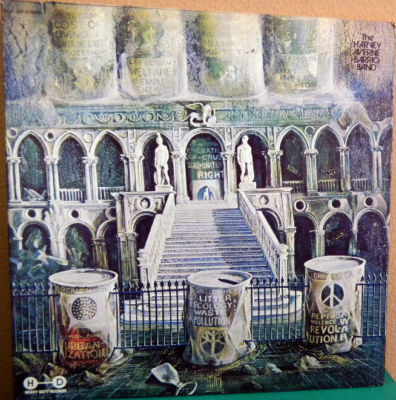
LABEL & RECORD #: HEAVY DUTY #101 (1971) VINYL CONDITION: HEAR !! : NM LABELS CONDITIONS: SEE SCAN : HAS A SIGNATURE (WOL)..OTHERWISE NM COVER CONDITION : SEE SCAN :GREAT GATEFOLD....NO SPLITS...VG++...ANOTHER WORK OF ART DESIGNED BY IZZY ZANBRIAREMARKS: WOW! WHAT A NICE FINDING!!! NOT A REISSUE!!! 1ST PRESSING GATEFOLD!!!! Reissues do not have the gatefold cover which is considered (all of it, not only the front and back cover, an Izzy Zanabria "work of art")
An excellent album by Latin Soul arranger Harvey Averne! This set is miles ahead of Harvey's work from the 60s -- a heavy set of 70s grooves that has a lot of Chicano rock influences, and which mixes together percussion, electric guitar, soulful vocals, and plenty of other tasty instrumental touches. Arrangements are by Marty Sheller, and the album's got a stone NuYorican groove --!
FOR COLLECTORS ONLY: HARVEY AVERNE A LATIN DANCE MUSIC ICON
!: It was the start of Harvey’s career in Latin music. He assembled a group called Harvito and his Latin Rhythms, playing the hotels, as well as a residency at the Boulevard nightclub at Rego Park in Queens. “We were a good little Latin quartet, but played to a crowd that was almost exclusively Anglo," he explains.
Renamed Arvito and his Latin Orchestra, the group took a step forward when Harvey took over the leadership of a troubled band formed by pianist Larry Harlow. With Harvey on vibes and Larry on piano, the new Arvito combo was a more complete outfit. Managed by top DJ Dick “Ricardo” Sugar, the group worked constantly, playing hotels, resorts and dances at the mecca of Latin music - the Palladium.
The band's Palladium debut was alongside Tito Puente, whose songbook and arrangements were a prime source for the Arvito band. Harvey was extremely nervous. He asked Puente about the many tunes that he had copied from him. A generous man, Puente told him not to worry. "I have a lot of songs," he said. "Just tell me which ones you are going to perform, and I won't play those tonight." "We became great friends," recalls Harvey. "He remained a mentor throughout my career.”
The constant whirl of gigs continued throughout the '50s and into the '60s. Things would change in early 1964, when The Beatles conquered America. Suddenly, four-piece rock groups were the rage - and the Anglos stopped listening to Latin music.
There was still work, but Harvey concentrated on the day job that had occupied him since the beginning of the '60s. He had invested in the construction trade, enjoyed success and made a fortune - he had his own, chauffeur-driven limo, a pad on the upper Eastside, and all the trimmings. By the end of 1966, however, he was disillusioned. The following year, he met Jerry Masucci through Larry Harlow.
"Larry told me that he had signed a contract with a new company," he recalls. "He suggested that I meet this lawyer, Jerry, who owned the company together with Johnny Pacheco. I did, and Jerry told me that he needed someone to run the label for him. He wanted me to do it, working out of his law offices, and offered $300 a week. I laughed and told him that my chauffeur earned nearly that, to which Jerry replied: 'I think that the chauffeur is gone if you take this job'. I thought about it for weeks, and eventually decided to accept. It was what I wanted to do. I felt like I was being paid to go to college."
At Fania, Harvey worked on every aspect of the business. "Jerry chose not to interfere," he explains. "He allowed me to learn by experience". Even though he had never been in a recording studio before, Harvey began producing albums. He called Marty Sheller, who had played trumpet in the Arvito band and arranged hits for Mongo Santamaría and others. "He favored a mix of jazz, Latin and the blues," he says, "I loved that sound." Harvey produced important LPs like Ray Barretto’s Acid and Larry Harlow’s El Exigente. He also recorded his own material for the label.
It was the height of the boogaloo craze. With Sheller's arrangements, the voice of Kenny Seymour Sr. (formerly of Little Anthony and the Imperials) and Harvey's English lyrics ("I didn't speak Spanish that well"), his recordings were a natural match for the boogaloo movement.
Harvey’s entrance into the recording world produced two 45 rpm singles. We have included two of those four sides - check out the lyrics of "Make Out" and "The Micro Mini," backed by the boogaloo "go-go" sounds in the background.
These singles were the starting point for the Viva Soul LP - a record that was eventually released on Atlantic. Harvey felt that Fania’s contacts were too Latin oriented - and that his material was suited for a mainstream label. Music business hustler Jack Hook suggested that this was the kind of album that Jerry Wexler would like. He was right.
The following year, Harvey’s singles appeared on both Fania and the Uptite label that had been set up to push the label's R&B material.
The first single was the phenomenal "Never Learned To Dance" - a club classic around the world that features the vocals of Seymour Sr. The LP The Harvey Averne Dozen was a glorious combination of Latin, soul, jazz and funk. The rhythm and melody of "Central Park" are equally infectious. "Gotta Do My Number" would not be out of place in one of Grant Green's Blue Note sessions of the same decade. The music here is superb, featuring some of the top session musicians of the time.
Entitled Brotherhood, the following album was similar in style - but with a social message to boot, and covers of tunes by The Beatles and Sly and the Family Stone. Harvey had now become part of the Woodstock generation. "I took a bunch of us to Woodstock and rented a couple of hotel suites nearby," he recalls. From the master tapes of the time, we have unearthed a previously unreleased version of The Beatles' "Come Together" - John Lennon’s call to political arms from the Abbey Road album.
The Woodstock ideals would appear prominently on Harvey’s final album from this era - a rare collector's item entitled Harvey Averne Barrio Band. "It was all about Santana," says Harvey. "I loved what he was doing. We were a bit too Latin in our brains - we were hardwired. Santana, on the other hand, knew how to get the right mix."
Not getting the correct mix was harmful in commercial terms - but not in artistic ones. The fusion of rock, soul and big Latin sounds is compelling, inspiring us to include three cuts from this album. Even more intriguing is the fact that the singers and musicians who appear here would later become the Fania All Stars - this is their first time together in a studio.
Harvey was starting to realize that he did not want to be an artist anymore. Slowly, he began to remove himself from the label.
Even though there was no explosive incident that ended it all, Harvey was upset by the events surrounding the success of Ralfi Pagán’s single "Make It With You," from his second Fania LP. Through a chance meeting with Frankie Crocker, New York's top R&B DJ at the time, Harvey had secured constant airplay for the record, as well as a deal with the Wand label to push it even further. He felt that Jerry Masucci embarrassed him with Wand during negotiations for the second single - and with the music director of the WWRL-AM station where Crocker worked. It was time to move on.
Harvey turned his back on his artistic career, but he would enjoy even greater success as producer and owner of his own Coco Records label. Fittingly, his recordings from the late '60s and early '70s are treasured by collectors!
2- PARA TI (5:09) (mongo santamaria)
3- HEAVY DUTY (5:05)
TRACKS SIDE B:
1- CUCARA MACARA (4:30)
2- CAYUCO (5:28) (Tito Puente)
3- IN THE WIND (6:38)
PERSONNEL:
Don' know who where the "Dozen' Harvey plays the Vibes.
Maybe vocals: Kenny Seymour Sr. (formerly of Little Anthony and the Imperials)
ARRANGER: THE GREAT MARTY SHELLER!
WEB REMARKS: "Wanted you all to know that Fania is releasing Harvey Averne - Never Learned to Dance -Anthology 1967-71....a great compilation... - available on Amazon.com for preorder - drops May 26, 2009....
Even has a song never released called "Girl from the mountain" ...if you want to catch up with Harvey he even has a myspace now!"
"It wasn’t until I was in my 30’s that I was introduced to the sounds of boogaloo and Latin soul. The crossover sounds from the mid-to-late 60’s, where Latin bands started to mix in soul and funk sounds made for some of the most exciting records of the era. Many of these records were made by established Latin recording stars like Ricardo Ray (who’s version of ‘Nitty Gritty’ is a killer), Ray Barretto (who’s ‘Acid’ and ‘Hard Hands’ lps are classics of the genre) , Joe Cuba (‘Bang Bang’, ‘El Pito’), Mongo, Willie Bobo and Larry Harlow, who started to work a soul and rock sound in with their clave. One of the folks who got into creating these fusions with a passion was Harvey Averne. Averne (like Larry Harlow, a New York born Jewish cat* with no Latin blood to speak of) started out working under the stage name Arvito, with his own Latin dance band. Originally an accordionist, Averne was taught by Harlow to play the vibes. Working with arranger Marty Sheller (who also worked extensively with Mongo Santamaria) Harlow recorded albums for Atlantic, Fania and Heavy Duty that took the pop/Latin mix to new extremes."
Please Follow The Shipping Rates Below:
LPs
1 Item
Xtra Item
Air Mail Media U.S.A
$4.00 (Delivery Confirmation Included)
Add $0.25
Air Mail Priority U.S.A
$7.50 (Delivery Confirmation Included)
Add $1.00
Air Mail Canada
$6.75
Add $2.00
Air Mail Europe
$13.50
Add $2.50
Air Mail Asia
$13.50
Add $3.00
Air Mail Caribbean
$12.00
Add $2.00
Air Mail South America
$12.50
Add $2.50
If Buying More Than 3 Records We Will Inform You The Shipping & Handling....We do combine shipping for multiple purchases.
Insurance Available If Requested - Domestic Only:
$1.75 ................ $0.01 to $50
$2.25 ................ $50.01 to $100
$2.75 ................ $100.01 to $200
* We offer a money back + shipping costs guarantee on our records (unless otherwise noted) if you feel the LP was not graded properly (in Grading “disputes” Return Shipping Not Included). We will issue a full refund upon its return, once our mistake has been verified.
Record Grading: Standard guidelines for grading records comes down to a subjective judgment that may vary from person to person. We grade records and LP covers visually AND (when possible) play-tested. We make every effort to give full disclosure (remember that the LP has at least 12 tracks and the grading may vary between each other) and your satisfaction is guaranteed. Don't assume that our vinyl determination of "Very Good+" is the same as yours!
RECORD OR COVER GRADED VG or LESS WILL BE "SOLD AS IS"
MINT: Unplayed, still sealed.
NM RECORDS: are shiny, with no visible defects, they might have one or 2 minor superficial scuff and they should play without any noise. Writing, stickers or other markings cannot appear on the label, nor can any “spindle marks” from someone trying to blindly put the record on the turntable. Major factory defects also must not be present; a record and label obviously pressed off center is not Near Mint. If played, it will do so with no surface noise. (NM records don’t have to be “never played”; a record used on an excellent turntable can remain NM after many plays if the disc is properly cared for.)
NM COVERS:
have no creases, ring wear or seam splits of any kind.
Picture Sleeves: should look as if they never housed a record. This is a great reason to remove your 45s from their picture sleeves and keep them separate. Just keeping the 45 inside the sleeve will cause damage than can reduce the grade of the sleeve.
VG++ (Excellent) RECORDS:
Barely noticeable play wear and background noise. May have surface scuffs and/or superficial marks, which will be inaudible or indiscernible from the background, no scratches. Very nice, flaws noted.
VG++ COVERS:
Artwork is still as close to perfect as can be. Some impression to the cover (minor outer ring wear) but no ink wear! Some slight creases to the corners, but not wrinkled and obtrusive to the eye. The corners can show white (where the artwork pasted slick was) meaning, slight wear. No seam splits or writing on the cover or taped repairs can make this grade.
VG+ RECORDS:
may show some slight signs of wear, including light scuffs or very light scratches that do not affect the listening experience. Slight warps that do not affect the sound are OK. Minor signs of handling are OK, too, such as telltale marks around the center hole, but repeated playing has not misshapen the hole. There may be some very light ring wear or discoloration, but it should be barely noticeable.
VG+ COVERS:
should have only minor wear. A VG+ cover might have some very minor seam wear or a split (less than one inch long) at the bottom, the most vulnerable location. Also, a VG+ cover may have some defacing, such as a cut-out marking. Covers with cut-out markings can never be considered Near Mint.
VG+ PICTURE SLEEVES:
might show some very light creasing where it is obvious that a record once resided (or still does reside). A VG+ picture sleeve might have some very minor seam wear or a split (less than one inch long) at the bottom, the sleeve’s most vulnerable location.
VG RECORDS:
They have more obvious flaws than their counterparts in better shape. They lack most of the original gloss found on factory-fresh records. Groove wear is evident on sight, as are light scratches deep enough to feel with a fingernail. When played, a VG record has surface noise, and some scratches may be audible, especially in soft passages and during a song’s intro and ending. But the noise will not overpower the music otherwise. Minor writing, tape, or a sticker can detract from the label. Many collectors who have jukeboxes will use VG records in them and not think twice. They remain a fine listening experience, just not the same as if it were in better shape.
VG COVERS and PICTURE SLEEVES:
will have many signs of human handling. Ring wear in the middle or along the edges of the cover where the edge of a record would reside, is obvious, though not overwhelming. Some more creases might be visible. Seam splitting will be more obvious; it may appear on all three sides, though it won’t be obvious upon looking. Someone might have written or stamped a price tag on it, too.
RECORDS GRADED VG OR BELOW WILL BE "SOLD AS IS"
Items are to be paid within 7 days (if not paid by that time it will be subject for relisting) of auction close and will be shipped within 48 hours of receipt of payment. Paypal is the preferred method of payment.
Carlos A. Flores 25830 Crippen Dr. Land O' Lakes, FL 34639
price rating