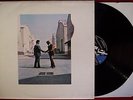
PINK FLOYD WISH YOU WERE HERE COMPLETE WITH SHRINKWRAP UK A1/B3 + POSTCARD
£
20
$
26


Favourite Auctions
To save auctions to your favourites, please login
If you don't have an account, please register
Description
m149065 Store
NB POSTAGE IS £4.00 FOR SIGNED DELIVERY AS TOO VALUABLE TO RISK LOSING AND I GENERALLY POST THE WEEKEND AFTER PAYMENT AS I WORK MIDWEEK SO PLEASE BE PATIENT. IF YOU DISAGREE WITH THIS THEN PLEASE DO NOT BID.
PINK FLOYD
WISH YOU WERE HERE
MATRIX A1/B3 MAKING THIS A VERY EARLY PRESSING
MADE IN ENGLAND
VINYL VG TO EXCELLENT
PLAYBACK IS VG NOTED A LITTLE STATIC IN QUIET TRACK SIDE 2.
THE COVER IS AT LEAST VG NEAR EXCELLENT DUE TO THE BLACK SHRINKWRAP.
SHRINKWRAP IS LOOSE AS SPLIT ON TWO SIDES
LABELS NICE AND CLEAN.
INNER SLEEVE HAS STRIGHT DIAGONAL CUT EDGES TO 3 CORNERS AS IS CORRECT FOR THE EARLIEST PRESSINGS OF THIS LP.
POSTCARD UNUSED AND IN EXCELLENT CONDITION AS PER PHOTO
SEE ALL PHOTOS, ASK QUESTIONS
Wish You Were Here is the second Pink Floyd album to use a conceptual theme written entirely by Waters, and echoes his feeling at the time that the camaraderie that had served the band previously was largely absent. The album begins with an eight-minute, thirty seconds instrumental preamble, before segueing into the lyrics for "Shine On You Crazy Diamond". "Shine On" is a tribute to former band member Syd Barrett, whose drug-induced breakdown had forced him to leave the band several years before. Barrett is fondly recalled with lines such as "Remember when you were young, you shone like the sun" and "You reached for the secret too soon, you cried for the moon".
The album is also a critique of the music business; "Shine On" segues seamlessly into "Welcome to the Machine", which begins with the opening of a door—described by Waters as a symbol of musical discovery and progress betrayed by a music industry more interested in greed and success. The song ends with sounds from a party, epitomising "the lack of contact and real feelings between people". Similarly, "Have a Cigar" scorns record industry "fatcats", its lyrics containing well-used clichés such as "can hardly count", "they call it riding the gravy train", and "by the way, which one's Pink?"—a question actually asked of the band on at least one occasion. "Wish You Were Here" contains lyrics which relate not only to Barrett's condition, but also to the dichotomy of Waters' character, as an idealist, and a domineering personality. The album closes with a reprise of "Shine On", and further instrumental excursions.
Alan Parsons was the EMI staff engineer for Pink Floyd's previous studio album The Dark Side of the Moon, but following its release he declined their offer to continue working with them (instead becoming successful in his own right with The Alan Parsons Project).The group had worked with Brian Humphries on More—recorded at Pye Studios—and again in 1974, where he replaced a somewhat inexperienced concert engineer hired at short notice. He was therefore the natural choice to work on the band's new material, although as a stranger to EMI's Abbey Road set-up he encountered some early difficulties, including one instance where he was inadvertently responsible for spoiling the backing tracks of "Shine On"—a piece that Waters and Mason had spent many hours perfecting. The entire piece, corrupted with echo, had to be re-recorded.Working from Studio Three, the group found it difficult at first to devise any new material, especially as the success of The Dark Side of the Moon had left all four physically and emotionally drained. Richard Wright has since described these early sessions as "falling within a difficult period", and Roger Waters found them "torturous". Drummer Nick Mason found the process of multi-track recording drawn out and tedious, and David Gilmour was more interested in improving the band's existing material. He was also becoming increasingly frustrated with Mason, whose failing marriage had brought on a general malaise and sense of apathy, both of which interfered with his drumming. Mason has since admitted that Nick Kent's unrestrained diatribe in NME may have had some influence however in keeping the band together.
It was a very difficult period I have to say. All your childhood dreams had been sort of realized and we had the biggest selling records in the world and all the things you got into it for. The girls and the money and the fame and all that stuff it was all ... everything had sort of come our way and you had to reassess what you were in it for thereafter, and it was a pretty confusing and sort of empty time for a while ...
—David Gilmour, However, after several weeks Waters began to visualise another concept. The three new compositions from 1974's tour were at least a starting point for a new album, and "Shine On You Crazy Diamond" seemed a reasonable choice as a centrepiece for the new work. Mostly an instrumental twenty-minute-plus piece similar to "Echoes", the opening four-note guitar phrase reminded Waters of the lingering ghost of former band-member Syd Barrett. Gilmour had composed the phrase entirely by accident, but was encouraged by Waters' positive response. Waters wanted to split "Shine On You Crazy Diamond", and sandwich two new songs between its two halves. Gilmour disagreed, but was outvoted three to one. "Welcome to the Machine" and "Have a Cigar" were barely-veiled attacks on the music business, their lyrics working neatly with "Shine On" to provide an apt summary of the rise and fall of Barrett;"Because I wanted to get as close as possible to what I felt ... that sort of indefinable, inevitable melancholy about the disappearance of Syd "Raving and Drooling" and "You Gotta Be Crazy" had no place in the new concept, and were set aside. PLEASE SEE MY OTHER LISTINGS FOR MORE RARE PSYCH AND OTHER LP'S COMBINE POSTAGE TO SAVE MONEYPOSTAGE - £4.00 SIGNED DELIVERY DUE TO VALUE SIGNED FOR IN UK USING CARDED ENVELOPE AND 2 BACKING BOARDS. WILL SHIP OUTSIDE UK AT COST. SEE MY OTHER LISTINGS COMBINE POSTAGE
Wish You Were Here is the ninth studio album by English progressive rock group Pink Floyd, released in September 1975. The album explores themes of absence, the music business, and former band-mate Syd Barrett's mental decline. It was inspired by material the band composed while performing across Europe, and recorded over numerous sessions at London's Abbey Road Studios. Early sessions were a difficult and arduous process but it was Roger Waters' idea to split the centrepiece track "Shine On You Crazy Diamond" in two, and join each half with three new compositions. "Shine On" was a tribute to Barrett, who, coincidentally, made an impromptu visit to the studio while it was being recorded. The band failed initially to recognise Barrett, who had gained weight and changed in appearance.
As with their previous work, The Dark Side of the Moon, the band made use of studio effects and synthesisers. Roy Harper was a guest vocalist on "Have a Cigar". The album's packaging, again designed by Storm Thorgerson, featured an opaque black sleeve which hid the album artwork. Wish You Were Here was released in September 1975 to instant success; record company EMI was unable to print enough copies to satisfy demand. Although it initially received mixed reviews, the album has since been acclaimed by critics, and appears in Rolling Stone magazine's "The 500 Greatest Albums of All Time" list. Band members Richard Wright and David Gilmour have each declared Wish You Were Here their favourite Pink Floyd album
price rating