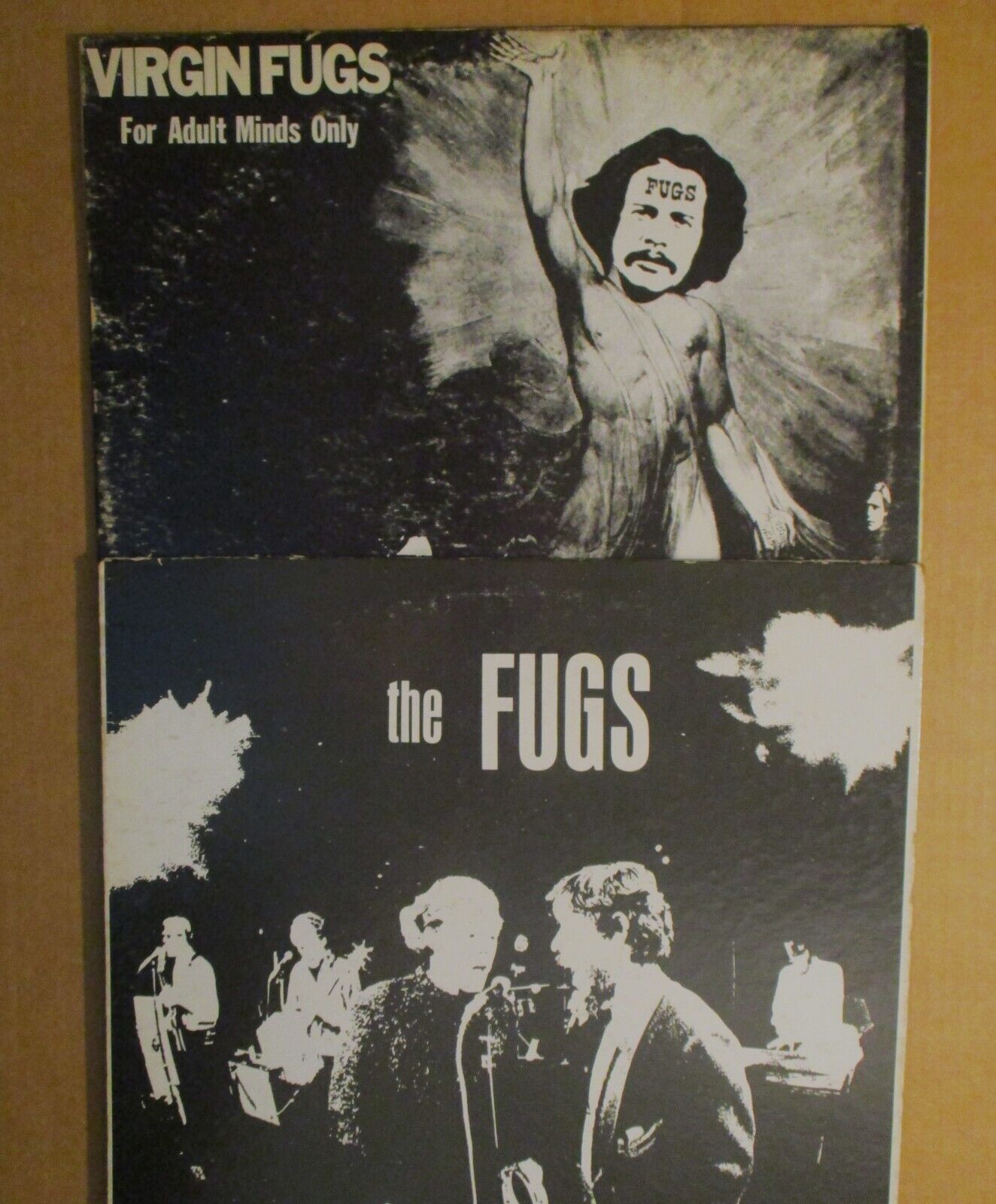
'THE FUGS' & 'VIRGIN FUGS' 2 CLASSIC 60's NYC UNDERGROUND ALBUMS RARE 'ESP'
$
24
Favourite Auctions
To save auctions to your favourites, please login
If you don't have an account, please register
Description
2 GREAT EARLY CLASSIC FUGS ALBUMS ON THE ESP LABEL
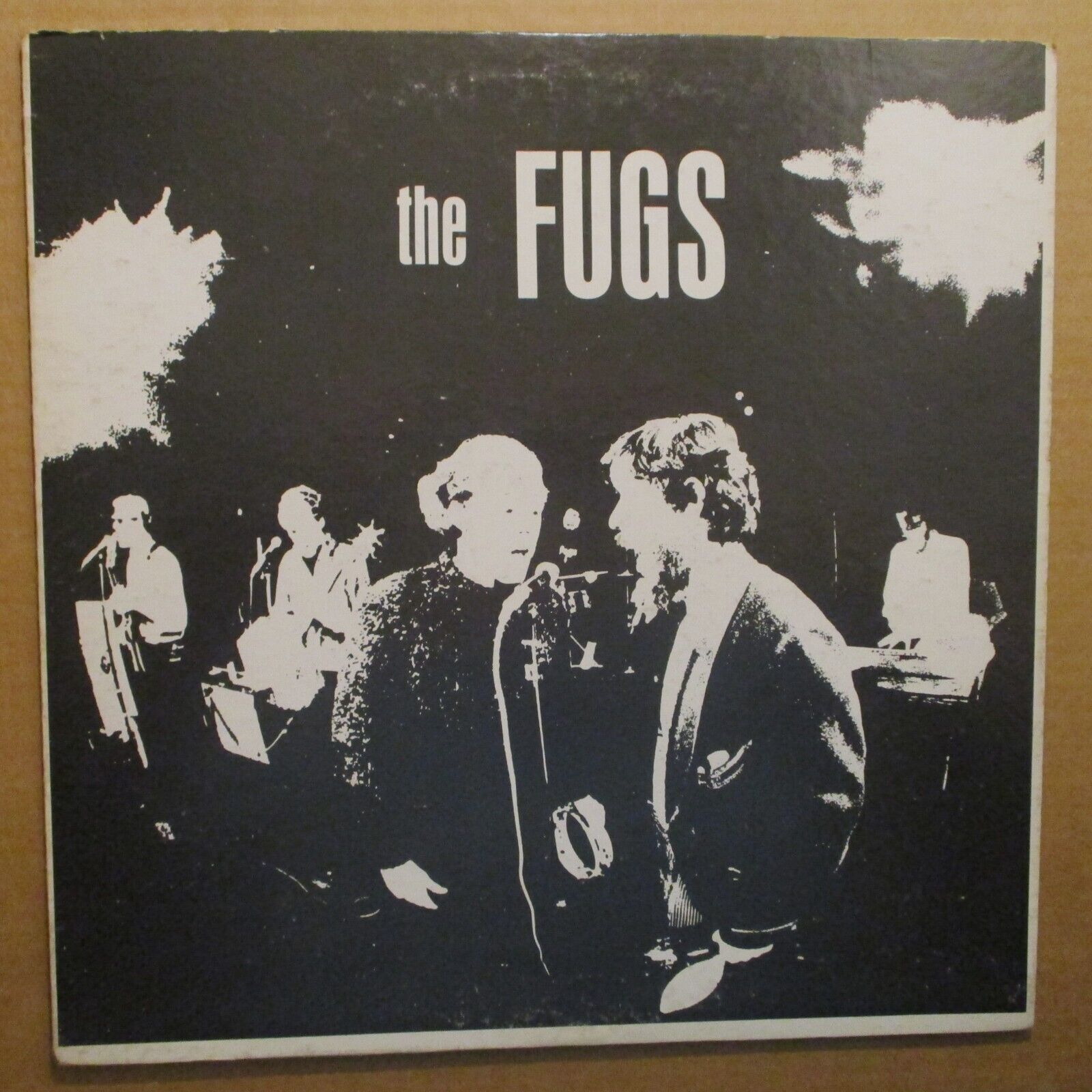
"THE FUGS" AND "VIRGIN FUGS" ~ STEREO ~ 1966/67
I've been going thru my massive vinyl record collection these past few weeks and pulling out some LPs that I thought that someone else would want for their collection. I've been collecting records for over 45 years and it's time to pass some of them on to the next generation of collectors.
This week on EBay I am offering up this pair of early Fugs albums, "The Fugs" from 1966, and "Virgin Fugs" from 1967.
This are both my original copies, purchased 'used' back in the mid 70's, in the record shops along St Mark's place in Greenwich Village, on one of my regular vinyl digs in those days, and I've taken great care of them for many years.
The vinyl on both copies has some light surface scratches and light wear, but nothing serious. I'll call them both VG, but decent copies.
Clean, minty, used Fugs albums don't exist in my experience. These records were usually played and listened to in sub-optimal conditions and on lo-fi equipment.
The Jackets have some typical authentic, honest wear, again, nothing serious, but these all-black Fugs albums always seem to have some degree of wear when you find them.
Most used copies of Fugs albums are quite trashed, but these aren't bad. I tried to show decent pictures. Rare, hard to find, records and decent copies.
See more details on Condition below.
~~~~~~~~~~~~~~~~~~~~~~~~~~~~~~~~~~~~~~~~~~~ There are 2 Fugs albums in this lot. I was going to list them separately, but these 2 have always been together, go well together, and should stay that way.
The first album is "Virgin Fugs' their 3rd album, from 1967.
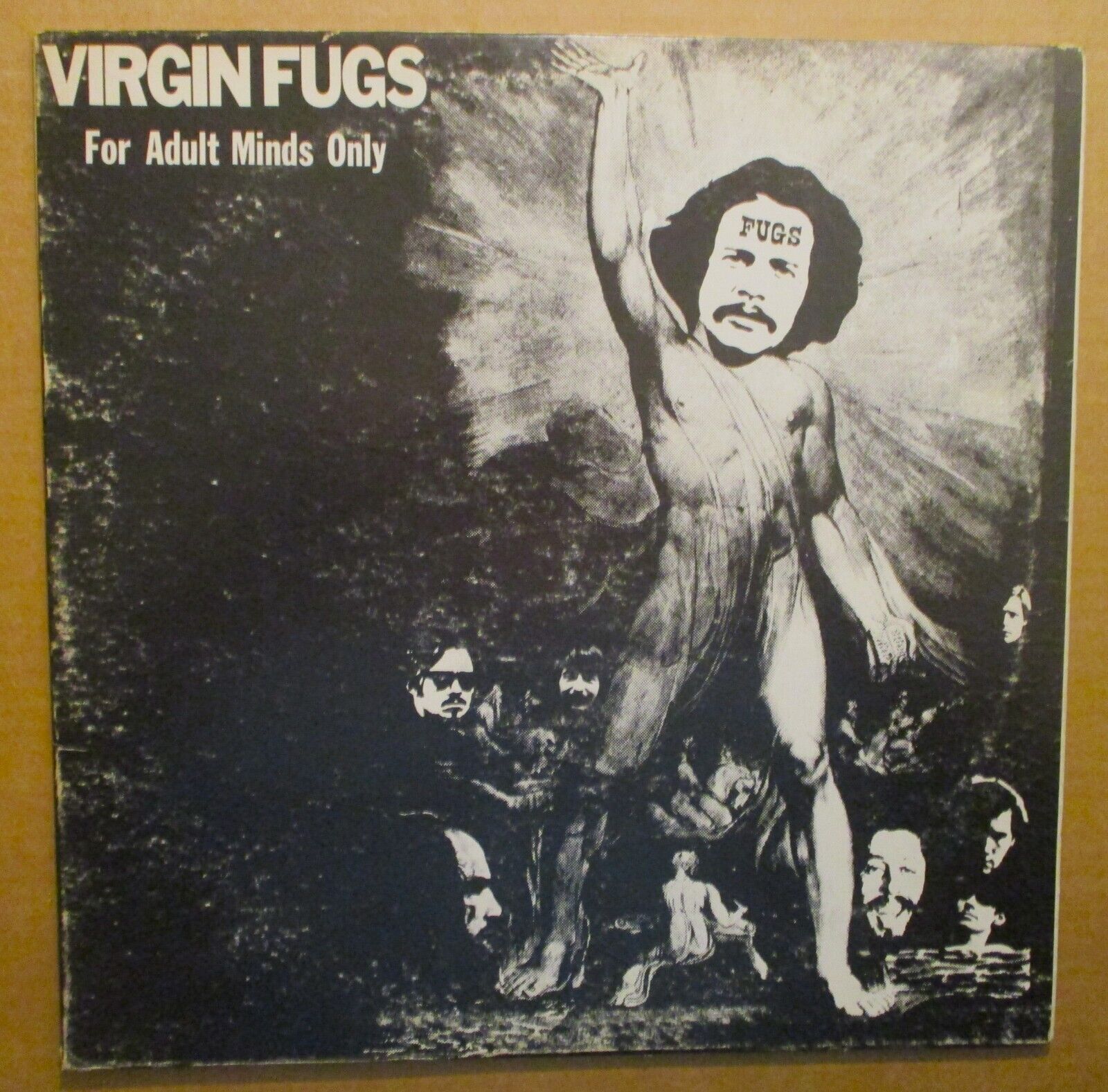
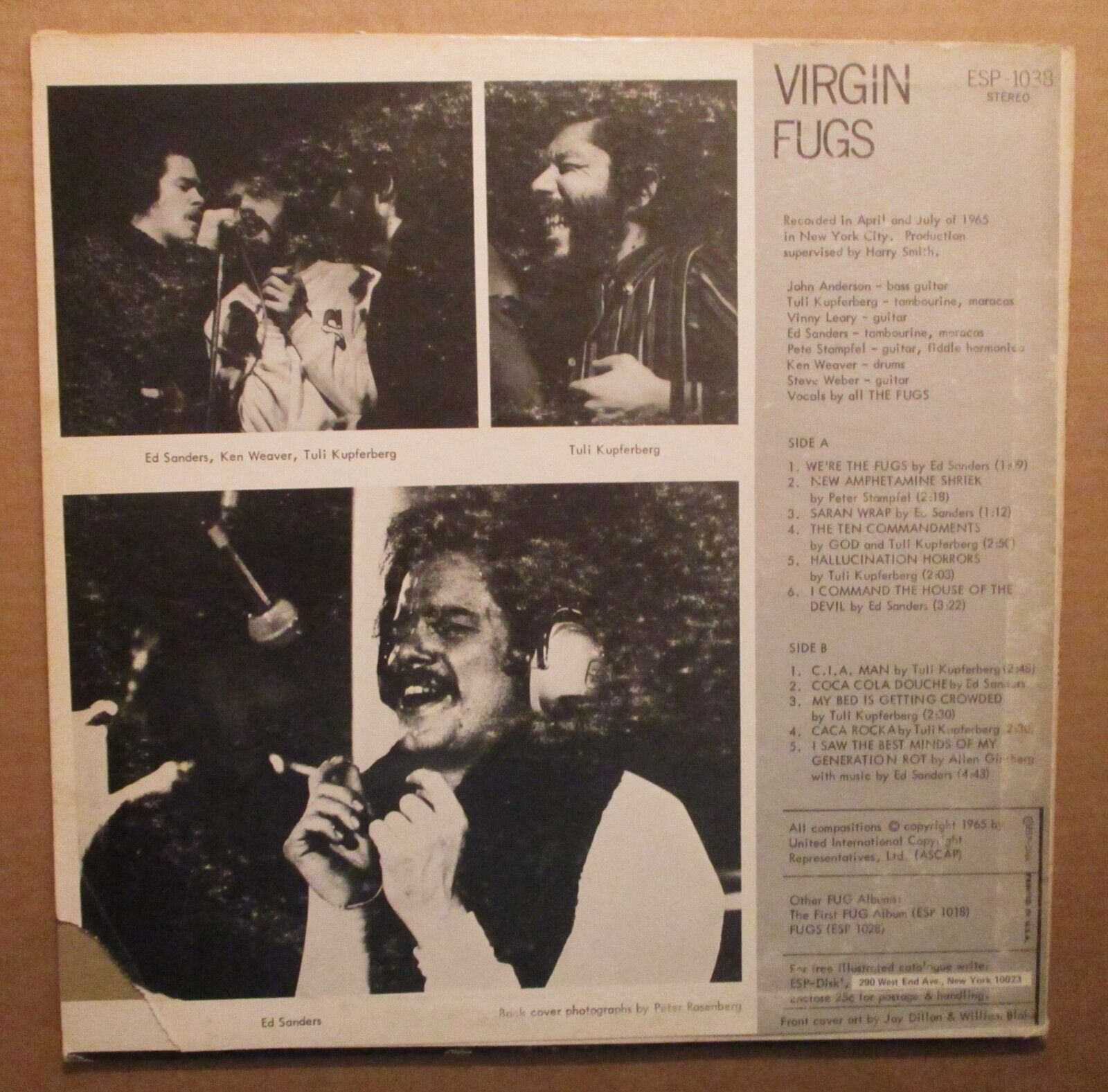
THE FUGS "VIRGIN FUGS" (FOR ADULT MINDS ONLY) LABEL: ESP DISK ~ ESP-1038 (STEREO) RECORDED: APRIL/JULY 1965 NYC DURING THE 'FOLKWAYS' SESSIONS ORIGINALY RELEASED IN 1967 RARE LIMITED 1974 'STEREO' RE-ISSUE w/ "10-17-74" DATE IN DEADWAX YELLOW LABEL w/ 'DEEP GROOVE' AND GREEN TEXT PRODUCER: HARRY SMITH PUBLISHER: UNITED INTERNATIONAL COPYRIGHT REPRESENTATIVES MATRIX (SIDE A): ESP - 1038-A 10-17-74
~~ The songs on this album include:
We're The Fugs (Ed Sanders) New Amphetamine Shriek (Peter Stampfel) Saran Wrap (Ed Sanders) The Ten Commandments (GOD & Tuli Kupferberg) Hallucination Horrors (Tuli Kupferberg) I Command The House Of The Devil (Ed Sanders) C.I.A. Man (Tuli Kupferberg) Coca Cola Douche (Tuli Kupferberg) My Bed Is Getting Crowded (Tuli Kupferberg) Caca Rocka (Tuli Kupferberg) I Saw The Best Minds Of My Generation Rot (Lyrics: Allen Ginsberg - Music: Ed Sanders)
~~ The members of the Fugs on this record are the classic early lineup and include:
ED SANDERS ~ VOCALS, TAMBOURINE, & MARACAS TULI KUPFERBERG ~ TAMBOURINE, MARACAS, VOCALS, PERCUSSION & CRAZINESS KEN WEAVER ~ DRUMS & PERCUSSION PETE STAMPFEL ~ GUITAR, HARMONICA, FIDDLE, BANJO VOCALS STEVE WEBER ~ GUITARS JON ANDERSON ~ BASS GUITAR VINNY LEARY ~ GUITARS LEE CRABTREE ~ KEYBOARDS & PERCUSSION
~~ This 'Virgin Fugs' album has the classic front cover art by Jay Dillon that incorporates Ed Sanders' head and the other Fugs faces into the classic artwork 'The Angel of Revelation' by English printmaker and poet William Blake.
The Front cover has 'For Adult Minds Only' printed under the title in the upper left.
The Spine is printed 'ESP-DISK 1038' VIRGIN FUGS STEREO' and does not include the words 'In Part'.
This pressing has the original '290 West End Ave, N.Y.' address on both the labels and the back cover. The labels are the original 'Deep Groove' Golden Yellow with Green text.
Some rare early pressings included a 'Fugs want to thank You' folded mini-poster, a sheet of Fugs Stickers ('Fug Cue' and 'Stay off the Grass, take Acid') and a small 'Fugs Flip' booklet. This limited 1974 re-pressing contains none of those additional inserts.
This is NOT a First Pressing. This is a 1974 re-issue with the mastering date actually etched into the Matrix, '10-17-74'.
The Fugs records have a long history of being pirated, having poor pressing quality, and having mastering, editing and speed errors. It seems like many different people had their hands in the pot, and there are many different pressings, labels and jackets, all nefarious.
In the early 70's, definitive Stereo masters were done for the early ESP records and these were marked with the mastering date to distinguish them from all the other problematic pressings out there. Both of these records are those 'dated' pressings and most of the pressing issues have been resolved.
Despite not being 'First' pressings, these 'dated' remasters are what the band truly intended and were the definitive, all-analog, stereo versions at the time; 1973/74.
The Fugs records were never intended to be pristine 'audiophile' recordings, and these pressings were as good as they ever got.
~~~~~~~~~~~ 'Virgin Fugs' is a 1967 album by The Fugs.
While it is their third album, it consists of outtakes from the two different 1965 'Folkways' sessions for their first album, 'The Village Fugs'. That first album took material mostly from the 2nd Folkways session, while this album focuses on the first session. So, in many ways, this could be considered their 'true' first album, thus the title 'Virgin Fugs'. It's really their first 'official' recording session.
In an attempt to save his dying record company, ESP-Disk label founder Bernard Stollman compiled 'Virgin Fugs' in early 1967 from various unreleased songs and outtakes from the Fugs debut album sessions, originally recorded in 1965.
This album was assembled and released without the band’s permission, involvement or approval.
Sanders and Kupferberg attempted to sue Stollman, to stop it's release, but failed. Contractually, Stollman had the rights to release it. Very soon afterwards, the Fugs left ESP and signed with Reprise records.
Despite being disowned by the band, 'Virgin Fugs' is actually one of their best records. A really great, notorious, early 'Folk Punk' underground counter-culture record. Very raw and loose, but honest and spot-on commentary on late 60's social issues like Drugs, LSD, sex, politics and religion.
Nothing was off limits to sing about for Poet Tuli Kupferberg and his partner in underground anarchy, Ed Sanders. They were true pioneers of punk and psychedelic lyrics and, rare for 1965, they did not hide the fact that there was a lot of 'chemical' inspiration for their songs and sounds.
The band's uncensored lyrics on this album, 'The Virgin Fugs' were unheard of at the time, borderline illegal, and really pushed the limits of 'Free Speech.'
The band’s frank lyrics about sex, drugs, and religion aroused a hostile reaction in some quarters, and enthusiastic approval and interest in others. It's still shocking, even by today's standards.
Everything that is great about the Fugs is found on this recording. Their early folk guitar/percussion/beat poetry thing, along with the humorous, shocking and outrageous lyrics and writing. It’s amazing how powerful and intense The Fugs could be with just a few edgy instruments and their acerbic vocals. Very 'Punk' for 1965.
The 'band' on this recording includes the Holy Modal Rounders' co-founders Peter Stampfel and Steve Weber on guitars.
~~~~~~~~~~~ This album contains one of their best known, and most controversial songs, Tuli Kupferberg's classic 'Coca Cola Douche'.
There's also Tuli's odd take on 'The Ten Commandments', a little ditty for which he gives credit to GOD as cowriter. There's not many subversive underground albums out there that give God a co-write.
The Fugs had a lot of respect for God and the Jewish faith, but also respect for the classic 'Beat' writers and poets.
This album ends with the Fugs chaotic, rambling 'cover' of Allen Ginsburg's famous poem 'Howl' and Ginsburg happily wrote the liner notes for their previous album, 'The Fugs' giving it his praises.
'C.I.A. Man' is a strong protest song about the band's outrage against the Government prodding into people's personal lives. A song that still has relevance in today's world.
Bob Dylan featured the song and wrote glowingly about "C.I.A. Man" in his book "The Philosophy of Modern Song."
In 2003, David Bowie included 'Virgin Fugs' in a list of 25 of his favorite albums, "Confessions of a Vinyl Junkie".
One reviewer at the time accurately recognized that "listening to 'Virgin Fugs' solely for purposes of enjoyment is practically impossible, no matter how many drugs are ingested."
'Virgin Fugs' is all about attitude and defiance and a 'must have' for anyone interested in the NYC Greenwich Village underground scene of the 60's.
~~~~~~~~~~~~~~~~~~~~~~~~~~~~~~~~~~~~~~~~~~~~~~~~~~~~ The second record in this lot is 'The Fugs', their 2nd album from 1966.
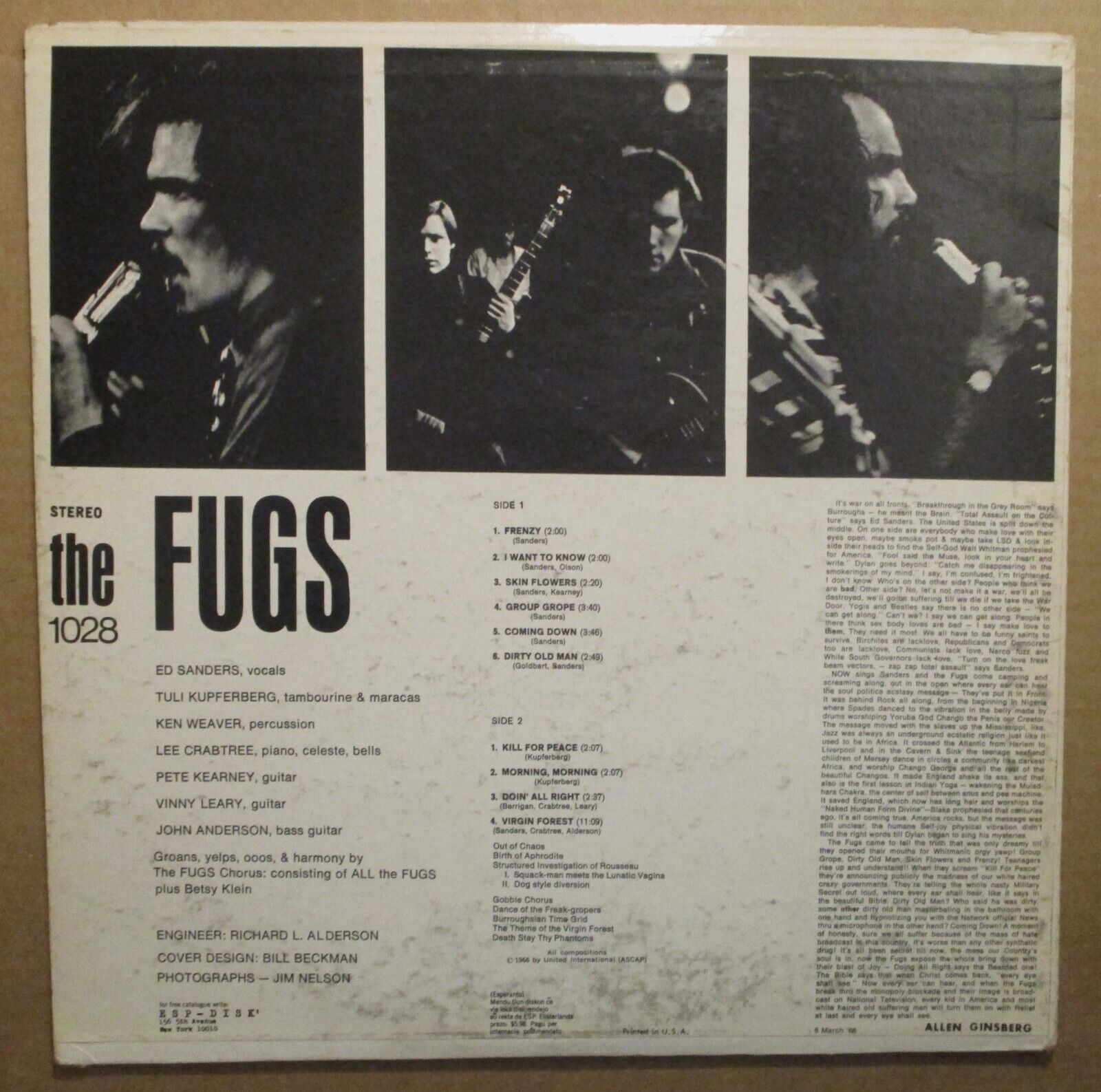
THE FUGS "THE FUGS" LABEL: ESP DISK ESP-1028 (STEREO) RELEASED: 1966 WHITE LABELS W/ 290 WEST END AVENUE NYC ALBUM JACKET WITH '156 5th AVENUE NYC' ADDRESS ENGINEER: RICHARD ALDERSON LINER NOTES: ALLEN GINSBERG MATRIX (SIDEA): ESPS-1028-A 10-12-73
~~ The Band members of the Fugs on this recording include:
ED SANDERS ~ LEAD VOCALS TULI KUPFERBERG ~ TAMBOURINE, MARACAS, PERCUSSION & CRAZINESS KEN WEAVER ~ PERCUSSION PETE KEARNEY & VINNY LEARY ~ GUITARS LEE CRABTREE ~ PIANO, CELESTA & BELLS JON ANDERSON ~ BASS GUITAR BETSY KLEIN & THE FUGS CHORUS ~ VOCALS, VOICE, SHRIEKS, YELPS & GROANS
~~ The songs on this Fugs album include:
Frenzy (Sanders) I Want To Know (Sanders & Olsen) Skin Flowers (Sanders, Kearney) Group Grope (Sanders) Coming Down (Sanders) Dirty Old Man (Sanders, Goldbart) Kil For Peace (Kupferberg) Morning, Morning (Kupferberg) Doin' All Right (Crabtree, Berrigan, Leary) Virgin Forest (Sanders, Crabtree, Alderson) - Virign Forest - Out Of Chaos - Birth Of Aphrodite - Structured Investigation Of Rousseau I. Squack-Man Meets The Lunatic Vaqina II. Dog Style Diversion - Gobble Chorus - Dance Of The Freak-Gropers - Burroughsian Time Grid - The Theme Of The Virgin Forest - Death Stay Thy Phantoms
~~~~~~~~~~~~~~~~~~~~~~~~~~ The Fugs albums have all been issued and re-issued several times and the specific details of the pressings are often quite difficult to determine.
The early ESP albums, like these 2 records, seem to have endless jacket, label, and pressing variations, making them all similar, yet different.
What I can tell you is that this is NOT a First Pressing.
This is a 1973 re-issue with the mastering date, '10-12-73', actually etched into the Matrix.
There is no Catalog Number on Front cover, the back cover has the 3 photos aligned at top edge, and has 'STEREO' printed above "THE" on the left side.
This copy has the '156 5th Ave' address on the jacket and the '290 West End Avenue' address on the white ESP labels. There is a $5.98 price printed on the back center.
~~~~~~~~~~~~~~~~~~~~~~~~~~~~~~~~~~~~~~~~~~~~~~~~~~~~~~~~~ The Fugs were one of the most interesting bands to emerge out of the post-beatnik, Lower East side, Greenwich Village music scene.
Founded in New York City’s East Village in 1964 by bookstore owner Ed Sanders and iconoclastic, beat-influenced, poet Tuli Kupferberg, the Fugs fused the well-read, literate, street-smart, liberal minds of New York's bookshop dwellers, with the radical, revolutionary, proto-Punk attitude of the city's 60's hippies.
The Fugs became an important part of New York City's East Village counterculture of the '60's. They were advocates of social and cultural reform and wrote irreverent and funny songs about the political, cultural and social turbulence of the late 1960's. ~ It’s hard to describe the 'music' made by the Fugs, because it’s not exactly music — it’s more of a 'statement'. A bunch of hippies and freaks, with the freedom and perspective of the Beat generation's writers and poets, singings 'songs', with 1960s counterculture lyrics, set to simple folk melodies and bluesy rock rhythms, all performed with a bit of theater, insanity, howls, hollers, reckless abandon and discordant glee.
In the mid to late 60's, there was really nothing else like them, except possibly Frank Zappa's Mothers, out on the West Coast.
If you're not familiar with the Fugs music, check out the insane 1-minute song, 'We're The Fugs' on U-Tube. It's 'folkier' than most of their other material, but gives you an idea about what the band were all about, and what their musical 'themes' would be on their early albums like these.
Some of the song titles on these 2 albums also give you an idea of what these guys were all about.
Song titles like 'Kill For Peace', 'Coca Cola Douche', 'Group Grope', 'New Amphetamine Shriek', 'Hallucination Horrors', and 'I Saw The Best Minds Of My Generation...Rot.'
Raw lyrics, irreverence, passion, and perversion, all wrapped up in simple melodies and harmonies. Primitive, folky, guitar-based insanity.
Some fans have called the Fugs the first "Folk Punk" band and I think that's a good description although they were much more than that.
Lester Bangs, the late, great rock critic, called the Fugs, "the first truly underground band in America."
The Fugs, and the Velvet Underground, were two of the 'authentic' Lower East Side bands at the time, playing real music, with real lyrics, for real people, in a real scene.
The Fugs music was just sort of like putting up a mirror to the emerging Greenwich Village counterculture scene. They sang about the thoughts and concerns of REAL hippies: getting laid, finding the best dope, avoiding the cops, avoiding the draft, and expressing outrage at, and fear of, America's war machine.
~~~ Many of the Fugs songs are strong pieces of social commentary on the social issues of the late 60's and straddle a fine line somewhere between anarchy, chaos and satire.
The Fugs were always right on the edge of what was possible. Constantly pushing the boundaries. They dared you to figure out what they were all about. There was a fearlessness, an intensity, and an unwillingness to pander to any commercial norms, which made their shows and records fresh and exciting.
The Fug's songs could be funny, disturbing, and offensive, all at the same time. 'Coca Cola Douche' is a perfect example.
On these albums, the group’s depraved lunacy and drug-fueled minds are often on full display.
~~~~~~~~~~~~~~~~~~~~~~~~~~~~~~~~~~~~~~~~~~~~~~~~~~~~ THE HISTORY, BACKGROUND, AND STORY OF THE FUGS
In late 1964, Ed Sanders rented a former Kosher meat store on East 10th Street in NYC, which he transformed into a gathering place for literary types called the 'Peace Eye' Bookstore. Sort of an east coast version of Lawrence Ferlinghetti's 'City Lights' bookstore in North Beach.
Next door to the bookshop lived Tuli Kupferberg, a beat writer who published small underground magazines 'Birth' and 'Yeah', which he sold on the streets of Greenwich Village.
Sanders had published some of Tuli's poetry in his literary journal, 'F***k You/ A Magazine of the Arts' and the two became close friends.
The two literary minded gentlemen put their minds together and decided to form a band. The band was named 'The Fugs' by Kupferberg, who took it from a Norman Mailer novel called 'The Naked and the Dead'. When 'The Naked and the Dead' came out in 1948, censorship rules at the time forced Mailer to substitute the word 'fug' for 'f*ck'.
They drew inspiration from various sources; Greek & Roman theater, The Dadaists, the jazz-poetry of the Beats, Charlie Parker's wild sax lines, the silence of John Cage, the songs of the Civil Rights movement, and their concept of pushing the limits of Free Speech and the United States Constitution.
Tuli and Sanders began writing songs at a fevered pace. They needed some steady backing rhythm and 'percussion', so asked a friend, drummer Ken Weaver, to join the band. At first, the band was just the 2 hip writers and poets, backed by Weaver playing bongos. Very hip and 'Beat' for the time.
On February 24, 1965, the Fugs performed their first live gig at the grand opening of Ed Sanders's 'Peace Eye' bookstore.
Steve Weber and Peter Stampfel of the Holy Modal Rounders were good friends, and agreed to also perform at the grand opening gig.
The Holy Modal Rounders joined the Fugs onstage during their set, and shortly after this inaugural Fugs concert, inspired by their political views, humorous and explicit songwriting, and do-it-yourself attitude to music, Stampfel and Weber officially joined the Fugs.
Stampfel and Weber were known for their groundbreaking work introducing 'Freak Folk' and 'Psychedelic Folk' into New York's Lower East Side and Greenwich Village Folk scene. Their musical style meshed perfectly with Sanders' and Kupferberg's lyrics and 'music'.
The 'Peace Eye' opening gig was very packed; Andy Warhol was there and had done some cloth wall banners of his flower images for the event. Warhol was a noted fan of the Fugs and frequented their shows.
Early on, Andy was interested in managing the Fugs, but soon discovered the Velvet Underground, and famously and thankfully went in that direction instead. The Fugs remained a peripheral part of Andy's 'Factory' scene and the band was filmed and photographed several times by Warhol.
Also at the opening gig, Literati as diverse as William Burroughs, George Plimpton and James Michener were on hand. The Fugs had a lot of respect for the classic 'Beat' writers and poets, as well as new upcoming writers. Ed Sanders ran a new underground book shop and was deeply involved in the current literary scene.
The "Peace Eye' gig was a huge success and got the word of the new band out on the streets of Greenwich Village.
Now that the Fugs had a complete band, and knew that they had something going on, they contacted their friend Harry Smith, who had produced one of the most influential records in history, 'The Anthology of American Folk Music' for Folkways Records in 1952, an album which had influenced an entire generation of musicians, and many artists in the current Greenwich Village Folk scene.
Harry Smith was a good friend, came to many early Fugs shows, and introduced the band to Folkways President Moe Asch, who agreed to help the band record and release their first album.
The first Fugs recording session for Folkways, in April of 1965, featured Sanders, Kupferberg, and Weaver, plus Steve Weber and Peter Stampfel from the Holy Modal Rounders, who were now members of the Fugs.
A second, longer, recording session occurred in June of 1965. This session included Sanders, Kupferberg, and Weaver, with John Anderson on bass, Vinny Leary on guitar, and Steve Weber. Peter Stampfel did not perform on the second session.
Those 2 sessions resulted in a demo tape that was given to Verve/Folkways, a brand new record label at the time. A selection of songs was chosen for the first album and Ed Sanders wrote the album notes.
The Fugs started appearing in galleries, clubs and theaters in New York City beginning in early 1965. They started performing a regular series of midnight concerts at the Bridge Theater over on St. Mark's Place, which were always packed and soon became their home base.
In the fall of 1965 the Fugs headed out on their first American tour and performed on College campuses and in small theaters. The Fugs touring band consisted of Sanders, Kupferberg, Weber and Weaver.
In San Francisco, they appeared with Beat writer Allen Ginsberg, as well as the Mothers of Invention, Country Joe and the Fish, and other bands.
By the time they returned to the Lower East Side in the late Fall of 1965, their first album, titled "The Village Fugs - Ballads and Songs of Contemporary Protest, Points of View, and General Dissatisfaction" had been released by Folkways Records.
Despite having a record out, the band had little else. They lived off their live club shows, partied continuously, and continued to try to get their new songs, and the contents of their overflowing brains, onto tape, all while continuously fighting and challenging 'the system'.
They began performing regularly at the Cafe Au Go Go on Bleecker Street, sharing the bill with The Blues Project, with Danny Kalb & Al Kooper, the Jim Kweskin Jug Band, and a young Richie Havens.
By the end of the year, Steve Weber had left the band. They ran ads in the East Village Other and Village Voice for a replacement guitarist and found Pete Kearney, a fellow literati, who worked at the NYU University bookstore.
The Fugs then famously hooked up with Bernard Stollman who owned an indie, avant-garde record company called 'ESP Disk', which his parents were conveniently bankrolling for him. This gave Stollman the freedom to record some less commercial, but exciting musicians, like The Fugs.
They eventually worked out a mutual deal. The Fugs agreed to sign with Stollman and ESP if the record company could find the band a rehearsal space or a small theater, where they could camp out, practice, work out new tunes and polish their stage act.
The band signed a crappy contract with ESP, but in return, they got to hang out at RLA Studios up on West 65th Street, owned by Engineer/Producer Richard Alderson.
The studio had a four-track Ampex Tape machine, and other nice gear, which was all state-of-the-art equipment for 1966.
Richard Alderson taught the band studio skills and the art of recording. Alderson would become their regular Producer and Engineer for many years.
The band started working on their 2nd album. For the second album the musicians consisted of Sanders, Kupferberg, Ken Weaver, brilliant keyboardist Lee Crabtree, Vinny Leary on guitar, Pete Kearney on guitar, and Jon Anderson on bass.
Whereas the first Fugs album required just two sessions to complete, the second Fugs album took four weeks to record, during January and February of 1966.
As the band got more popular in New York, they started to acquire some new equipment in exchange for their "endorsement." Ampeg gave them some better amplifiers, they got better Mikes, Ken Weaver moved on from congas to a full set of rock drums. Bass player John Anderson designed their new red, white and blue 'Fugs' logo which they stenciled onto the new bass drum head.
The Fugs then started doing regular weekly gigs at the Astor Place Playhouse over on Lafayette Street, along with ESP artists Albert Ayler, and Sun Ra, continuing to build their fan base. The Coca Cola company came to several shows and threatened to sue the band over their song "Coca Cola Douche." They kept playing it anyhow.
As part of their act, the Fugs had a large painted flag that said 'Lower East Side' which they used as a prop onstage. One night they lit it on fire and burned it. The NYC press published a review that said they "burned a flag" onstage, and authorities just assumed it was a U.S. flag. The band's controversial lyrics and stage antics now attracted the attention of the FBI.
New York City then sent building inspectors and fire inspectors to the Astor Place Playhouse and it was forced to shut down. The Fugs regularly played there until they were 'banned' in the early summer of 1966.
Forced off stage, the Fugs then began doing some television shows. In early 1966 they were on the David Susskind show in New York, and the Les Crane show in Los Angeles.
By 1966 standards, the Fugs shows were becoming very controversial. They were really pushing their right to Freedom of Speech. Lenny Bruce had just been successfully prosecuted in NYC for profanity and now there was a full-fledged investigation by the government of the Fugs for similar offenses.
The Fugs second album was released in March, 1966, with liner notes written by Allen Ginsberg. It was a moderate success, at least for ESP. The Fugs made little money. With songs like "Kill for Peace" it wasn't exactly climbing up the charts.
In the Summer of 1966, the band got a residency at the Players Theater on MacDougal Street in the Village. They played over 700 shows there. In the middle of their residency, the government tightened their grip. Bass player John Anderson was drafted, and went off to Viet-nam. Pete Kearney also left the band.
All through the summer of 1966 the band were very popular in NYC and partied and hung out with friends like Jimi Hendrix and Frank Zappa.
Hendrix was playing in a little club in the basement beneath the Players Theater, and the Mothers of Invention were playing regularly at the Garrick theater, a small 200-seater, a few blocks away on Bleecker Street.
By the end of the Summer of 1966, the Fugs included Sanders, Kupferberg, Weaver, Leary, Crabtree and new guitarist Danny Kalb, who they 'stole' from The Blues Project.
The Fugs relationship with ESP records was very turbulent. They had a lousy contract, their records were starting to sell, but they made nothing. The band also discovered that the mafia was illegally manufacturing 'fake' Fugs records and selling them. The Fugs started looking for a new label.
Ed Sanders met Jerry Wexler, the boss of Atlantic Records, who had just signed Allen Ginsberg and released a record of him reciting his great poem "Kaddish." Ginsberg got them in the door, and gave them a chance to record a demo for Atlantic. Atlantic gave the band full artistic freedom and no censorship.
After hearing the demo, Atlantic offered them a deal and they recorded an album for Atlantic at Talentmasters studio on West 42nd in the winter of 1966/67, using some fantastic NY session players in addition to the core band of Sanders, Weaver, Kupferberg, Crabtree, and Jake Jacobs.
The Fugs were becoming big and starting to get some recognition outside NYC. Sanders was on the cover of Life magazine in February of 1967 and the Johnny Carson TV show invited the band on as guests. The band insisted on performing "Kill for Peace", on national television, as a protest against the Vietnam War. The offer was quickly dropped.
Instead, in early 1967, the band went to L.A. to be on the Les Crane television show. While out west, they played with Eric Burden and the Animals, met Phil Ochs, and met rising star Janis Joplin, who they talked out of signing with ESP records.
In the Spring of '67 the Fugs appeared at a free concert with Country Joe and the Fish in the Panhandle of Golden Gate park, near Haight Ashbury. The concert introduced the Fugs to the Bay area hippies.
Returning to New York, they submitted their finished album to Atlantic. The new album featured a guest appearance by Beat heroes Allen Ginsberg and Gregory Corso singing a Hare Krishna chant.
Everything seemed set. The band took pictures for the new album cover to be called 'The Fugs Eat It'. The Village Voice ran pictures of the new album on it's cover.
Then, out of the blue, Atlantic records called Ed Sanders and said they weren't going to release the album, and also that the band were fired and off the label. The Fugs were stunned, and broke.
Rejected as they were, they nevertheless surged ahead. The band closed out their stay at the Players Theater and began to tour extensively to generate some income.
1967 was the year of Love Fests and Be-Ins, and in the spirit of Flower Power, Sanders turned his Peace Eye Bookstore over to the local East Village "community" to be used as it saw fit while they were away on tour. It soon became a hang-out and "crash pad" for wandering hippies. Tuli and Sanders were no longer considered 'Beats', they were now officially 'Hippies'.
At the end of the tour, they returned to New York, and began negotiations with Reprise Records. The president of Reprise Records said that before they could sign the Fugs, they had to had to play the demo tapes for label founder Frank Sinatra to get his approval. Frank, strangely and amazingly, gave it his okay.
They set about re-recording their Atlantic record for Reprise, adding some new material. After signing to Reprise, the Fugs cleaned up their sound. The anarchic approach of their ESP albums was mostly gone. "Tenderness Junction" was released in early 1968.
The band then decided to perform an 'album release party' concert in Appleton, Wisconsin, the hometown of Senator Joseph McCarthy, the famous right wing politician who was squashing personal freedoms and wrecking people's careers. On February 19, 1968 the Fugs performed at the Cinderella Ballroom in Appleton, holding nothing back.
The year 1968 took a toll on the Fugs, and many Hippies across the country. The Viet-Nam war was still raging, the My Lai massacre happened in February; President Johnson abdicated under mysterious circumstances in late March; Martin Luther King was assassinated a few days later, and the popular, next likely president, Robert Kennedy, was assassinated in an L.A. hotel kitchen in early June.
August saw the Chicago riots at the Democratic Convention, which Tuli and Sanders attended, shouting "The Whole World is Watching...". The year ended with the November elections, ushering in the years of Richard Nixon and more War in Viet-Nam.
The Fugs were worn out, frustrated, and decided to do a tour of Europe, with Peter Green and Fleetwood Mac, just to get away from it all. The tour introduced Europeans to the Fugs and their American counter-culture music.
Returning home, in June 1968, they performed at the newly opened Fillmore East down on Second Avenue in NYC. Those classic Fillmore concerts were recorded and released in 1970 as "Golden Filth"
The band then recorded what would be their last album for many years, originally titled "Rapture of the Deep" but finally called "It Crawled into My Hand, Honest".
By early 1969 the Fugs had put together their best band of the 1960s, were becoming more popular, but they were just burned out.
1968 had not been an easy time for the band. They had become very, very controversial and were constantly on the verge of getting arrested at every show. They were also being investigated by the FBI, by the Post Office, and by the New York District Attorney.
Ed Sanders was ready to take a break and 'retire' for a few years. Their long-time producer, Richard Alderson, also decided to take a break. He closed RLA Studios in NY and had gone off to study Mayan music in the Yucatan.
One of the band's final concerts of the 1960s was at the Stanley Theater in Pittsburgh on February 7, 1969, playing with the Velvet Underground and the Grateful Dead.
The Fugs of the 1960s were no more. They would not perform for the next 15 years.
The group re-formed in the mid-'80s and they performed and recorded sporadically, but it was not the same. Their peak years were behind them.
Ed Sanders continued to write. He wrote the best-sellers 'The Family', about the Charles Manson family, and 'Tales of Beatnik Glory'. He's still politically active and lives in Woodstock, NY.
Tuli Kupferberg continued to perform with his new group 'Revolting Theater', gave many solo song/poem recitals. He then became known for his witty, insightful political cartoons, which were published in the Village Voice. Tuli passed away in NYC in the summer of 2010.
(Credit where credit's due: although mostly my own writing, thanks to Zeth Lundy, Lindsay Planer, AllMusic and Pop Matters for their help with this write up.)
~~~~~~~~~~~~~~~~~~~~~~~ CONDITION: I tried to show good hi-resolution photos of the cover, labels and vinyl in my pictures.
I purchased these back in the mid 70's, 50 years ago, during my regular vinyl digs in the Village in those days, and have taken great care of them since.
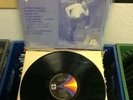
VINYL: The vinyl on both looks decent but they do have some light scratches, hairlines and evidence of play. No serious scuffs, palpable scratches, or dings that would mess with playback, but they do have some play wear. I'll call them both VG, but not bad. Expect some pops and clicks, but that's part of the whole Fugs experience.
The Deadwax of both has the ESP catalog numbers, and, as mentioned, these are both the 'dated' remastered versions from 1973/74.
See the full Matrix numbers above.
I tried to show some close-up pictures of the vinyl to show how good they still it look. Not perfect, and they do have light scratches and wear, but I'm sure you'll be happy with them.
I haven't messed with them, or cleaned them, other than my trusty 'DiscWasher' brush, in 50 years, since Nixon was in office. They both could use a good deep cleaning to make them even better looking and better sounding than they already are.
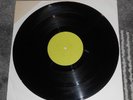
LABELS: These are pressed with the mid 70's ESP labels.
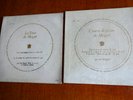
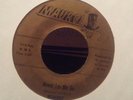
'Fugs' has a white label and 'Virgin' has a Yellow label with a 'deep groove' and green text. I tried to show sharp, hi-resolution pictures of the labels.
The labels are clean and bright. No marks or damage. The spindle holes are still sharp and clean, suggesting minimal playing and my careful handling over the years.
JACKET: As you can see from my pictures, these still look decent for 50 year old copies.
Usually these all-black Fugs jackets show significant scuffs, damage, wear and ringwear, but these copies aren't too bad.
The 'Fugs' album has a small 1" seam split at the top of the opening and the 'Virgin' album has a label tear on the back bottom left. I showed close up pictures.
There's some gentle authentic wear to both of these, but not bad. When sleeved, they look great. They both have a great vintage look and feel to them. Thick, solid, chunky covers.
These both just ooze vintage Lower East Side New York, which is where they were purchased. They have that cool 'vibe' to them that you just don't get from albums from the late 70's onward.
They are both on the ESP label, which are nearly impossible to find. When's the last time you saw a used ESP record in your local record shop?
There's just something 'special' and timeless about these old Fugs albums that can't be reproduced. Despite some honest mild wear, I'm sure you'll love them.
Two very nice survivors.
These originally came with plain white inners and they've been stored in a poly sleeve for decades. Overall, I'll call them both VG to possibly VG+, decent original early ESP pressings.
You can see from my pictures that they are both still quite decent, but not perfect.
~~~~~~~~~~~~ ** NOTE: I'm selling these rare 'Collector' records "AS IS" and "NO RETURN". Thy are rare and as described and I'm sure you'll be very happy with both of them.
~~~~~~~~~~~~~~~ I’m recently retired and downsizing and letting go some gems and rarities from nearly 45 years of vinyl record collecting. Check out the many other fantastic 45s and 33s coming soon to my page!
All records have been carefully evaluated and graded by me. I visually inspect all records under bright light, personally gently clean them with a soft cloth and then, if unsure, play them on a modern high-end turntable to get a true picture of condition.
Please look at all the high-resolution pictures I added. They are all my own and are of the actual record being sold. The pictures are part of the description and can show small details, label variations, and condition better than I can put into words.
My grading is fair and honest. I have had over 3,400 happy and satisfied EBay customers over the years, with 100% positive feedback, and I have been buying/selling on EBay for well over 25 years, so please bid with confidence!
I'm a 0ne-man operation, this is a hobby, not my job. I do this for fun. I do this because I love music, love collecting vinyl and want others to share in that same experience. I take my time listening, researching, grading, listing and packaging. I will NOT sell any record that I personally would not want in my collection.
As you well know, packing and shipping rare records requires special care and attention, therefore, shipping cost within the lower 48 states is $5.00 on this item. If you would like insurance, or anything faster than Media/Economy Mail, please let me know and I can arrange it for you. I’ll work with you to make sure you’re happy!
I will gladly combine multiple records, or other items on my page, and make the shipping much less for you. I don’t inflate the shipping costs; they are what they are. I strive to keep them as low as possible. See my feedback for comments on my quality packing and shipping.
All items are packaged with sturdy cardboard mailers and appropriate padding. I take pride in my packaging and shipping and package all my records as if I were sending them to myself. I refuse to use cheap flimsy packaging material when sending my vinyl. I treat them as if they were my own and mail them the same way.
All orders are processed and shipped within 2 business days of receipt. We package and ship our vinyl records with the greatest care, using proper packaging to ensure that your rare and collectible vinyl records arrive in pristine condition.
Payments can be made by any of the multiple options that Ebay offers.
I will be happy to exchange feedback with anyone I complete a transaction with.
THANK YOU for looking and reading if you got this far. -- JOHN
price rating