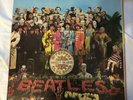
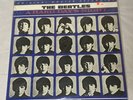
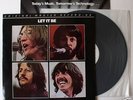
THE BEATLES Sgt Peppers LHCB Mobile Fidelity Sound Labs MFSL SEALED Mint
$
171


Favourite Auctions
To save auctions to your favourites, please login
If you don't have an account, please register
Description
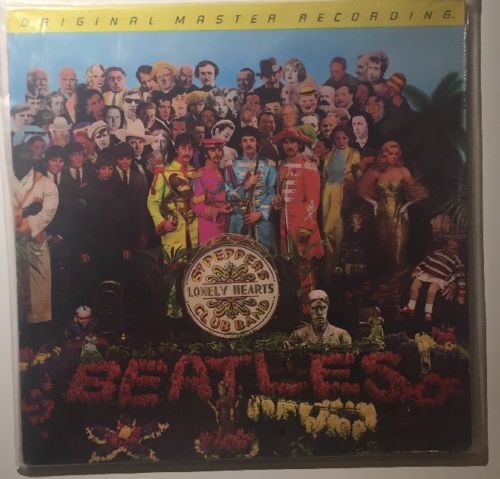
THE BEATLES
Sgt Peppers Lonely Hearts Club Band on Mobile Fidelity Sound Labs (MFSL)* Half Speed Mastered 1983.
One 12" 33 1/3 rpm Long Play vinyl record in its original factory sealed jacket presumably with all of its original inserts included.
Condition: This item comes with its original loose factory plastic seal with two original breathing holes. All contents are presumed to be in mint condition.
~
(*) A little history and explanation of "MSFL" or "MoFi":
BACKGROUND:
In the 1950s and 1960s, it was common for record labels to press relatively heavy records on new or "virgin" vinyl. During the economic downturn of the 1970s, the cost of record pressing increased, and many record labels cut costs by pressing lightweight recordings from recycled materials, which contained impurities. Recycled vinyl pressings often exhibit pops, clicks, and surface noise.
The process of sound transfer from magnetic tape to LP is a highly complicated process. Apprentice engineers typically spend several years learning how to become an expert in disc mastering. A mastering engineer may need to adjust and or compromise the sound quality of a record in order to maintain loudness and make the groove traceable by the stylus a record player using a low quality phono cartridge. Often, sounds have been mastered with additional compression, limiting, and equalization. In order to reduce wear on the master most discs are not sourced from the original master tape. The source tape used may be many generations removed from the original. Typically, the engineer cut the first pressing and a "cutting master" tape in parallel. Subsequent pressings were cut directly from the cutting master. Some pressings were even cut from copies of the cutting master tape. Each subsequent tape copy added additional levels of tape hiss, and wow and flutter, degrading sound quality.
FOUNDING:
Recording engineer Brad Miller (1939–1998) created the first recordings on the Mobile Fidelity label during the late 1950s and 1960s. These were recordings of environmental, locomotive sounds and orchestral music, which drew interest from audiophiles but gained little attention from the public. While Miller was located in Burbank, California in 1971, the company released a few pop and orchestral recordings. This included a 7" 45 rpm single produced by Miller, "Saunders Ferry Lane"/"Early Morning". The record was credited to "Clare" and sung by British vocalist Clare Torry, who later gained fame from her performance on Pink Floyd's song "The Great Gig in the Sky".
ORIGINAL MASTER RECORDINGS:
In 1977 Mobile Fidelity began to produce a line of records known as "Original Master Recording" vinyl LPs. These albums were previously released by other companies, licensed by Mobile Fidelity, and remastered by a process called half-speed mastering. During mastering, sound was transferred from magnetic tape to disc while the cutting lathe moved at half speed. The albums were remastered from the original analog master tapes, without compression, and with minimal equalization. The recordings were pressed on high-quality vinyl called JVC Supervinyl, a plastic compound invented by JVC to compensate for the demands of Quadrophonic records, which had begun appearing in the 1970s. JVC Supervinyl was more durable than regular vinyl, with lower surface noise and fewer pops and clicks. Mobile Fidelity packaged their albums in heavy cardboard sleeves, inner cardboard stiffeners, and plastic liners.
Half-speed mastering had been done before. Decca Records used the same process on its classical albums from 1958 to 1967. MFSL revived the practice, refined it, and made it the company's selling point. Half-speed mastering took more time than typical mastering, and it presented technical challenges. Its use was never widespread by other companies despite sonic advantages.
Stan Ricker (né Stanley Forbes Ricker; 1935–2015) mastered early Mobile Fidelity LPs. Ricker's work can be recognized by the signature "SR/2" carved in the dead wax. Jack Hunt ("JH/2") mastered many of MFSL's LP releases in the 1970s and 1980s. Some later titles were mastered by John LeMay and Paul Stubblebine, with a few uncredited releases. Currently, Shawn R. Britton and Rob LoVerde are mastering most LPs for MFSL. CDs, SACDs, and audio cassette mastering have been done by a variety of engineers, most recently Britton. The company has had only a handful of engineers in its history.
LP, CD, SACD:
MFSL's first four half-speed master albums were pop-orchestral titles by the Mystic Moods Orchestra. Then MFSL offered well-known rock, pop, and jazz titles licensed from major record companies. The first of these was Crime of the Century by Supertramp, originally released by A&M Records in 1974. The label's biggest success at this time was Pink Floyd's The Dark Side of the Moon (1973) when it was re-issued in the Original Master Recording series in 1979.
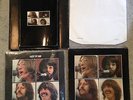
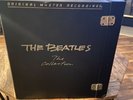
In 1981, MFSL produced a box set of recordings by The Beatles. The box set comprised all 12 original British versions of their albums, mastered from the original Abbey Road Studios master tapes, plus Magical Mystery Tour (1967) which was sourced from US tape copies prepared by Capitol Records. An album-sized booklet displaying the original album covers was also included. This project was the first and only time The Beatles master tapes ever left Abbey Road Studios.
During the 1980s, Mobile Fidelity began to sell CDs in addition to LPs. In the 2000s it began to sell SACDs. As with the LPs, the CDs and SACDs are remastered from the original analog masters. SACDs use Direct Stream Digital (DSD) encoding rather than the more common Pulse-code modulation (PCM). Mobile Fidelity sells its remasters in limited editions of 5000 copies or less.
BANKRUPTCY AND REVIVAL:
In November 1999 Mobile Fidelity Sound Lab shut down after the bankruptcy of M. S. Distributing, one of its biggest distributors. In 2001 MFSL's assets were acquired by Music Direct. The acquisition turned over to Music Direct the company's intellectual property and the rights to the technology used in the proprietary mastering chain.
price rating